

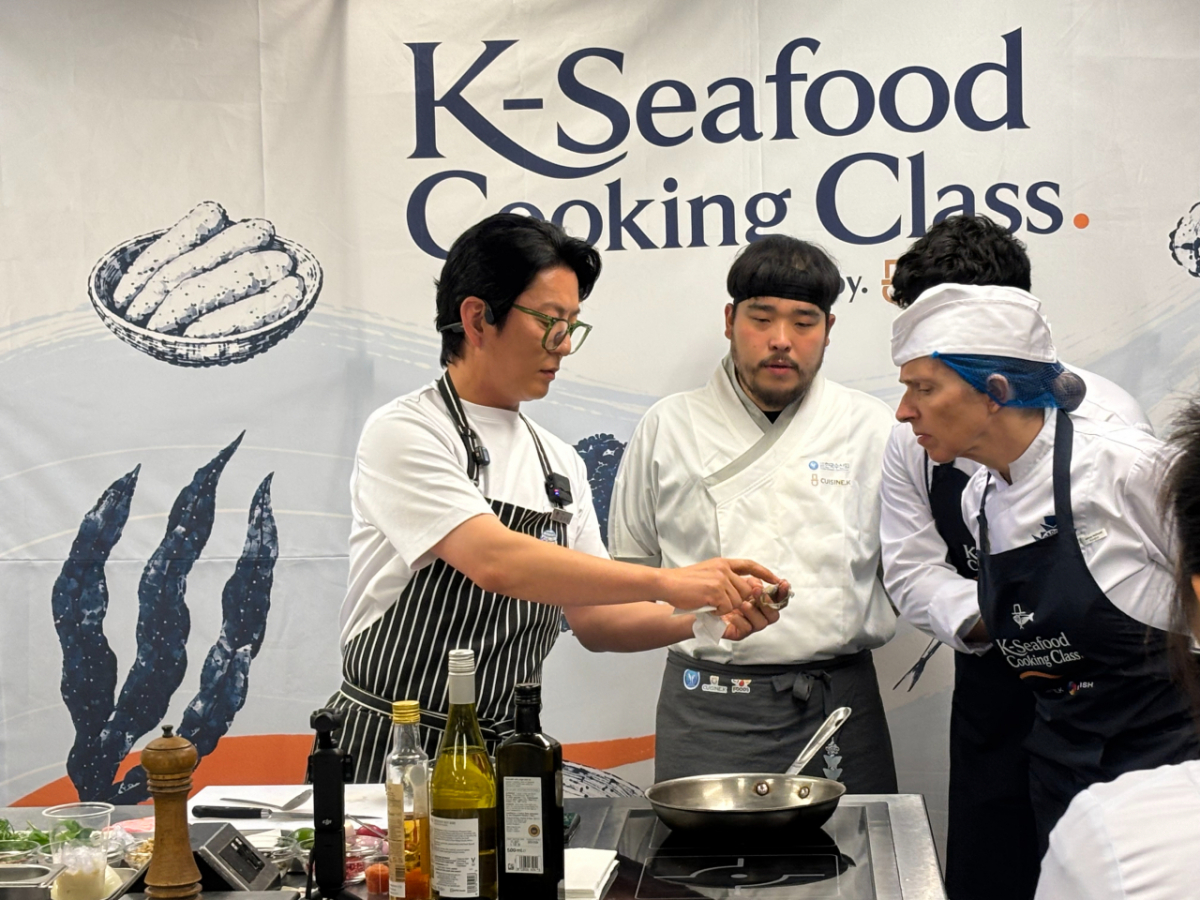
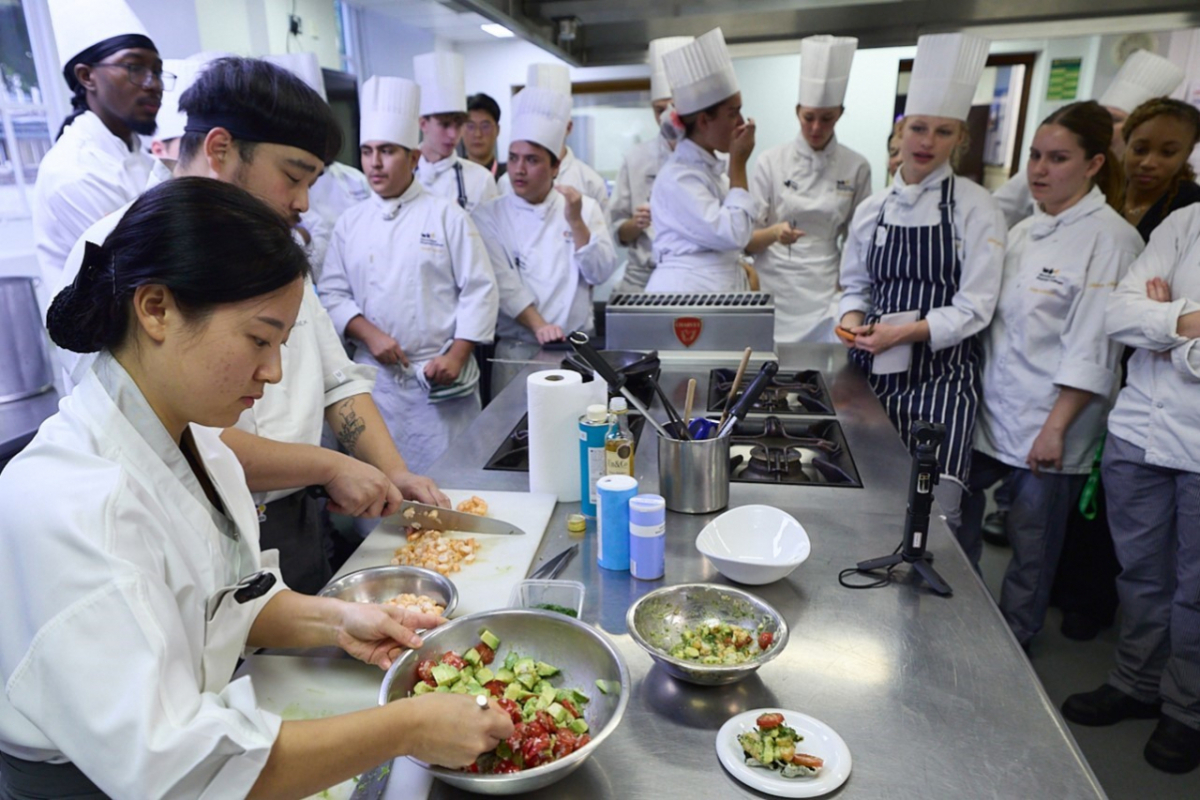
Chef Kang Leo, who was explaining how to remove abalone teeth, held up the prepared abalone. Students, who had few opportunities to encounter fresh abalone, learned one by one how to prepare and cook Korean ingredients. The menu for the day's class was abalone risotto and yellowtail ceviche. Korean seafood landed on the practical tables of a London culinary school.
The cooking class held at Le Cordon Bleu London on the 9th of last month (local time) featured participation from local culinary school students. The event was organized by CJ CheilJedang's Korean cuisine talent development program, "Cuisine K," and the Korea Fisheries Association. Chef Kang, who served as a special instructor, personally demonstrated everything from preparing abalone to cooking it, and made yellowtail ceviche, showing how to incorporate Korean seafood into Western-style dishes.
Alora, a student who received her diploma at Le Cordon Bleu in July and is currently undergoing an internship, said she experienced Korean seafood such as abalone and myeolchi (pollock roe) for the first time on that day. She stated, "It was very meaningful to be able to cook using ingredients that are difficult to encounter in the UK."
The previous day, on the 8th, they showcased seaweed canapés and myeolchi pasta for local consumers and influencers. They used seaweed instead of bread for the canapés and added myeolchi instead of anchovies to the pasta. This approach lowers the barrier to entry for local consumers by incorporating Korean ingredients into familiar Western-style menus. Cuisine K is promoting a business that informs overseas culinary schools and local consumers about how to use Korean ingredients and expands their experience with Korean cuisine. Following the UK, they conducted K-Seafood cooking classes in Vietnam and the United States as well.
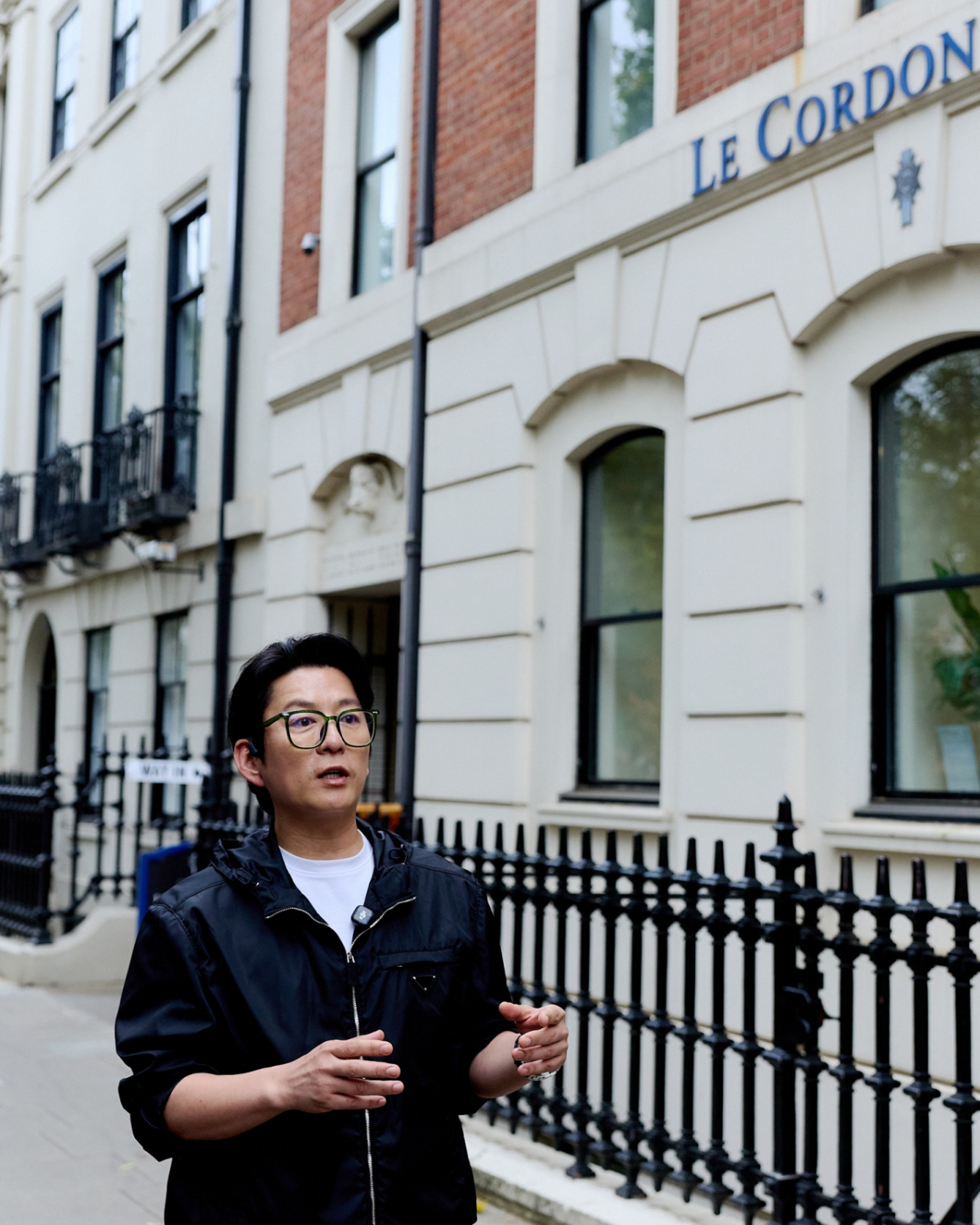
Chef Kang, who met with MoneyToday after the cooking class, cited a solid production base and price as the competitiveness of Korean seafood. He said, "From seaweed, kelp, and laver to abalone and yellowtail, Korea has well-established aquaculture bases for major seafood products and active exports." He also mentioned cases where Japan imports raw Korean laver sheets for separate processing, emphasizing the quality competitiveness of Korean seafood.
He believes that the high recognition of Japanese food is not necessarily a disadvantage for the overseas expansion of Korean food. Chef Kang stated, "We can introduce Korean products as a new alternative to consumers who are already accustomed to Japanese food," adding, "Laver, kelp, and fish cakes have sufficient competitiveness even when considering both quality and price."
He emphasized that to promote Korean food overseas, it is necessary to find ways to naturally blend into local food cultures. He said, "While introducing Korean cuisine menus as they are is good, we must also find ways to utilize Korean ingredients in foods that locals usually eat." He further diagnosed, "In London, people regularly eat salads, sandwiches, Japanese-style sushi, and sashimi, but there are still not many cases of utilizing Korean ingredients in these dishes."
He cited as an example a kimchi and Brie cheese toast sold at a restaurant in Spitalfields Market in London. It is a breakfast menu featuring kimchi and Brie cheese on bread, accompanied by eggs and Cumberland sausage. Chef Kang stated, "It is important to naturally integrate into existing food cultures, such as putting kimchi in foods familiar to locals," and listed kimchi stew using pork and pork gukbap (pork soup) as menus with potential locally.
He also noted that simply increasing the number of Korean restaurants makes it difficult to take root in overseas markets. He said, "As important as opening Korean restaurants overseas is cultivating people who can properly cook Korean food and operate restaurants locally," adding that it is necessary to refer to Japan's case of providing state-level education support for those hoping to start overseas restaurants. He also proposed a plan for culinary talents produced by Cuisine K to participate in overseas pop-ups or restaurant operations. The intent is that "as more people make and introduce Korean food locally, opportunities to encounter Korean ingredients will increase."

 in LIVING


