

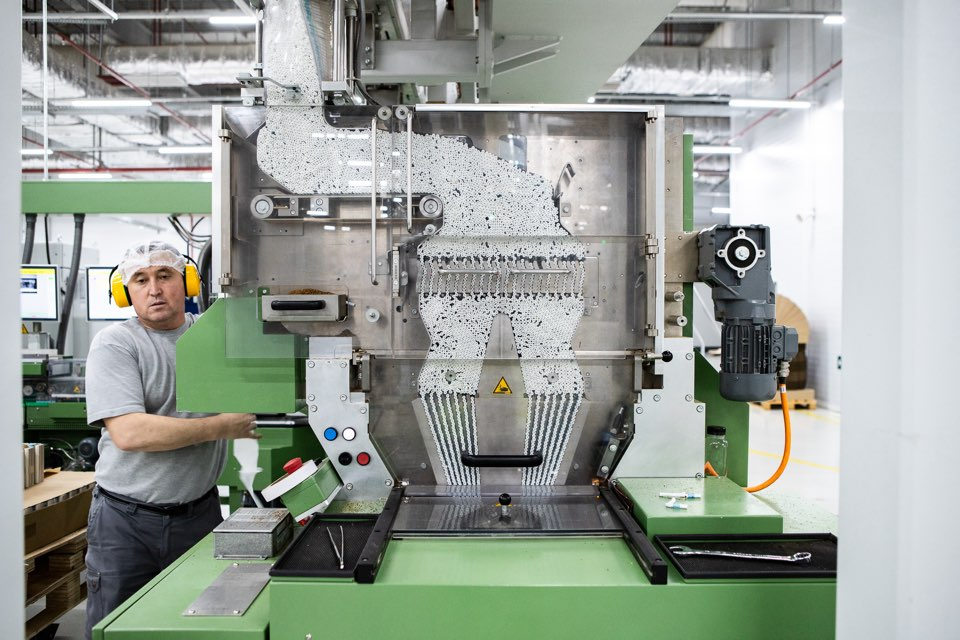
Upon entering the production building of KT&G’s new factory in Almaty Region, Kazakhstan on the 10th (local time), green ultra-slim (super slim·SS) cigarette manufacturing equipment filled the view. As finely processed tobacco leaves were sucked into the machines, finished cigarettes poured out ceaselessly. On the conveyor belts installed on the ceiling, packed boxes moved in a line.
The production speed is difficult to follow with the naked eye. One ultra-slim cigarette manufacturing unit produces 6,800 cigarettes per minute. Calculated based on packs of 20 cigarettes, this equates to approximately six packs per second and more than 20,000 packs per hour. It takes only 0.18 seconds to produce one pack of cigarettes.
Going further inside, a sweet scent brushed against the nose. This is the area where cigarette filters are made, which also includes the process of inserting capsules for flavored cigarettes. Workers also perform tasks to screen whether the capsules have been inserted properly. The filters produced this way combine with the cigarette rods in the manufacturing equipment seen earlier to become finished products.
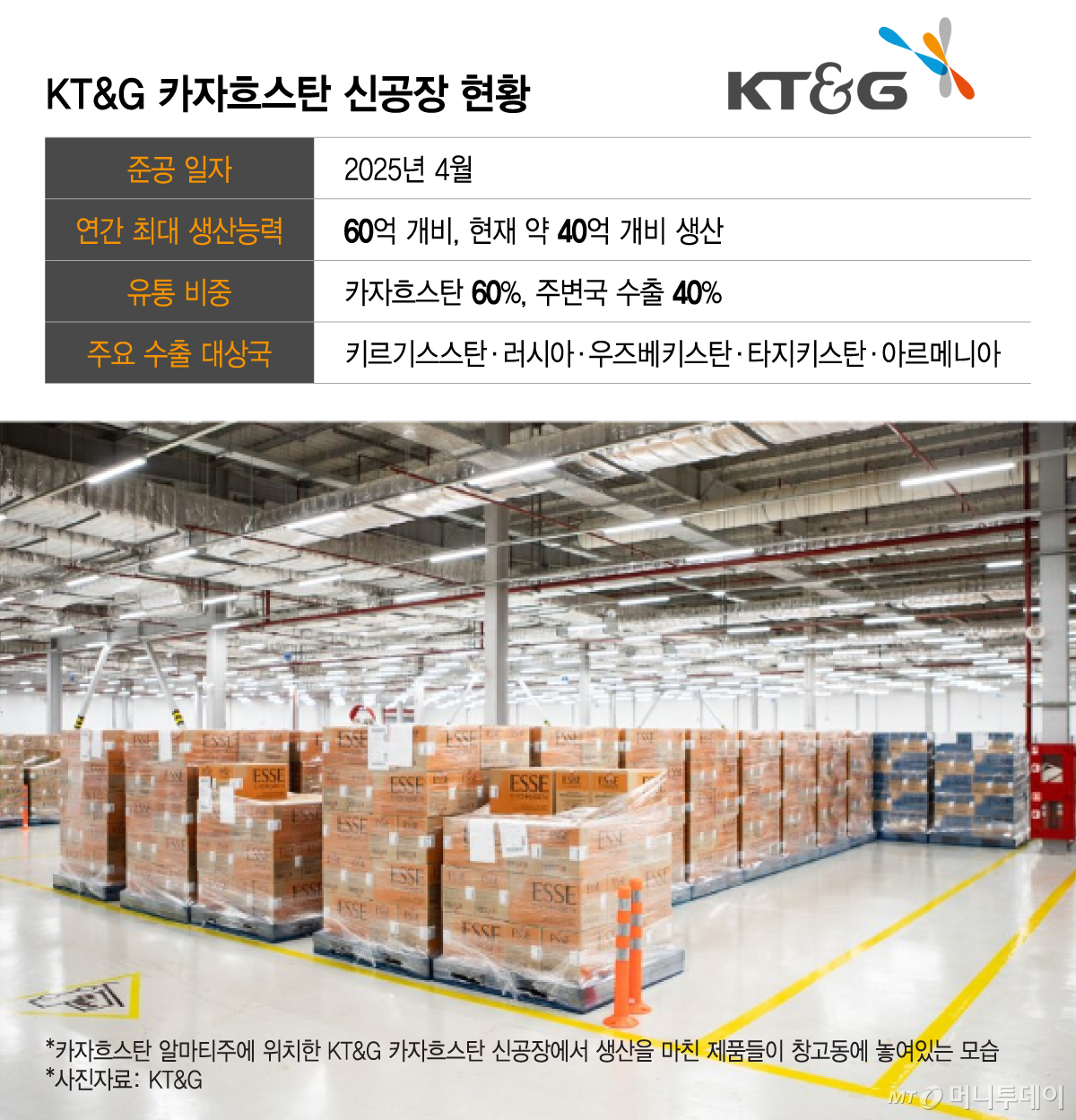
The new Kazakhstan factory is KT&G’s Eurasian production hub, completed last April. Currently, approximately 120 employees work there, operating two ultra-slim cigarette manufacturing units, one slim unit, and one dedicated filter unit. The facility produces 68 types of products, including export-only items for neighboring countries. It also takes on the supply of products to the Eurasian market in place of the Russian factory, which lacks slim cigarette manufacturing equipment.
With the establishment of the Kazakhstan factory, the supply period, which previously took more than a month, has been shortened to a maximum of ten days. Additionally, it saves over $40 per box through tariff exemptions and reduced transportation costs. Sales subsidiaries, which had to secure inventory for two to three months, have reduced this to one month’s worth, resulting in cost savings.
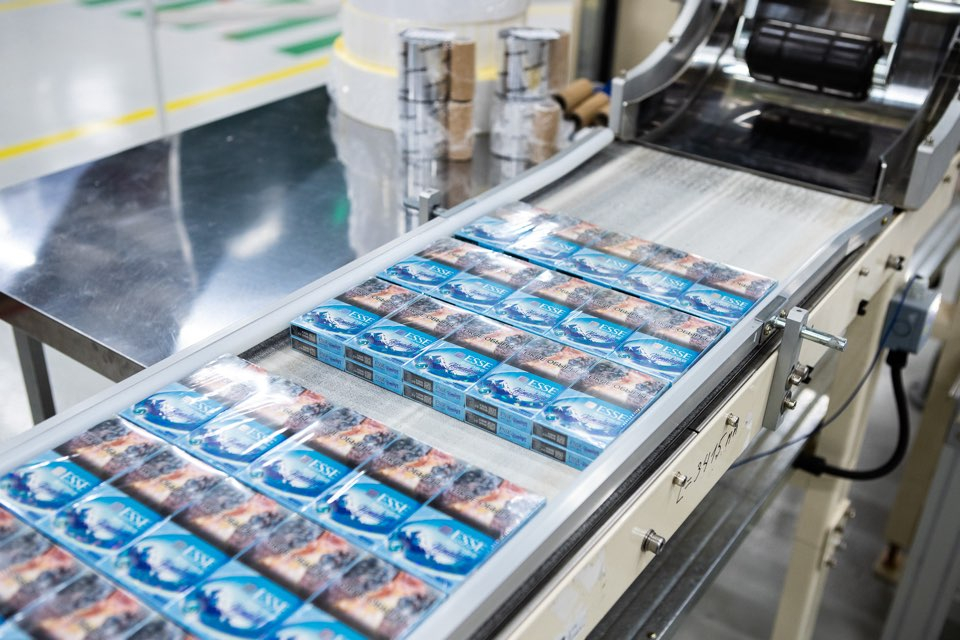
As the company supplies products to multiple countries, it pays special attention to complying with distribution tracking regulations in the Eurasian region. It manages which products have been included by linking the tracking codes assigned to each product, from cigarette packs to boxes. Codes that are duplicated or have poor print quality are immediately filtered out.
KT&G plans to gradually expand its production equipment to meet increasing demand in the Eurasian region, including Kazakhstan. Empty space has been left inside the production building for additional installation of production equipment, and separate land has also been secured for producing heated tobacco products, which require different temperature and humidity management conditions than conventional cigarettes. However, since significant investment is required for equipment expansion, the timing is being carefully weighed.
Yoon Dae-bin (43), plant manager of KT&G’s Kazakhstan factory, said, “Within a year and a half of starting commercial production, productivity has risen to a level similar to that of our Korean factories.” He added, “We hold monthly meetings with production and sales managers to forecast demand up to seven months ahead and determine the production plan.”

 in LIVING


