

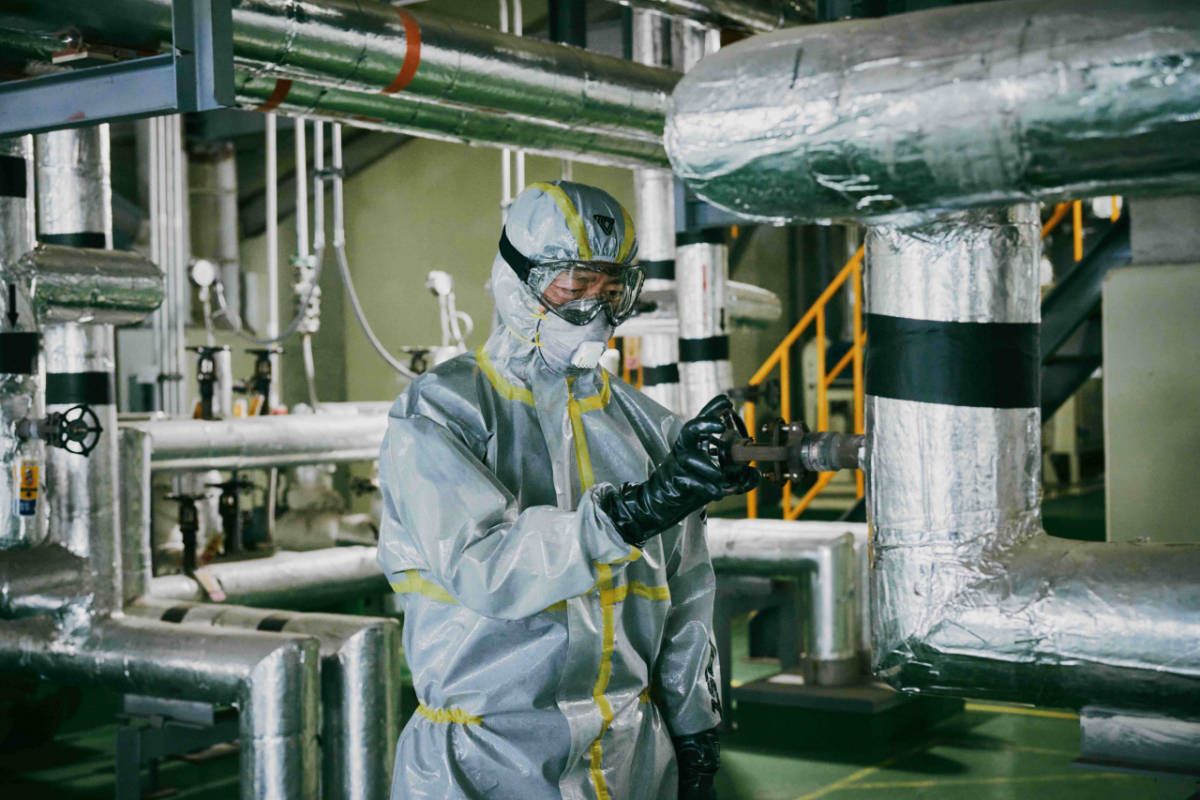
The fashion industry is turning its attention to industrial worksites as workwear emphasizing safety and comfort emerges as a new growth driver.
The trend is fueled by stricter obligations to prevent serious industrial accidents, increased investment in manufacturing industries amid the semiconductor boom, and growing demand for protection against heat waves and extreme cold caused by climate change.
Outdoor apparel companies, which have lost a key growth engine amid a downturn in the hiking wear market, are now targeting workwear as a new business opportunity, leveraging their expertise in functional materials and technology.
According to fashion industry sources on Monday, the domestic workwear market is valued at approximately 1.6 trillion won and is growing at an annual average rate of 5.2%.
This growth reflects a shift in perception: whereas workwear was once viewed as little more than a consumable item to prevent clothes from getting dirty during work, it is now recognized as equipment that enhances safety and operational efficiency.
A representative brand is Korlon Industries’ “Boldist.” Boldist’s sales from January to October increased by 134% year-on-year.
The brand has gained momentum by expanding its customer base across various industries, including construction, automotive, power generation, display, and manufacturing, through its business-to-business (B2B) operations, which were fully launched in 2024. Key clients include Hyundai E&C (safety vests), the Hyundai Motor Group (safety caps), LG Display, and BMW Korea.
Boldist’s competitive edge lies in Korlon’s fiber material technology, accumulated over more than 50 years. “Heracron” and “Porpe” are representative examples.
Heracron is a high-strength superfiber used in bulletproof vests, featuring excellent durability and flame resistance, making it an industrial-grade material that protects the body from sparks and metal abrasion in maintenance and manufacturing environments. Porpe instantly draws heat away upon contact with the skin to maintain perceived temperature, while also offering cut-resistant functionality.
K2’s workwear brand “K2 Safety” and CNTUS’s “Aerworks” are pursuing field-focused strategies. K2 Safety opened a directly operated store near the Yongin Semiconductor Cluster in January, while Aerworks has held pop-up stores in areas densely populated with industries such as automotive, shipbuilding, and petrochemicals to conduct product consultations.
Industry observers note that the workwear market is evolving into a functional apparel sector.
A Korlon Industries official said, “Workwear, previously perceived as simple clothing, is transitioning toward a paradigm where it is regarded as equipment directly linked to workers’ safety.”

 in LIVING
