

'Seoul National University Hospital, Shinchon Severance Hospital, National Medical Center...'
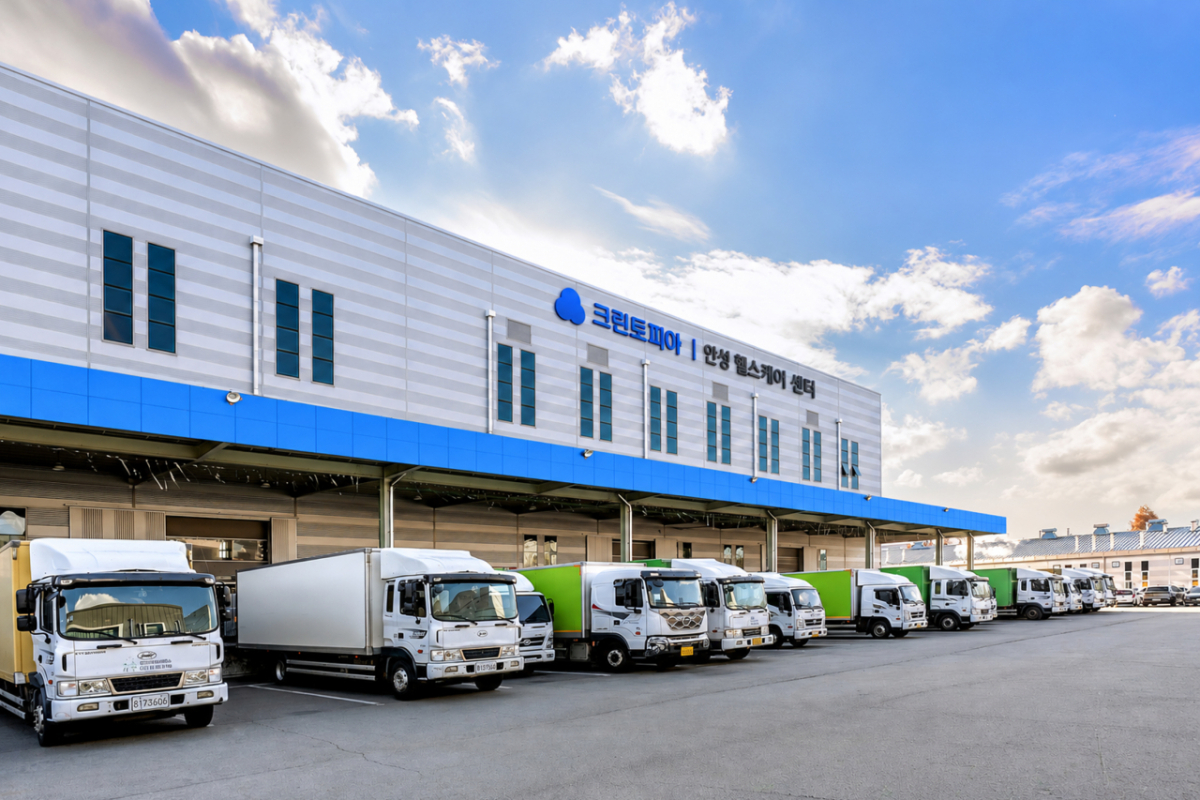
On the afternoon of the 19th, at the Cleansing Topia Healthcare Center (Medical Business Division) factory located in the Gongdo-eup Industrial Complex in Anseong, Gyeonggi Province. Large metal carts placed at the entrance bore the names of Korea's representative general hospitals. Trucks with a capacity of 5 tons unloaded laundry into areas designated for each hospital. The items varied in type, including white sheets, patient gowns, medical staff coats, and uniforms. Although these are laundry items from hospitals, they are not merely washable fabrics here. As they directly relate to patients' health, they are medical assets requiring rigorous hygiene management and professional laundering technology.
Baek Jung-hyun (45), head of the Cleansing Topia Medical Business Division, explained, "Every day, 34 vehicles travel back and forth between 28 major tertiary general hospitals to transport laundry, and deliver it again once washing is complete." He added, "There are 25 large hospitals with over 500 beds, and Cleansing Topia ranks first in the industry in the medical laundry sector."
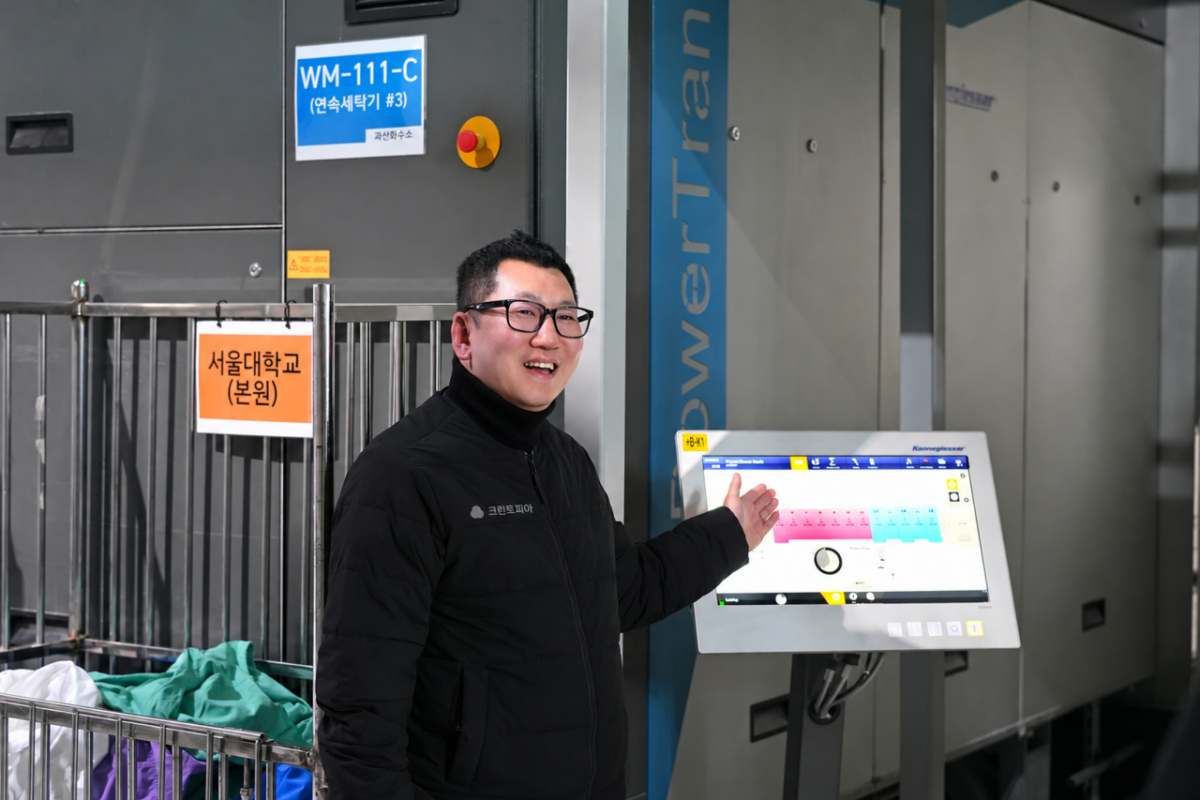
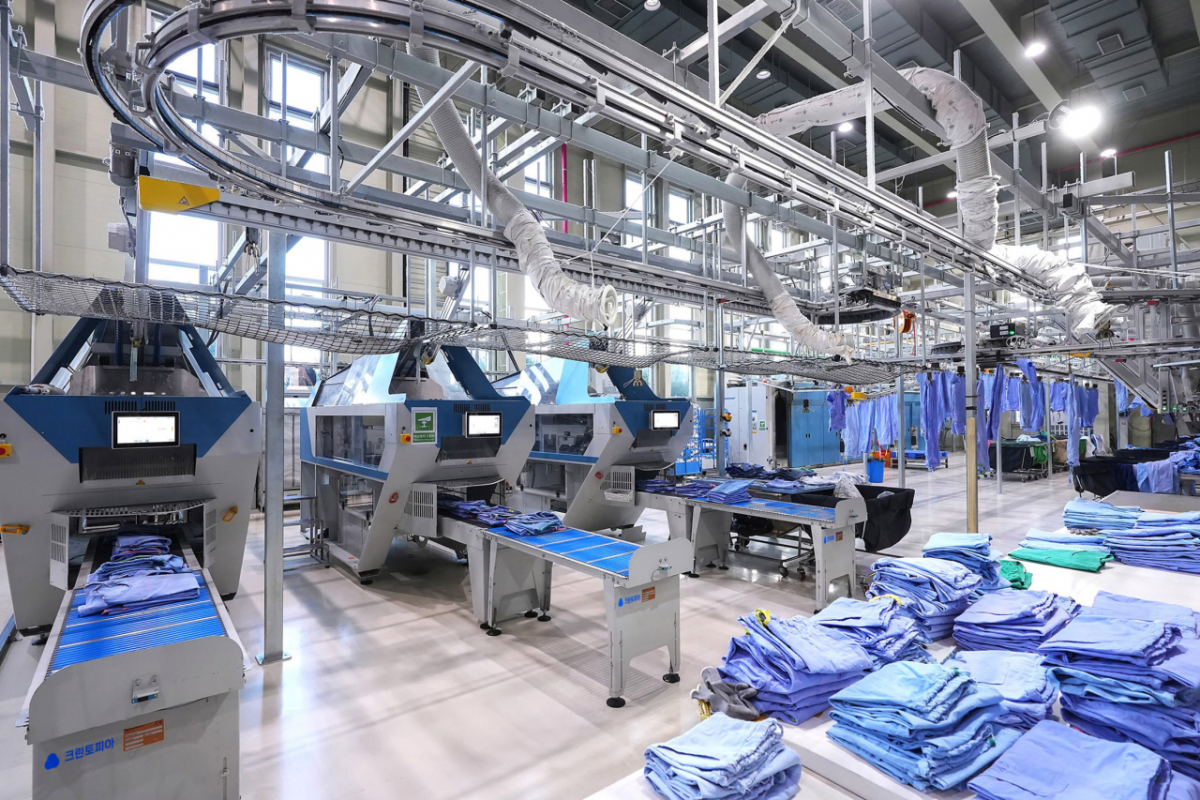
The facility consists of four buildings—Factory 1, Factory 2, and an administrative building—covering a total area of 10,000 pyeong (approximately 33,000 square meters). Upon entering the recently built Factory 2, the overwhelming size of the laundry equipment caught the eye. Laundry items from each hospital were sorted by facility using electronic tags (RFID) and immediately moved to the washing machines. Items placed in the 16th-stage continuous washing machines with a capacity of 60 kilograms moved sequentially through each compartment every two minutes. The laundry that passed through this process was as clean as new clothes. Six 16-stage continuous washing machines were operating simultaneously.
Subsequently, laundering proceeded without pause through 30 dryers with a capacity of 120 kilograms and six large-scale ironing facilities. The facility processes 220,000 items (pieces) of laundry per day. Approximately 260 employees handle 90,000 tons of medical laundry annually.
Cleansing Topia, which began its laundry service through a franchise business in 1992, entered the medical laundry business in 2015. The company has built its expertise by applying the laundering know-how and technological capabilities accumulated for general consumers to hospital laundry. Head Baek emphasized, "The most important aspect of medical laundry is infection control," adding, "Cleansing Topia thoroughly removes bacteria and contaminants that may remain on the laundry."
In practice, Cleansing Topia separates laundry into contaminated zones and clean zones, and operates by distinguishing workers according to these zones. Laundry items undergo chlorine-based disinfection before washing, followed by high-temperature sterilization at 85 degrees Celsius or higher for more than 34 minutes. A separate process is applied to highly infectious contaminated laundry, which is washed at 95 degrees Celsius for 90 minutes.
In particular, the wastewater treatment facility is one of the advantages this factory highlights. The daily volume of wastewater processed is 1,200 tons. Head Baek stated, "We periodically conduct tests through a specialized testing agency, Korea Analysis and Testing Research Institute (KATR), to obtain non-detection certificates for E. coli and Staphylococcus aureus," adding, "We objectively verify our hygiene standards and share them with the hospitals."
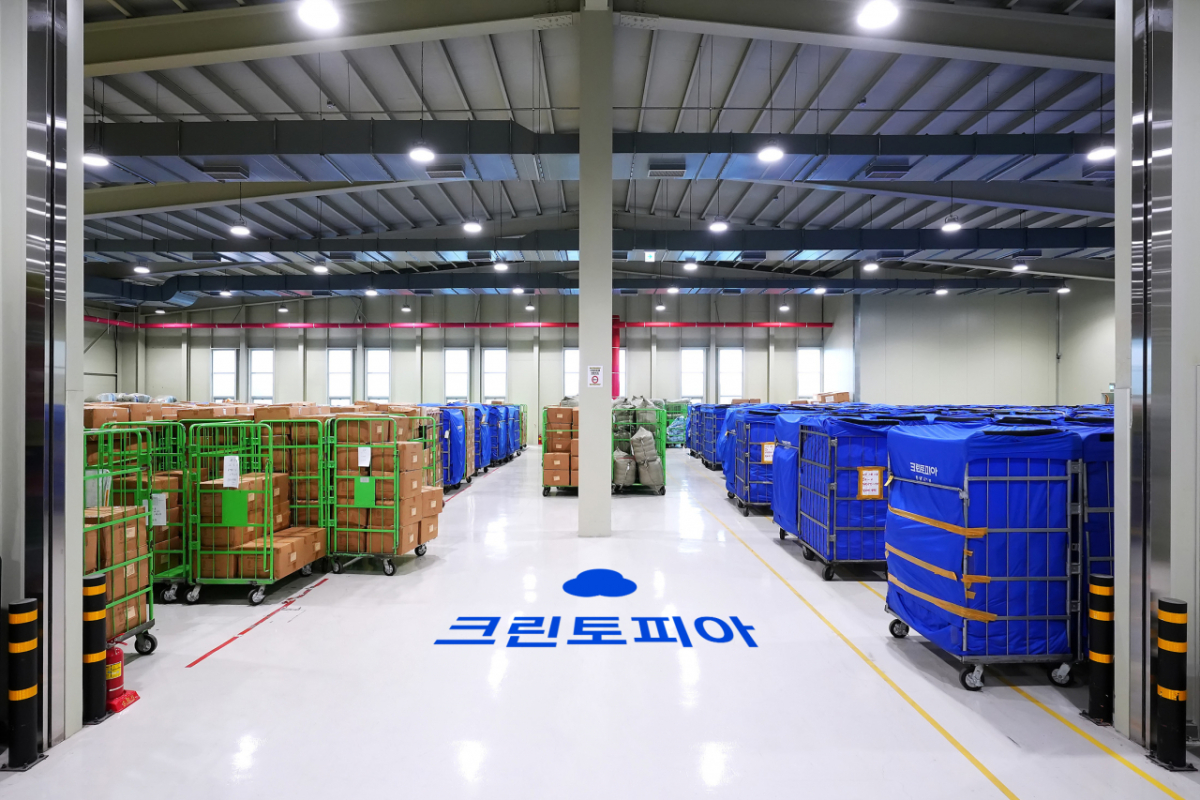
Cleansing Topia is actively promoting its rental (linen rental) service as a new growth driver model. This method allows hospitals to use patient gowns or sheets borrowed from Cleansing Topia instead of managing them independently. Additionally, the company provides warehouse space on behalf of hospitals with limited space. Hospitals such as Shinchon Severance and Yongin Severance store their reserve inventory here.
Head Baek said, "The secret to securing competitiveness in the medical laundry business is not solely about processing large volumes of laundry." He explained, "It is because we provide services necessary for hospital operations, including hygiene, quality, personnel, and logistics, while also reducing hospitals' cost burdens."

 in LIVING


