

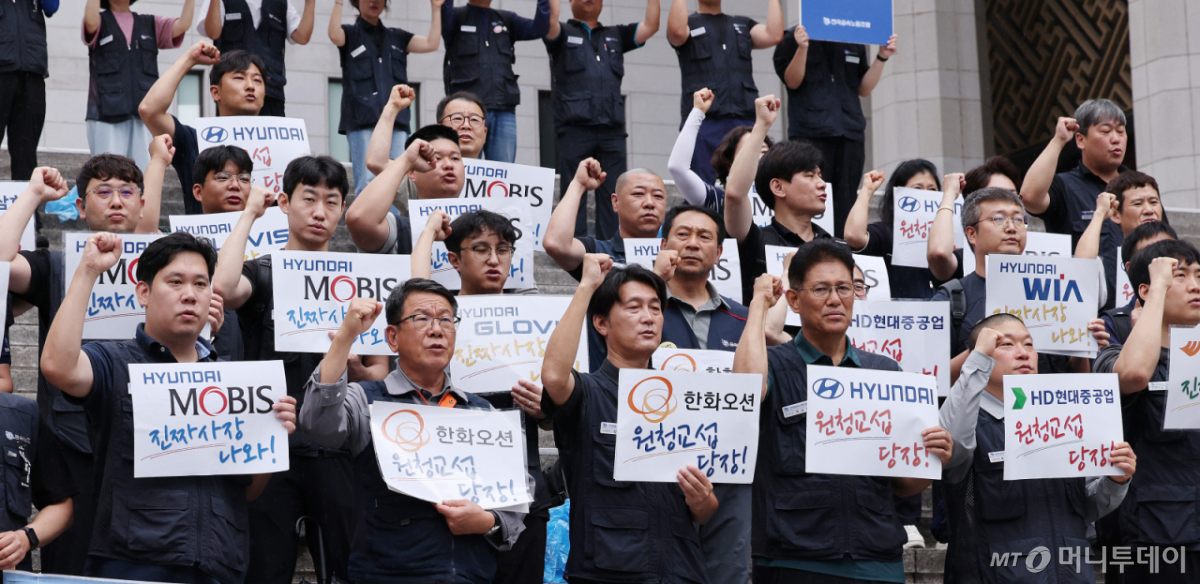
The Central Labor Relations Commission (CLRC) is reportedly considering introducing a summary judgment procedure as it struggles to cope with the surge of cases related to the Yellow Envelope Act (amended Trade Union Act). Some companies are appealing first- and second-instance rulings by rushing to court.
According to the People Power Party Yoon Jae-ok (Rep.), there were 70 CLRC cases related to the Yellow Envelope Act between its implementation in March and the end of last month. Of the 24th applications approved, five proceeded to administrative litigation, four of which were filed by companies.
The "summary judgment" procedure aims to expedite rights protection for labor and management parties, referencing summary procedures used by the Fair Trade Commission. However, concerns arise over whether complex cases can be properly adjudicated if such simplified procedures proliferate. Following the rushed legislative reform without deliberation or public discussion, there is a growing atmosphere where even post-implementation handling in the field is being treated as an afterthought.
"This was predictable from the start," critics from the business community argue, noting that legislation was pushed through without clearly defining the scope of collective bargaining between employers and unions beforehand. It was inevitable that subcontractors would flood courts demanding direct negotiations with prime contractors. The Ulsan Labor Relations Commission ruled that ten subcontracting unions responsible for Hyundai Motor's cafeteria and security services could negotiate directly with Hyundai Motor. Similarly, the CLRC recognized negotiation rights for a cooperative union handling catering and laundry services for Hanwha Ocean. A prevailing view holds that the CLRC's bias toward labor has fueled this wave of legal actions by industry players.
Eventually, even the government itself (Incheon Bupyeong-gu) received a CLRC ruling stating it could be considered the prime contractor for workers performing outsourced public services. Public sector unions, which have publicly declared "Jin Jja (President) is the President," are now positioning themselves to bring President Lee Jae-myung to the negotiation table. President Lee has even demanded that specific criteria be included in the enforcement decree and regulations.
Beyond the Yellow Envelope Act, the current administration repeatedly pushes through major reforms—such as real estate tax restructuring and criminal justice system overhauls—without opposition party consultation, only to sweat over the aftermath. While the government maintains a stance of "try it first; if it fails, we'll fix it" (Kim Yong-beom, Cheong Wa Dae Jeong Chaek (Head)), who will bear the resulting confusion, conflict, and enormous social costs? Former Minister of Employment and Labor Lee Chae-pil recently warned in his book that unpredictable labor-management relations lead to labor disputes and market rebellion, ultimately leaving citizens impoverished.

 in OPINION
