

"China does not need to enjoy trade advantages through yuan devaluation."
This was said by Pan Gongsheng, governor of the People's Bank of China, at a recent meeting of the Group of Twenty (G20). It was a rebuttal aimed at the United States and Europe, which have pointed to China as the source of global trade imbalances.
His words carried both China's sense of grievance and confidence. The argument is that cheap Chinese products sweeping global markets are due not to exchange rates or subsidies, but to technological prowess and a tight supply chain. The logic follows: Why blame China for buying fewer American products when the U.S. tolerates fiscal deficits and low savings rates while even controlling purchases of advanced semiconductors that China desires?
That is not entirely wrong. Blaming only China for global trade imbalances is unjustified. If China saves more and consumes less, then the United States saves less and consumes more. China's surplus and America's deficit are two sides of the same coin.
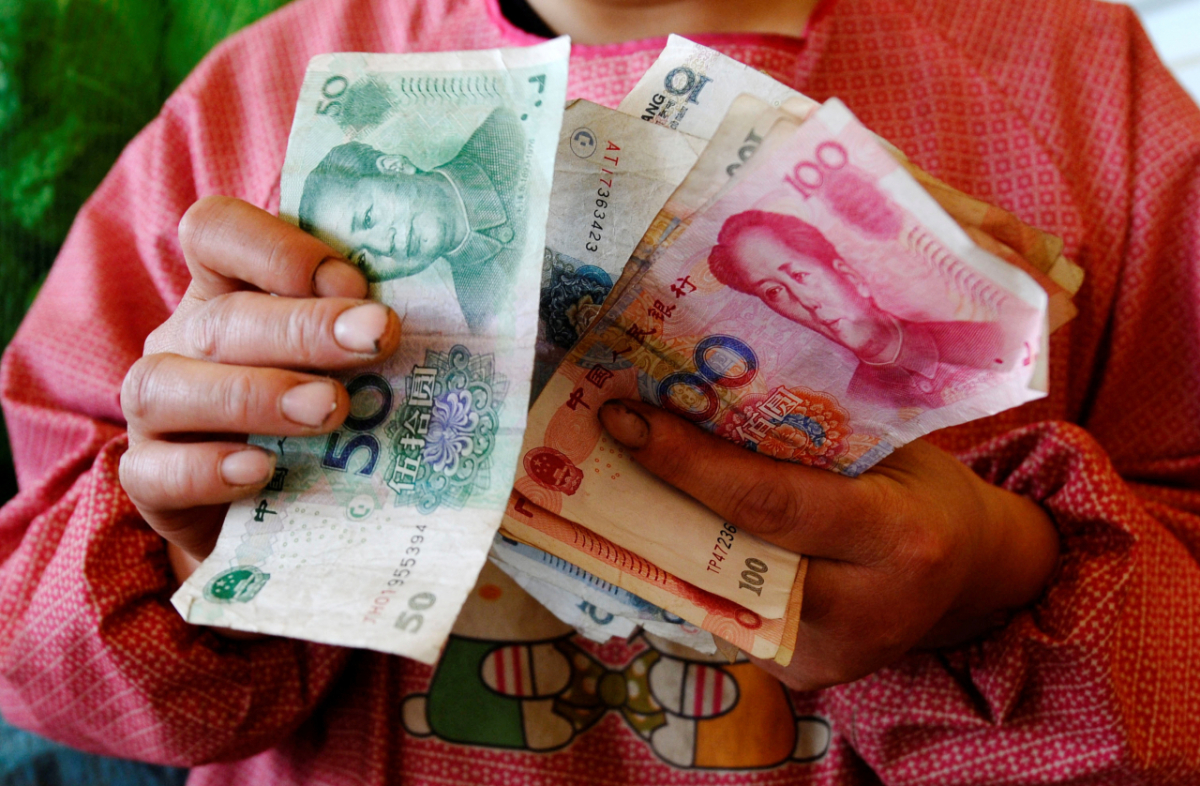
However, there is something Governor Pan's rebuttal cannot conceal: the closed wallet of Chinese consumers. In August, China's exports rose 25% year-on-year, with a trade surplus reaching $119 billion. Meanwhile, retail sales growth in July was only 0.6%. Car sales plummeted by 17%, and sales of construction and decoration materials dropped sharply by 14.2%. Real estate development investment also fell 19.2% from January to July this year. While Chinese products heading abroad are increasing rapidly, the Chinese consumer's wallet remains stubbornly closed. The phenomenon of "strong exterior, weak interior," where exports support growth, is becoming increasingly pronounced.
The problem lies in the fact that households are not spending even as production continues to rise. With real estate and private investment sluggish, the government and financial institutions have channeled more resources into manufacturing. Products that could not be absorbed domestically were sent overseas. What counts as exports and growth for China translates to an influx of low-priced goods and a crisis for domestic manufacturing in other countries.
The United States and Europe call this "overproduction." As China keeps its factories running while its consumers keep their wallets shut, countries are locking their doors with tariffs and import restrictions. This is why China's domestic weakness is no longer just China's problem. China knows this well. While rejecting Western criticism of overproduction, it seeks to curb cutthroat competition at home and reorganize disorderly capacity expansion.
The solution seems simple: Chinese consumers must spend more. But opening the wallet is harder than raising the yuan's value by a few percentage points. Home prices are falling, jobs are unstable, and individuals must secure their own funds for healthcare, education, and retirement. It is difficult for households to feel secure enough to reduce savings and increase consumption with only consumer coupons. Income concentrated in the government and state-owned enterprises must be shifted to households, and pensions and social insurance must be strengthened. However, this goes beyond economic stimulus; it requires changing the growth model itself. While voices calling for expanded consumption are growing within China, the view that manufacturing competitiveness is tied to national security remains stronger.
This also marks a limitation of the upcoming U.S.-China summit in the United States. The U.S. is likely to demand reduced subsidies and yuan appreciation, while China may insist on tariff reductions and relaxed controls on advanced technologies. However, China's income distribution and industrial policies are not negotiation cards that can be changed by leaders meeting face-to-face. These issues are deeply rooted in China's system of governance itself.
Therefore, the outcomes of the summit are likely to be limited to purchases of U.S. soybeans and energy, some tariff relief, and stabilization of rare earth supplies. Even if an agreement is reached, it will be closer to delaying a recurrence of trade wars than resolving global imbalances. Korea cannot view this as someone else's affair. Products from China blocked in the United States will flow to Europe, Southeast Asia, and Korea. Conversely, if China increases household consumption and opens its markets, it presents an opportunity for Korea.
We should not judge the upcoming summit solely by how much the U.S. products China has agreed to purchase. We must look at whether China is shifting the weight of its policy toward household consumption and where products pushed out from the United States are heading. What the U.S.-China summit can manage is only the pace of conflict. The fundamental solution to trade disputes lies not in Washington's tariff lists, but in the Chinese consumer's wallet.

 in OPINION
