

#In 2010, the average daily trading volume of ELWs (Equity Warrants) in Korea's derivatives market was 1.6 trillion won, accounting for 30% of KOSPI trading volume at the time. This ranked second globally. In particular, following the global financial crisis, volatility surged sharply, and individual investors flocked to ELWs due to their significant leverage effects.
#Single-stock leverage: Since the launch of single-stock leverage and inverse products, the ETF (Exchange-Traded Fund) with the highest trading volume in Korea's stock market was the KODEX SK Hynix Single-Stock Leverage ETF, which saw 188.7928 trillion won traded over approximately two months. Lee Eo (CEO) index ETFs such as KODEX200 and KODEX Leverage followed. Among the top 10 stocks, seven were leverage or inverse products.
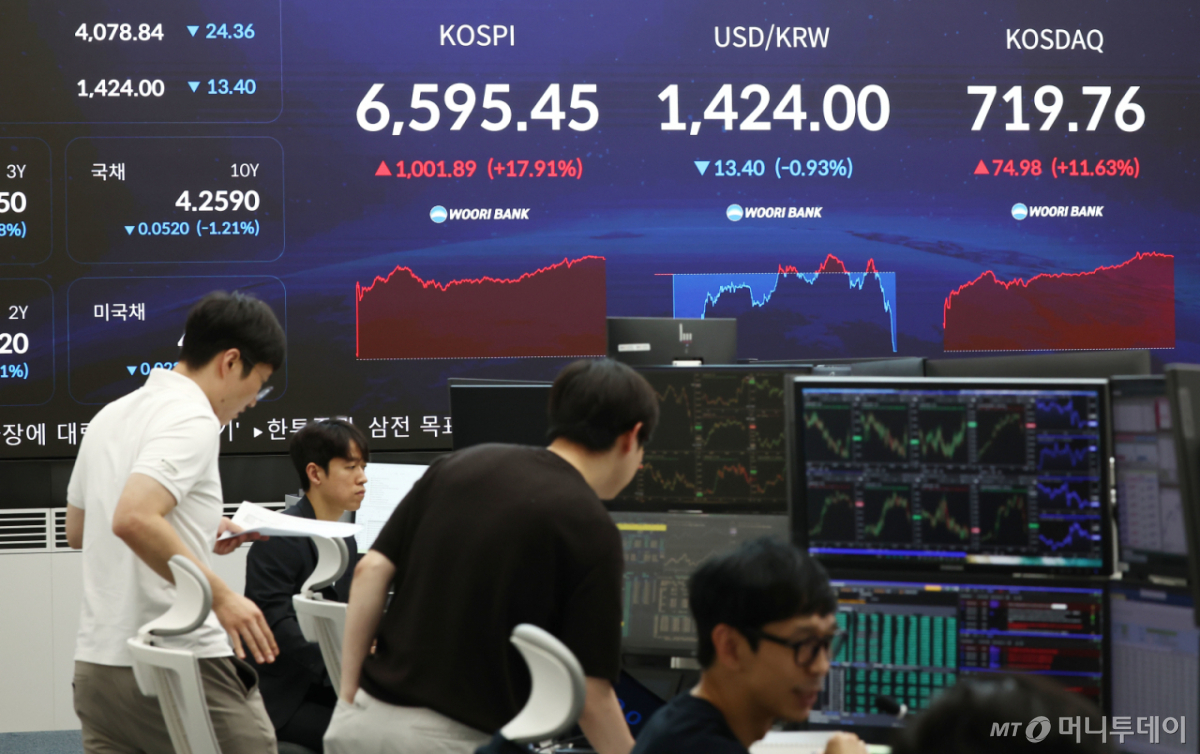
The phenomenon of individual investors pouring funds into high-risk derivative products such as ELWs, leverage ETFs, and ELS (Equity-Linked Securities) is repeating itself. While these products can deliver high returns during rising stock markets, they also incur substantial losses during downturns. As individual investors continue to flock to them, warnings regarding investor protection persist.
According to the financial investment industry on the 31st, trading volume for 16 single-stock leverage and inverse products reached 525.5435 trillion won between their launch on May 27 and July 30, accounting for 32.3% of total ETF trading volume. During this period, the average return rate for four SK Hynix leverage products was minus (-)70.8%. The average return rate for Samsung Electronics leverage products was -61.4%, representing a loss of nearly two-thirds. Although the loss rate decreased somewhat due to a sharp stock price surge that day, losses remain at roughly half the original value.

The investment behavior of retail investors (individual investors) seeking high returns has led not only to investor damage through expanded losses but also to increased volatility across the entire market. The UK-based Economist compared Korea's stock market to a casino on the 23rd (local time), offering analysis on leverage investing and market concentration. The Economist stated, "Domestic individual investors have poured $10 billion (approximately 14.6 trillion won) into single-stock leverage products," adding, "Korean investors are already deeply immersed in these attractive new products, making it difficult for financial authorities to pull them out of the casino."
Some point out that the investment frenzy targeting a "big win" by individual investors was foreseeable. Considering past cases involving ELWs and ELSs, the popularity of high-risk products among domestic investors has persisted. Investment in overseas-listed leverage products is also active. Since the beginning of this month, the most net-purchased stock by Korean investors in overseas markets was the Direxion Daily Semiconductor 3X ETF, with net purchases totaling $3.3295 billion (approximately 477.81 billion won). This amount is four times larger than the second-highest net purchase, SK Hynix ADR ($84.45 million). Korean investors also flocked to leverage products listed on the Hong Kong stock market, including Samsung Electronics leverage and SK Hynix leverage.
The actual launch of single-stock leverage products was triggered by domestic investors' heavy concentration on overseas-listed leverage products, particularly those based on Korean stocks. However, this enthusiasm spread even to individual investors who had not previously engaged in overseas stock trading, leading to overheating. Nevertheless, it is expected that the authorities' measures will ease the overheating. Taehyun DB Securities researcher stated, "If additional new capital inflows are limited due to strengthened entry requirements such as pre-investment education for investor protection, increased initial margin deposits, and restrictions on credit trading, the 'wag-the-dog' phenomenon (where leverage and inverse products amplify market volatility) will likely ease over time."

 in STOCK

