

It is projected that the KOSPI will surpass its all-time high of 9,300 before the end of this year. This is because the KOSPI has fallen excessively given that economic indicators and corporate earnings are trending upward. Currently, the KOSPI index trades at a price-to-earnings (PER) ratio below five times.
In an interview with Money Today's specialized stock YouTube channel "Bukkumi - Ants Dreaming of Becoming Rich," Lee Kyung-min, Head of FICC Research at Daishin Securities, stated, "The likelihood of a downward trend emerging from now on is extremely low." He added, "We should prepare for the possibility of reaching the all-time high of 9,300 first."
※You can view the full interview video on the YouTube channel 'Bukkumi - Ants Dreaming of Becoming Rich'.
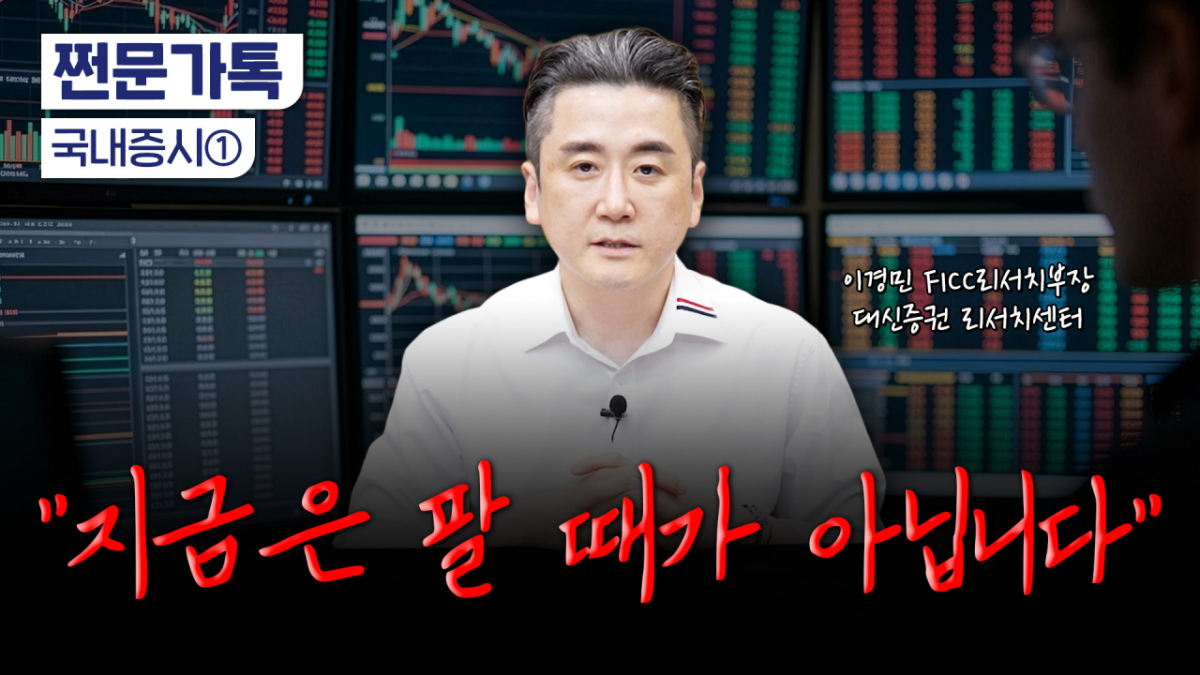
Q. The KOSPI fell more than 22% last July and continues to show volatility this month. What is the reason?
▶First, we believe there must be aftershocks from last month's decline. Afterward, both the KOSPI and the U.S. were at a psychological peak in risk appetite when interest rate variables emerged. This unsettled market sentiment, leading to strong profit-taking. Previously, whenever the market wavered, retail investors or ETFs (exchange-traded funds) would step in with buying orders. However, recently, every rebound has been met with selling by retail investors, creating a fragile supply-demand situation. Foreign investors had been driving demand, but interest rate volatility also shook foreign trading activity, widening the decline.
Q. Concerns about U.S. interest rate hikes due to the Middle East war keep arising. How do you expect this to unfold?
▶We see almost no possibility of an interest rate hike within this year. Looking back at whether conditions are suitable for a rate hike, the U.S. employment data released earlier this month deteriorated. The CPI (consumer price index) also slowed for two consecutive months. However, high international oil prices have created significant fear that rates could still be raised. Former U.S. President Donald Trump remains a variable influencing interest rates. Therefore, if the U.S. and Iran show signs of moving toward peace, we believe interest rates may stabilize.
Q. Another variable is the vicious cycle of supply-demand deterioration. Foreign investors continuously sold Korean stocks net during the first half of this year. What do you expect to happen next?
▶It is true that supply-demand has become fragile. Just last June, retail investors showed a trading pattern of buying stocks when the market corrected and selling on rebounds. However, after the KOSPI broke below 7,500, both retail investors and financial investment firms (ETF buyers) stopped purchasing. As prices fell into the 6th,000s, they began selling. Psychologically, we believe the KOSPI needs to reach the 7,000–8,000 range for retail ETF demand to stabilize. The key factor is foreign investors. Foreign investors stopped further selling once the won-dollar exchange rate peaked and started declining. Their large-scale net sales in the first half of this year were due to rebalancing. During the first half, the KOSPI alone rose more than 120% from its low point. For global portfolio managers and fund managers, the KOSPI's weight became too high. In that context, as the KOSPI sharply declined, they viewed it as a normalization of positions that had risen far beyond their appropriate allocation. Additionally, we believe concerns over AI (artificial intelligence) and semiconductors have somewhat subsided. Especially in the second week of this month, CoreWeave's stock trend and SanDisk's contract-related news helped calm anxieties. The issue remains interest rates; if they stabilize, we expect the market to recover quickly. We anticipate the market will show stability as next month progresses, and we hope the KOSPI will also display an upward-trending valuation pattern.
Q. Why do you believe concerns over AI profitability have eased?
▶Concerns about AI profitability would inevitably weaken if interest rates remain high. Therefore, we consider it a potential risk that must be kept in mind. However, we do not think the likelihood of an immediate drop in AI profitability is currently high. While some companies report negative cash flows and lack of funds, expectations for profitable firms remain. If we examine the balance of power between these two factors, we believe optimism about profitability still holds more weight. Especially in the case of the KOSPI, which is extremely undervalued, with semiconductor valuations fluctuating around four times, it remains in a deeply undervalued zone. Moreover, big tech companies continue to invest heavily in AI CAPEX (capital expenditure).
Q. The domestic stock market has fallen from 9,000 to the 6th,000s. Can the KOSPI reach 9,000 again for the remainder of this year?
▶We believe breaking through the all-time high of 9,300 is entirely possible. As of the closing price on the 19th, the KOSPI had fallen 38% from its peak. Historically, there has never been a single instance where the stock market dropped more than 30% while leading economic indicators and earnings forecasts were trending upward. This is extremely unusual. As a result, the PER (price-to-earnings ratio) is below five times — the first time since 2000. In simple terms, even if earnings were cut in half, the PER would still not reach ten times, indicating how cheap it is. While economic conditions and corporate performance are trending upward, stock prices have plummeted, creating a significant gap. This gap must narrow somehow. Earnings forecasts continue to show robust trends. Therefore, we do not see a downward trend in the stock market. A sufficient correction has already occurred. Thus, if the KOSPI reaches its all-time high and economic conditions and earnings rise further, there will be room for additional gains. Even if the market corrects after surpassing the all-time high due to a downturn in economic conditions and earnings, we reiterate that the likelihood of a downward trend emerging from now on is extremely low. We must prepare with the possibility of reaching the all-time high of 9,300 in mind.

 in STOCK
