

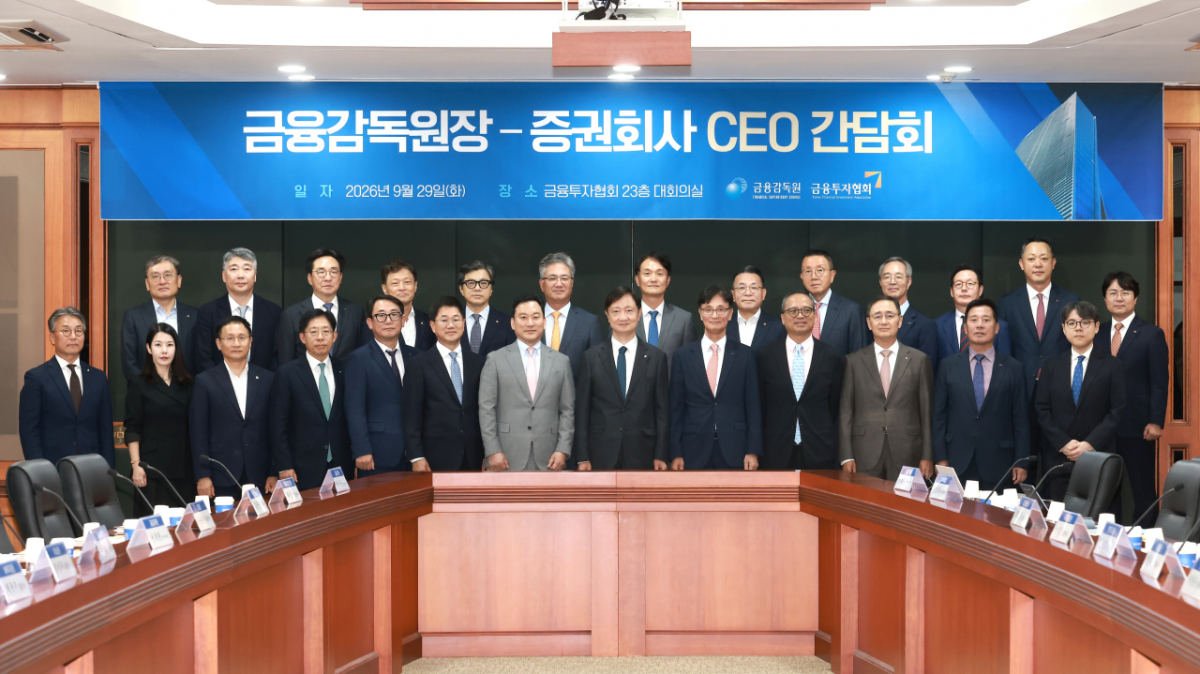
Addressing the securities industry, which earned 8.6 trillion won in the first half alone, Financial Supervisory Service Chairman Lee Chan-jin urged firms to “contribute commensurate with their expanded scale” and strengthen social responsibility. He stated that as the size and role of securities firms have grown, they must actively step up social contributions, including investor education.
On the 29th, at the Korea Financial Investment Association in Yeouido, Seoul, Chairman Lee held a meeting with CEOs of 23 securities firms, stating, “The achievements of the securities industry were possible because of investors,” and adding, “Now that those very investors are facing difficulties, the industry needs to reflect on what it can do.” He further noted, “The social responsibility performance of the securities industry lags significantly behind that of banks and other institutions,” urging firms to “self-assess whether they are contributing in line with their expanded scale and role.”
Chairman Lee said, “The securities industry has already achieved remarkable results, with its net profit for the first half alone approaching last year’s annual performance.” He added, “It is also true that criticisms have emerged stating that while securities firms continue to enjoy profits, a significant number of investors, who form the foundation of their existence, have only incurred losses.”
The securities industry recently proposed an approximately 1 trillion won venture secondary investment as a de facto social responsibility initiative, but Chairman Lee is interpreted to have judged this insufficient. The criticism is that social responsibility performance has been low relative to the increased size of securities firms.
Last year, the expenditure on social responsibility activities was 2.2 trillion won for domestic banks, whereas it stood at approximately 50 billion won (provisional) for domestic securities firms. Based on separate financial statements for the first half of this year, net profit was 13.8 trillion won for domestic banks (20 companies) and 8.6 trillion won for domestic securities firms (37 companies).
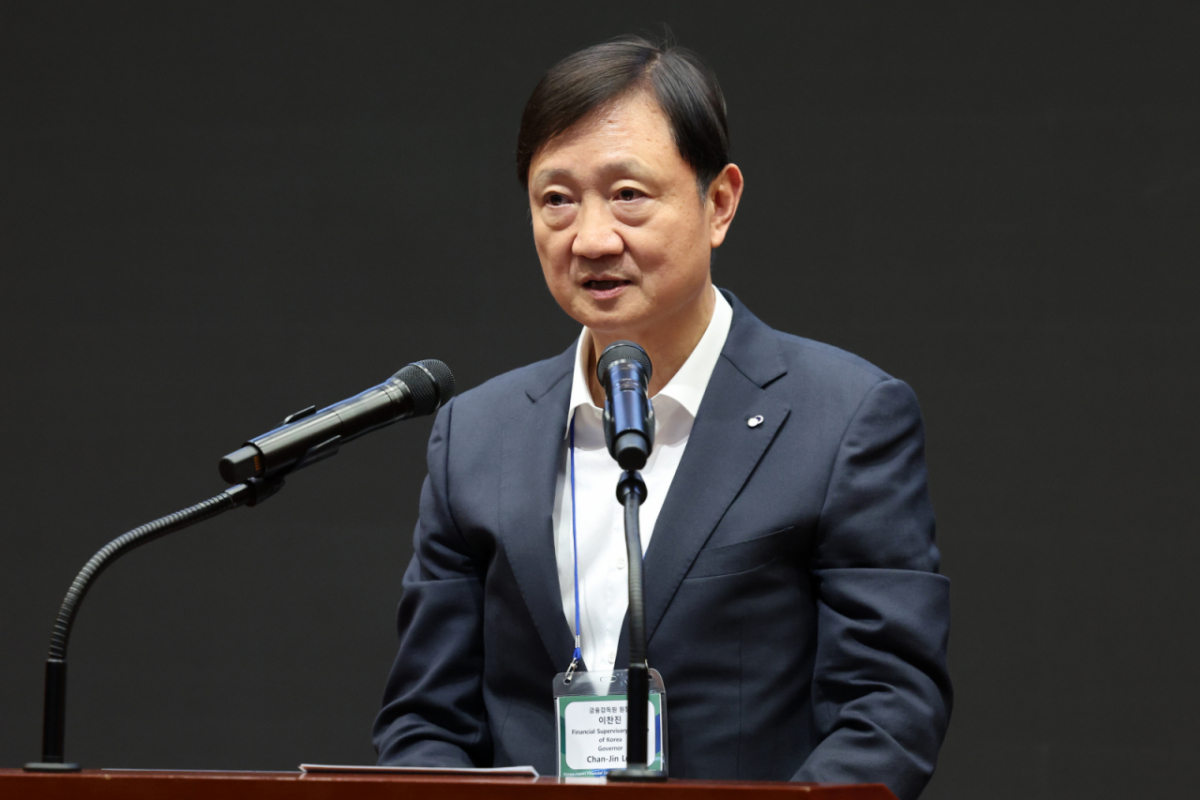
Chairman Lee also emphasized investor education. He stated, “Please implement substantive investor education that goes beyond legal disclosure obligations, enabling investors to clearly recognize the possibility of losses.”
He expressed gratitude for measures recently introduced by securities firms to strengthen voluntary management of so-called margin investing (investing with debt), such as reducing credit lending balances from the statutory limit of 100% of own capital to within 90%. Chairman Lee said, “Credit lending reached its largest scale this year amid a stock market boom and was identified as one cause of market concentration in specific stocks and increased volatility.” He added, “I would like to express my gratitude for securities firms recently voluntarily resolving to limit credit lending by individual stock and strengthen limits relative to own capital.”
He warned that regulatory and inspection efforts will be launched against practices infringing on investor rights, such as false or exaggerated advertising and the shifting of hidden costs. Chairman Lee stated, “Some trust-undermining practices remain, including product design that does not meet investors’ expectations, false or exaggerated advertising, and the shifting of hidden costs.” He added, “Going forward, we will concentrate regulatory and inspection resources to thoroughly investigate and fundamentally improve practices that undermine investor trust.”
In addition, Chairman Lee urged securities firms to present benchmarks for corporate shareholder returns so they can play a leading role in enhancing shareholder value. He also called for risk management prepared for periods of rising interest rates.
Chairman Lee emphasized, “A securities industry that fails to gain investor trust cannot guarantee its future,” adding, “Now is the time to seriously consider a path where the industry and investors grow together.”

 in STOCK

