

The initial public offering (IPO) of a global "big fish" like SpaceX is an unattainable dream for domestic retail investors. This is because overseas IPO markets, such as in the United States, allocate shares primarily to large local institutional investors after rigorous review.
Woori Asset Management's "Woori US Short-Term Bond IPO Fund" has cleared this hurdle by securing SpaceX shares and has identified Anthropic, the developer of the generative AI model "Claude," as its next target.
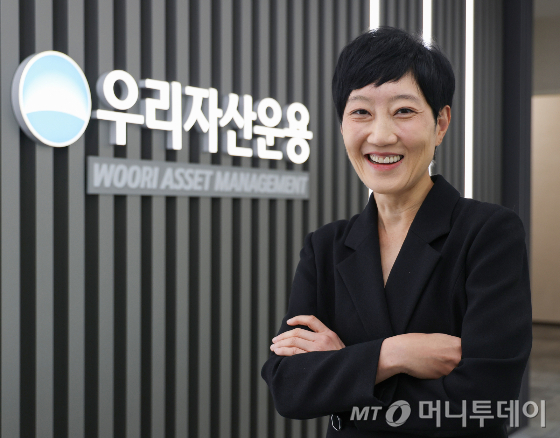
Jung Ji-yoon, head of Global Operations Team 2 at Woori Asset Management, who manages the Woori US Short-Term Bond IPO Fund, recently met with MoneyToday and cited IPOs as a core investment strategy.
"The fund is designed to primarily hold short-term bonds to minimize volatility and prevent losses," Jung said. "By participating in IPOs, we add 'plus alpha' returns, differentiating the fund from other short-term bond funds."
The fund aims to invest approximately 95% of its total assets in U.S. dollar-denominated short-term bonds with maturities of around six months, while keeping equity exposure within 5%.
It typically secures interest income through short-term bond trading and pursues additional returns by receiving IPO allocations when major offerings occur. The fund participates not only in U.S. IPOs but also in those in Europe, Hong Kong, Japan, and Korea.
According to Fund Guide, the fund's net asset value was approximately 343 billion won as of the 10th, making it the second-largest among Woori Asset Management's mixed-type public funds.
The key to securing shares from "big fish" IPOs lies in collaboration with global asset manager Nuveen. In overseas IPO markets, such as those in the United States and Europe, underwriters heavily evaluate an investor's local network and deal-sourcing capabilities when allocating shares.
Nuveen was deemed a suitable partner because it not only has a strong local network but is also recognized for its active engagement in the Korean business. Currently, Nuveen manages overseas short-term bonds and IPOs, while Woori Asset Management participates in domestic IPOs.
SpaceX, which listed last June, is a representative example of an IPO inclusion. "Our strategy is to actively sell shares on the first day of listing to realize profits," Jung said. "However, if corporate valuation appears high, we may hold onto them longer. SpaceX is currently trading at a price higher than its offering price, so we still hold a very small amount."
The next IPO to watch is Anthropic, the developer of generative AI "Claude." Despite recent controversies surrounding the high corporate valuations and capital burdens of AI companies, Jung assessed that the long-term growth potential of the AI industry remains valid.
"Generative AI has already entered our daily lives with significant impact, and companies cannot escape it due to efficiency competition, so we view the AI industry positively," she said. "With the major event of the midterm elections behind us, the IPO market will become even more active next year."
In addition to Anthropic, Jung cited OpenAI, Databricks, and Canva as upcoming IPO companies to watch.
Although attention has shifted to long-term bond investments due to recent declines in long-term interest rates, Jung believes that short-term bonds still offer high investment appeal.
In a market with high volatility in interest rates, short-term bonds carry significantly lower price risk, and the continued high-interest-rate environment allows for substantial returns from interest income alone. "Bond yields are also fluctuating sharply, so I advise investors to 'keep their bat short,'" Jung said.
Jung recommended that investors make long-term investments of at least one year in the Woori US Short-Term Bond IPO Fund through systematic accumulation.
Unlike parking-type products where funds are deposited for short periods despite investing in the same short-term bonds, this approach allows investors to fully enjoy compound interest effects by capturing additional returns with each IPO.
"A certain portion of a portfolio must be invested in stable assets so that there is room to rebalance when market volatility is high," Jung said.

 in STOCK
