

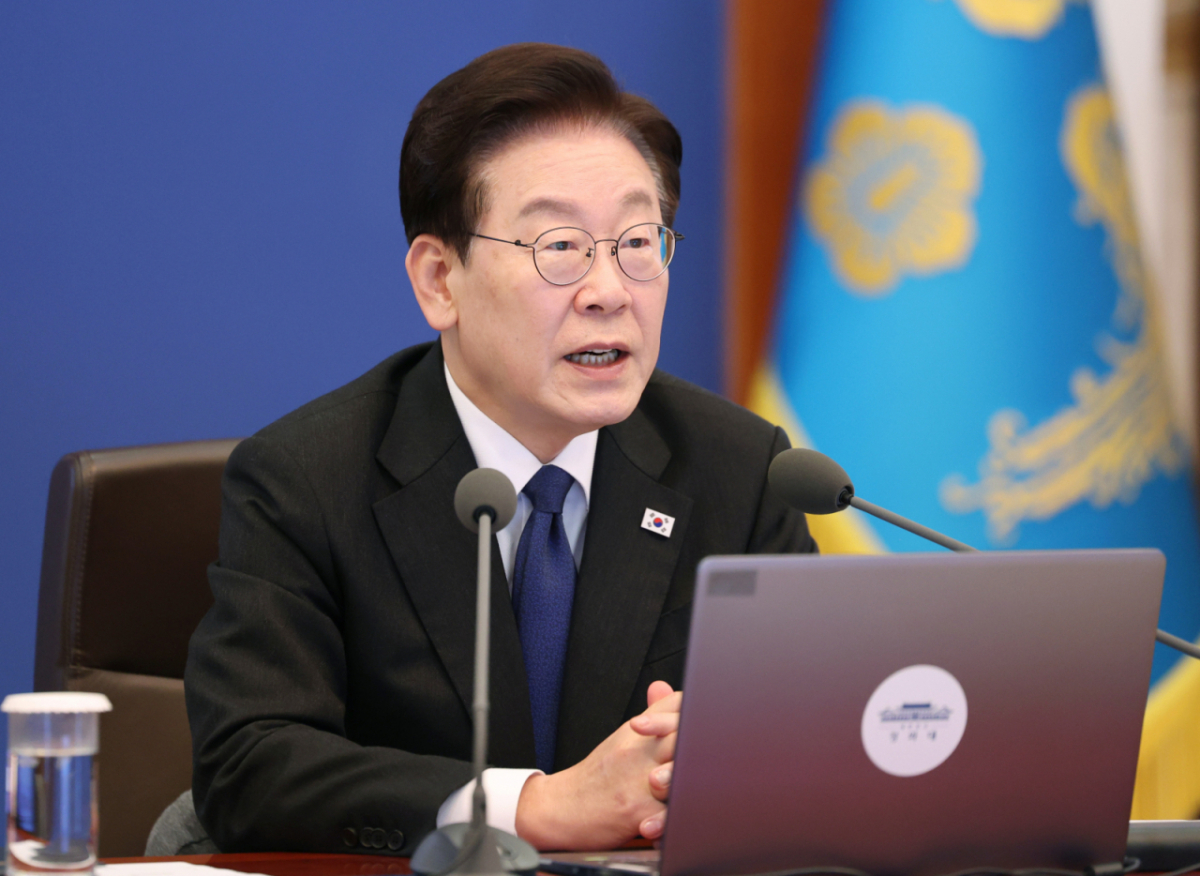
The government held a roundtable chaired by President Lee Jae-myung to discuss the direction of capital market policy. Experts proposed strengthening the effectiveness of disclosing low-PBR (price-to-book ratio) companies and improving stewardship codes to promote corporate valuation re-rating. They emphasized that while KOSDAQ market segmentation is expected to bring benefits, concerns exist over the stigma effect on lower-segment companies, making operational management critical; they also stressed the need for ISA (Individual Savings Account) system improvements to expand long-term supply and demand.
The government held a 'Capital Market Policy Roundtable' chaired by President Lee on the 13th. Under the theme "A Trusted Capital Market: Asking Questions in the Field and Finding Answers," experts discussed policy directions for upgrading Korea's capital market from corporate, market, and supply-demand perspectives.
Attendees included Vice Prime Minister and Minister of Economy and Finance Lee Hyoung-il, Financial Services Commission Chairman Lee Eui-woon, Minister of SMEs and Startups Lee So-young, Governor of the Financial Supervisory Service Lee Chan-jin, and Korea Exchange Chairman Chung Eun-bo from government and related agencies. From the National Assembly, Yu Dong-su, Chair of the Political Affairs Committee; Park Sang-hyuk, Vice Chair of the Political Affairs Committee; and Oh Ki-hyung, Chair of the Democratic Party of Korea's K-Capital Market Special Committee, were present. In addition, representatives from the financial investment industry, institutional investors, academia, and KOSDAQ-listed companies participated.
Three experts presented on key issues in the corporate, market, and supply-demand sectors. First, from the corporate perspective, Lee Hyo-seop, a researcher at the Korea Capital Market Institute, addressed "Expanding Shareholder-Centric Management and Enhancing Corporate Valuation." He emphasized the need to spread corporate valuation re-rating across the entire market, noting that the KOSPI PBR stood at 1.74 times as of last month, still low compared to major countries, and that there are 560 companies on the KOSPI and 877 on the KOSDAQ with a PBR below 1.
Accordingly, he proposed strengthening the effectiveness of disclosing lists of low-PBR companies and enhancing the effectiveness of stewardship codes to strengthen institutional investor activities. Regarding the debate over mandatory tender offer purchase ratios, he stated that a phased approach is needed, comprehensively considering the need for shareholder protection and concerns about the contraction of the M&A (mergers and acquisitions) market.
From the market perspective, Im Hyeong-jun, a researcher at the Korea Institute for Financial Studies, presented on "Redesigning the Venture Ecosystem and KOSDAQ." Researcher Im assessed that market trust has declined and long-term institutional investor investment has contracted due to the KOSDAQ market's concentration in IPOs (initial public offerings) for VC (venture capital) fund recovery, issues with early listings, and delays in delisting insolvent or low-performing companies. He explained that to create a "many births, many deaths" environment where excellent high-growth companies thrive and insolvent companies are delisted, it is necessary to diversify recovery paths through activating M&A and secondary markets, and to induce flexible yet responsible market entry.
Regarding the KOSDAQ segment system, he emphasized that operation is key, as expectations of attracting new long-term institutional investor funds to the KOSDAQ market and reducing incentives for representative companies to uplist to the KOSPI coexist with concerns over the stigma effect on lower-segment companies. The KOSDAQ segment system classifies KOSDAQ-listed companies into Select (representative companies), Standard (general companies), and Management Group (insolvent companies), aiming to induce voluntary strengthening of disclosures, expansion of shareholder returns, and improvement of corporate governance by companies seeking to move up to higher segments.
From the supply-demand perspective, Kim Hak-gyun, Head of Research at Shin Young Securities, explained that to expand household fund inflows into the stock market, efforts must continue to enhance the market's own attractiveness, such as improving low dividend payout ratios and managing listed stocks. He stated that system improvements are needed to build a long-term supply-demand base, including cultivating ISA as a lifelong asset management platform for citizens, activating public funds, and expanding long-term and systematic investment education.
In the free discussion, attendees exchanged views on capital market policies and issues such as the mandatory tender offer system, activating M&A of low-performing companies through bear hugs, strengthening delisting, and KOSDAQ segment separation.
The government plans to design and promote capital market policies that resonate with the public by reflecting the diverse field opinions presented at the roundtable.

 in STOCK
