

"If an AI interviewer rejects a candidate due to their age, then the AI has discriminated against older individuals, violating 'inclusivity.'"
"Since company personnel accepted and used the AI evaluation as is, this constitutes a violation of 'autonomy.'"
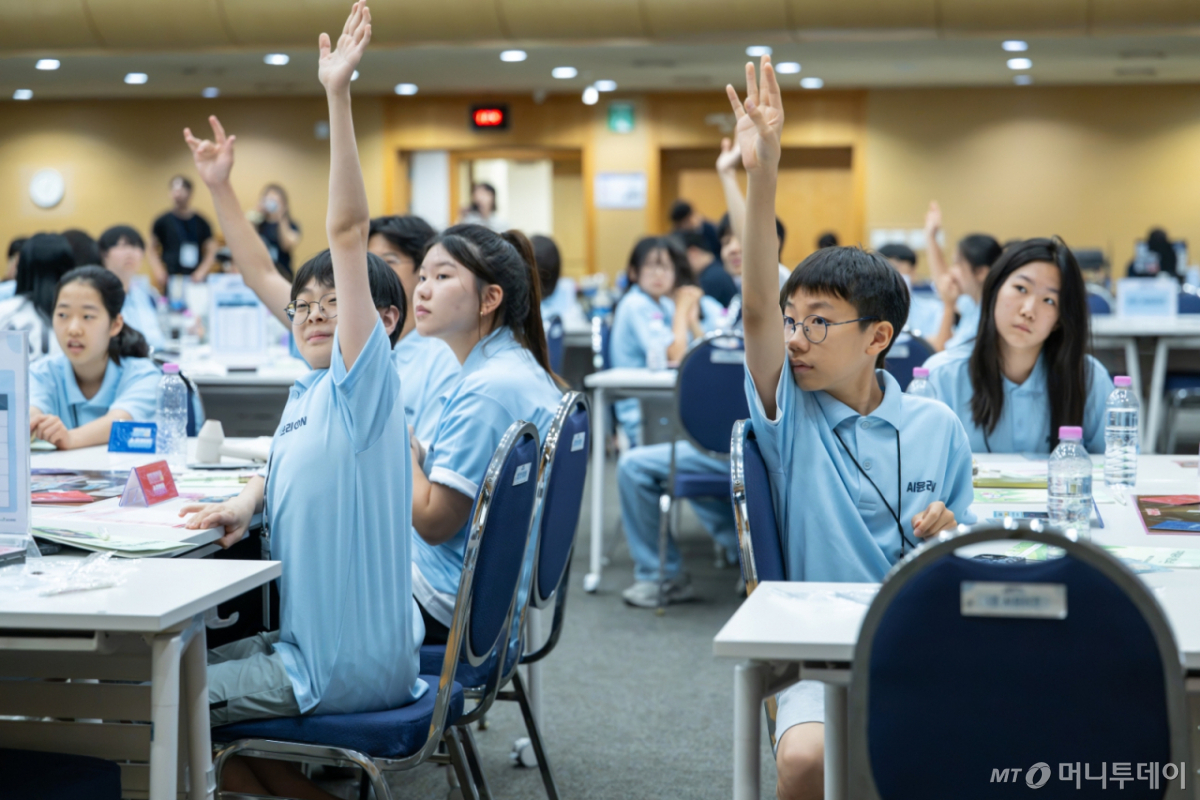
Seventy-nine middle school students, all wearing matching sky-blue T-shirts emblazoned with "AI Ethics ON," engaged in vigorous debate despite the scorching heat, with daytime temperatures reaching 33 degrees Celsius. This was the scene on July 30 at the Centennial Hall of Sookmyung Women's University, where the "2026 First Youth Debate Camp: AI Ethics ON" took place under the joint organization of the Radio and Broadcasting Media Committee, the Korea Institute for Information Technology Advancement (NIA), KT, and the Kyobo Education Foundation.
Held under the slogan "Turn on your thinking, learn responsibility," the event ran tightly scheduled from 10 a.m. to 5:30 p.m., yet participating students remained fully engaged with bright eyes throughout activities ranging from ice-breaking games and board games to Golden Bell quizzes and debates.
Before the session began, the moderator outlined key ethical virtues for AI usage—such as inclusivity, accountability, and autonomy—through a foundational AI theory lecture. The children absorbed knowledge like sponges and promptly offered sharp, well-reasoned answers to applied questions.
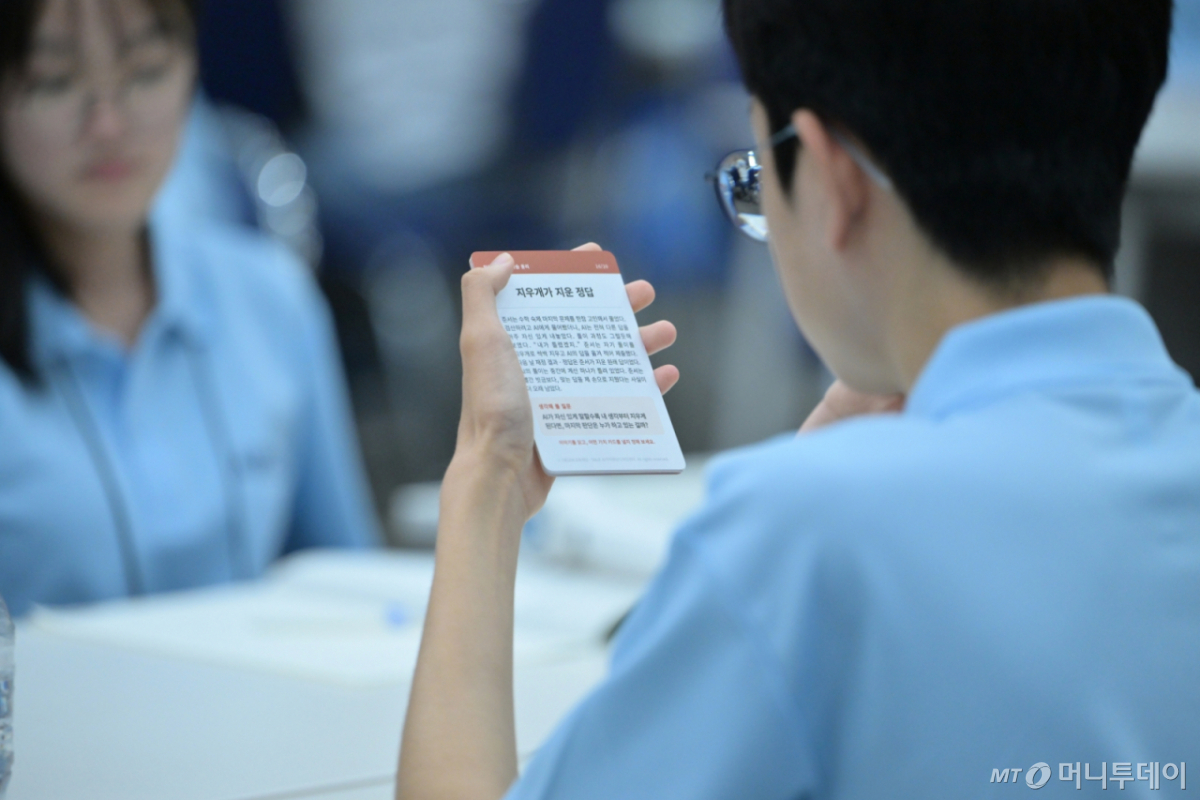
Even a seemingly light question about whether to install AI-powered CCTV cameras in schools elicited profound reflections. "A child trying to help a friend who fell could be misidentified as an aggressor," one student argued, adding that "AI judgments may not always be accurate, so I oppose it." Another noted, "There are risks of hacking and security breaches with AI CCTV systems," while a third countered, "I support it because it would make schools safer from bullying." The students, often described as 'AI natives,' articulated their thoughts with remarkable logic.
Generative AI pioneer OpenAI launched ChatGPT in 2023. The attendees, aged 14 to 16, have grown up enjoying the convenience of AI since elementary school.
NIA's "Debate Camp" gathers 79 middle school students... Reflecting deep interest and concern over proper AI utilization
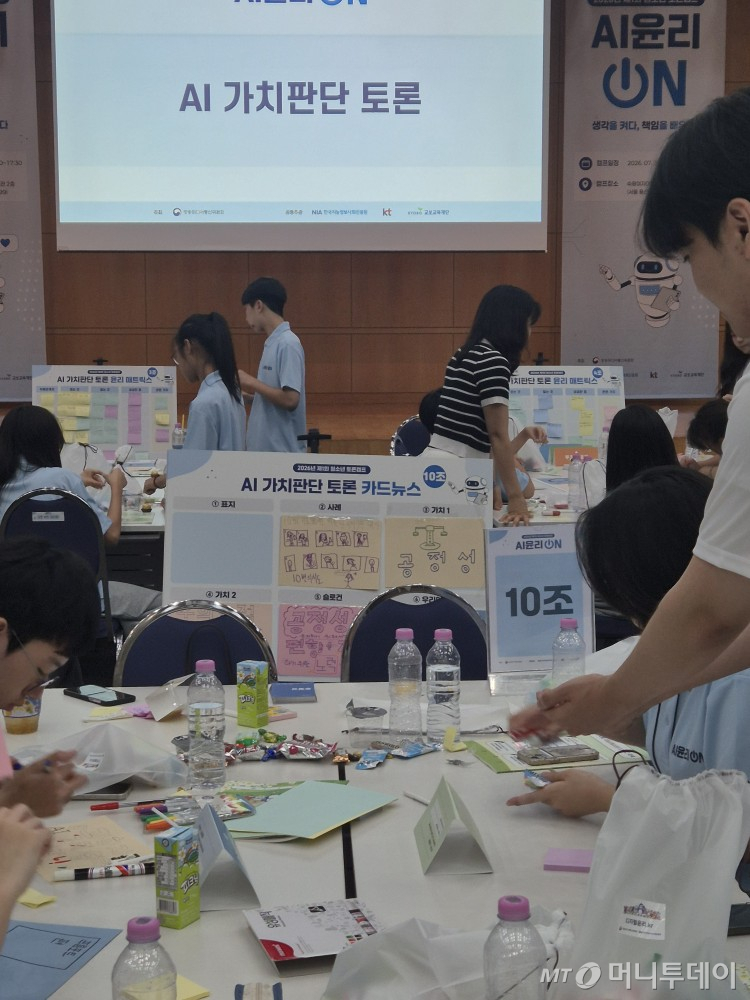
These students demonstrated greater interest in their daily experiences with AI and in making sound judgments about its use and value than any previous generation. This concern was evident during a 90-minute debate conducted via an analog method: exchanging handwritten opinions on sticky notes without using smartphones. Divided into 13 groups of six, the students engaged in deep reflection on given cases and exchanged diverse viewpoints.
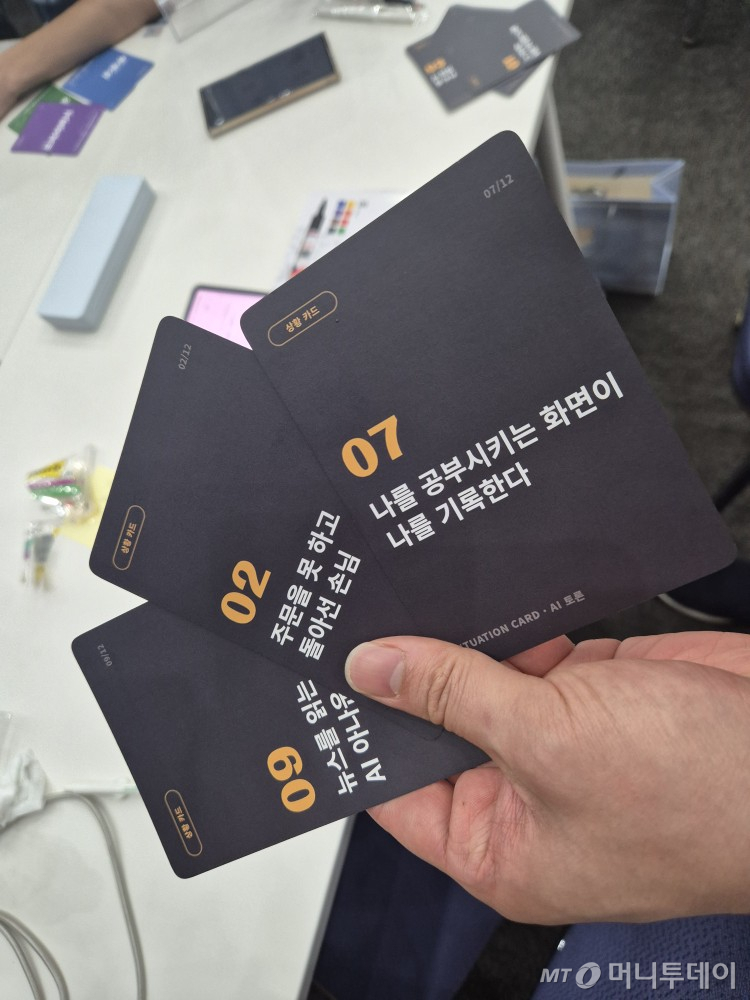
After reviewing both the conveniences AI has brought to daily life—such as autonomous vehicles—and misuse cases like ghostwriting and cheating on exams via news reports, the students then constructed hypothetical scenarios involving potential AI-related issues. From the perspectives of affected parties and stakeholders, they discussed what would be gained, lost, questioned, or compromised in terms of values, before presenting their collective opinions.
In Group 13, composed entirely of third-year middle school students, participants debated a case where parents and teachers pressured a fictional character named "Eunho" to pursue a specific career path based on an AI aptitude test result. The students concluded that by relying solely on documents generated by AI, both teachers and parents had exerted "human control" over Eunho, while Eunho himself had become overly "dependent" on AI. They further determined that Eunho lost his "autonomy," and the teacher lost her "professionalism." Consequently, they asserted, "Even when using AI, we must make the final decisions ourselves."
Group 12, debating the same topic, concluded that AI not only exerted "human control" but also infringed upon "privacy" by exposing Eunho's personal information. They reached the conclusion: "AI is merely a tool designed to assist; individuals must judge and choose for themselves."
Other cases discussed included scenarios where photos edited with AI won a contest, and instances where truth was distorted because no one read the original text of a book, relying solely on AI summarization features. Based on these cases, the students drafted declarations such as "Use AI appropriately for its intended purpose, and if used, disclose it honestly," and "Before trusting AI, verify information independently and maintain autonomy." The depth of reflection displayed by these middle schoolers was so profound that officials and parents present at the event applauded the AI ethics declaration they produced.
Youth Camp on "AI Ethics ON" says "I want to participate"... This year's competition ratio reached 3-to-1
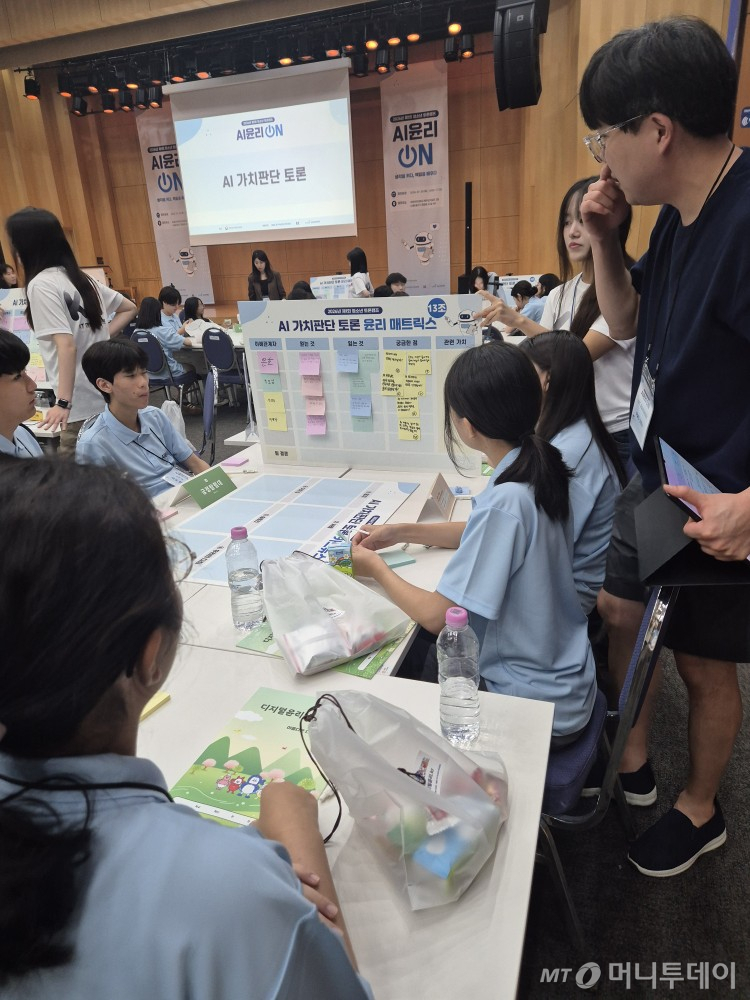
The "AI Ethics ON" Youth Camp was launched last year. It garnered significant attention from its first year, and this year, 216 students applied from across the nation, resulting in a competition ratio of 3-to-1. This underscores growing concerns among teenagers and parents about AI ethics amid the rapid spread of generative AI.
Choi Hwan, a second-year student at Geowon Middle School in Songpa-gu, Seoul, said, "I applied last year but was not selected; I'm happy to be chosen this time." He added, "I've always enjoyed coding and frequently use Claude, but I realized that using AI in major competitions could become problematic."
Ki Yoon-soo, a second-year student at Seoul Yeom Middle School in Mapo-gu, Seoul, attended alongside a friend from his kindergarten. He remarked, "I newly learned about 'deep voice' technology that can alter voices using AI." He continued, "I never thought I could create realistic photos with generative AI to enter contests; it would be better to establish clear guidelines for AI usage."
Joo Cheol-jin, a teacher at the Seoul National University of Education's AI Value Judgment Design Center who led the debate, emphasized, "Today's students are growing up alongside AI. If we do not help them establish their values now, serious problems could arise in five to ten years." He stressed, "Since children are exposed to AI at an early age, it is best to begin AI ethics education as soon as possible."

 in TECH


