

"Among these, which one is a photo taken by a person? The answer is No. 4: 'None'."
"Whoa..."
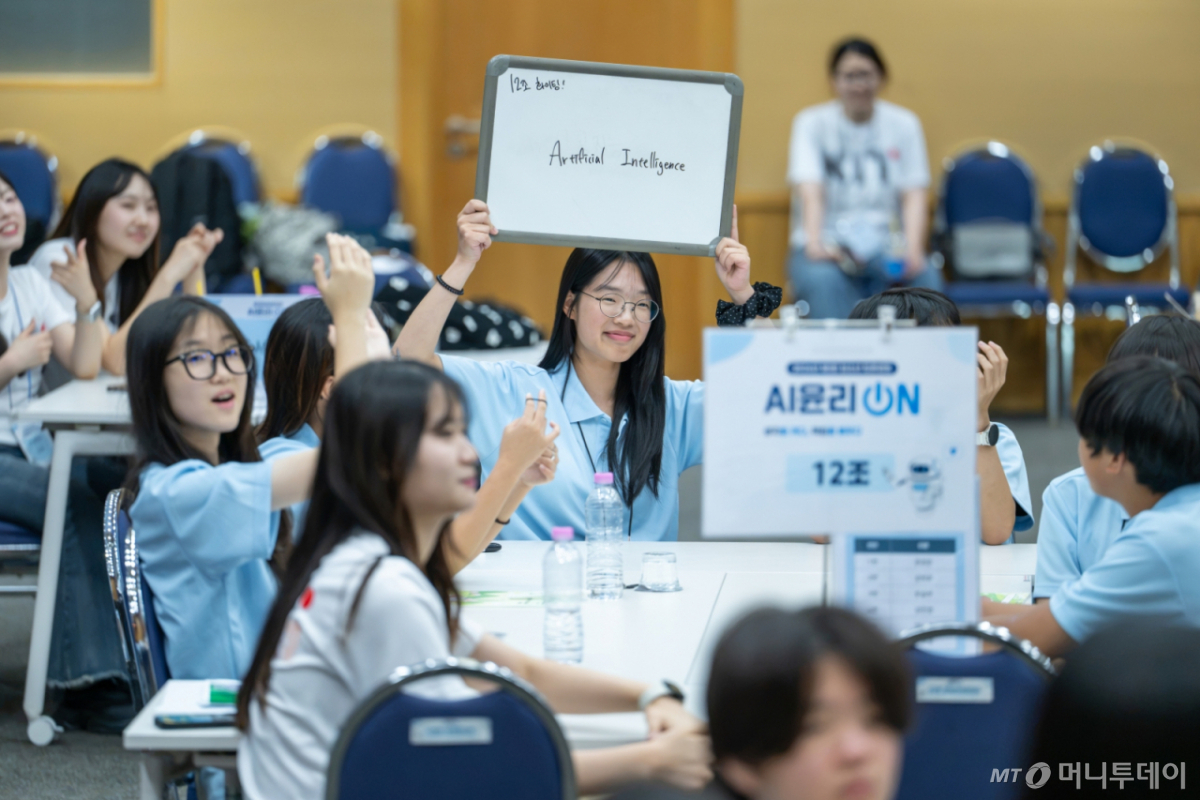
On July 30 at the "2026 First Youth Debate Camp AI Ethics ON," four beautiful landscape photos featuring cherry blossom scenery, green fields, and sunset skies—images that are visually soothing—were displayed on screen. Although they appeared natural, the audience was stirred upon learning that all were images generated by AI.
AI image generation features that once produced awkward results, such as six-fingered hands or twisted joints, have become so sophisticated in just one to two years that distinguishing them from real photos is now difficult. As AI penetrates daily life further, concerns are growing over the misuse of advanced AI technologies, including deepfakes and misinformation.
According to an AI image and video recognition survey conducted by Korea Research last December among 1,000 men and women aged 18 and older nationwide, 81% of respondents described the spread of AI images and videos as "a natural change driven by the trends of the times." However, only 15% responded positively, while negative perceptions reached a much higher 32%.
Thus, many people are quickly accepting AI into their lives while simultaneously worrying about its misuse.
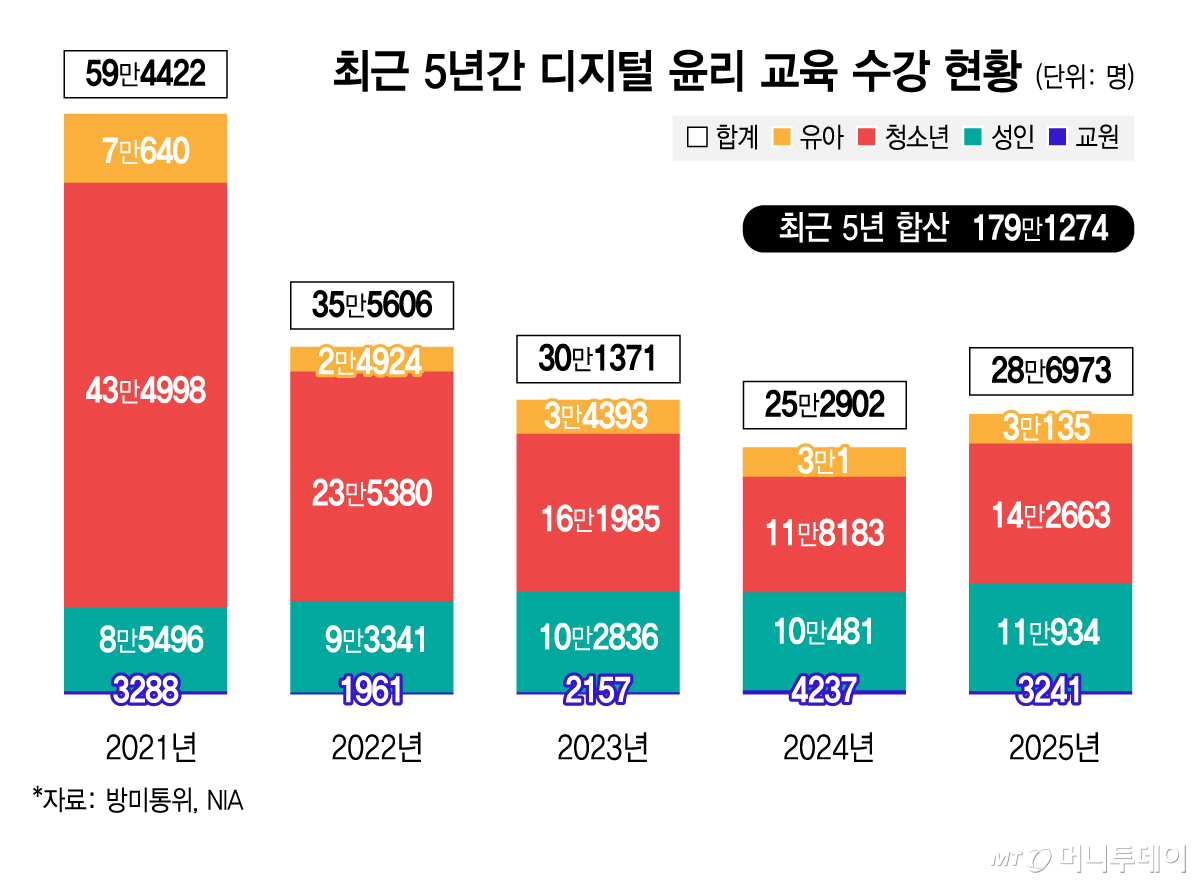
In response, the Ministry of Culture, Sports and Tourism (MCST) and the Korea Intelligence Defense Command Promotion Agency (NIA) have been implementing digital ethics training since 2009. Results from the "Cyber Violence Survey," launched in 2013, are also incorporated into the program, allowing it to evolve further. Over the past five years (2021–2025), a total of 1,791,274 people completed NIA's digital ethics training, including approximately 1.09 million teenagers and about 490,000 adults.
While NIA's training has primarily targeted the digital- and AI-native generation of teenagers in recent years, it now plans to expand its target audience to include adults and increase the number of participants.
Choi Moon-sil, Director of NIA's Ji Teol-po-yong (Head), stated, "We internally set a goal to provide AI ethics training to 170,000 people this year, but based on current trends, we expect to exceed 200,000." She added, "For the first time this year, we have expanded our target to include public institutions. Currently, training is being conducted at 30 public institutions, including Incheon Airport Corporation and the Small and Medium Business Market Promotion Corporation."
She further noted, "In the future, we plan to further expand AI ethics training for the elderly and parents. Recognizing the limitations of lecture-style education alone, we have increased experiential programs such as debates, which are receiving positive responses."

 in TECH

