

SK Telecom posted strong results for the second quarter this year, overcoming subscriber churn and one-time costs triggered by last year's SIM card information leak. The AI data center business also supported performance improvement with growth of nearly double that of the previous period.
On the 5th, SK Telecom announced that its consolidated revenue for the second quarter reached 4.3591 trillion won, operating profit stood at 566 billion won, and net income was 466 billion won. Revenue increased by 0.5% compared to the same period last year. Operating profit rose by 67.3% year-on-year and 5.3% quarter-on-quarter.
The improvement in performance was bolstered by base effects from subscriber churn and one-time costs caused by last year's SIM card information leak, as well as the recovery of profitability in the telecommunications business and growth in the AI sector. Net income surged 459.8% compared to the same period last year.
On a separate basis, revenue was 3.117 trillion won, operating profit reached 427.7 billion won, and net income stood at 310.6 billion won. SK Telecom will implement a quarterly dividend of 830 won per share in the second quarter, following the first quarter.
The most notable part of these results is the AI data center business. Second-quarter revenue from the AI data center reached 136.2 billion won, up 92.5% year-on-year, recording the highest growth rate among SK Telecom's businesses.
As demand for high-performance computing infrastructure rapidly increases due to the spread of generative AI, SK Telecom established a dedicated subsidiary for its AI data center business, 'SK Hyper,' last month. The strategy is to proactively secure key infrastructure such as land and power, attract global customers, and accelerate business execution. SK Telecom set an initial goal to gradually build a total of 5 gigawatts (GW) of AI data centers by 2029 centered on SK Hyper.
The telecommunications business also continued its recovery trend. The company explained that it achieved net subscriber growth even in a stable market environment through a customer lifetime value (CLV)-centered strategy and efficient marketing. In July, the company launched an integrated 5G·LTE tariff plan to reorganize its tariff system and improve customer usage experience and service accessibility.
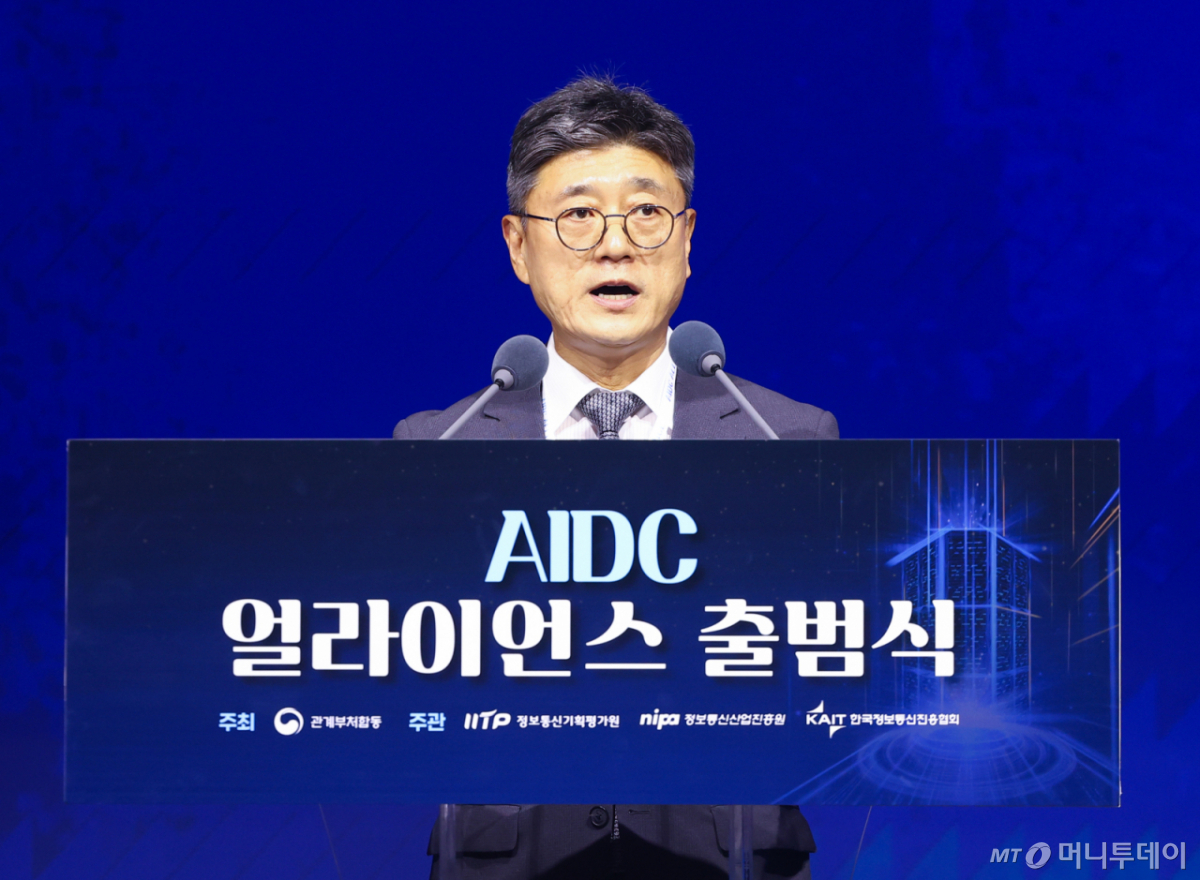
Park Jong-seok, SK Telecom's Chief Financial Officer (CFO), stated, "In the first half of the year, we solidified our foundation based on stable revenue from the telecommunications business while laying the groundwork for rapid expansion of the AI data center business." He added, "We will do our best to ensure that SK Telecom plays a leading role in South Korea's leap as an Asian AI infrastructure hub."

 in TECH
