

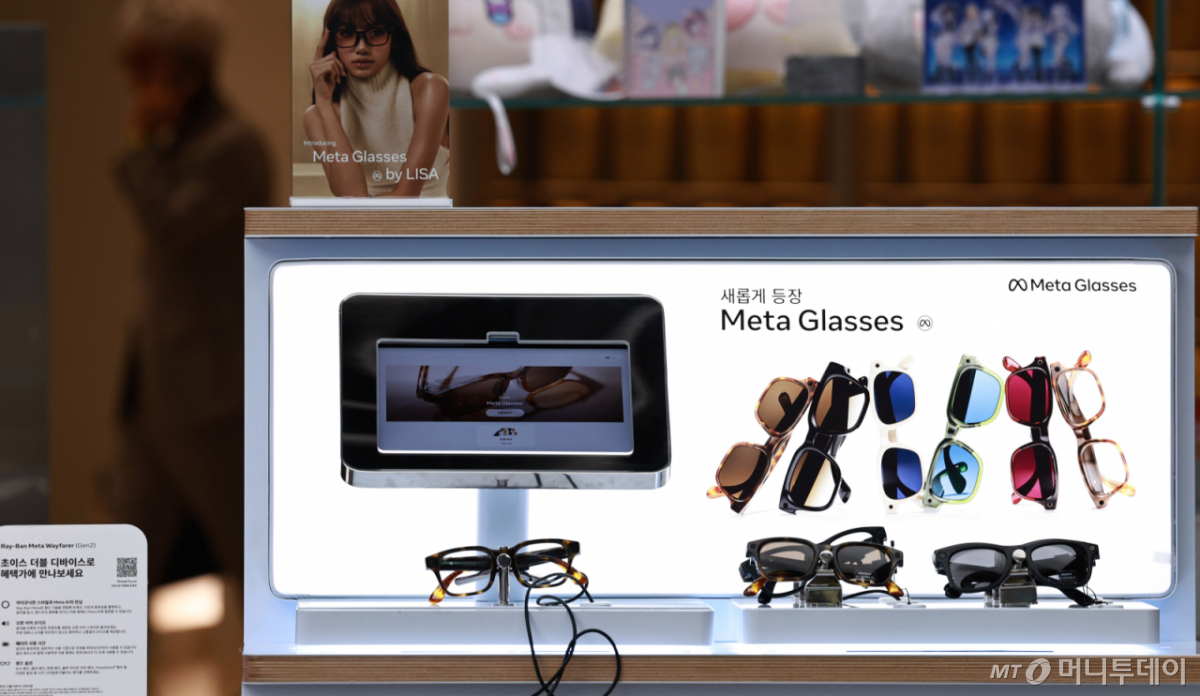
As AI glasses products have successively entered the market and become easily accessible to anyone, concerns over exam cheating and privacy violations through AI have grown. There is concern that the positive functions of AI glasses, such as assistance for people with disabilities or interpretation, may be overshadowed by highly publicized side effects. Major AI glasses manufacturers preparing for domestic launch next month are pouring technological resources into dispelling such concerns.
According to foreign media and IT (information technology) industry sources on the 16th, the current AI glasses market features various products from manufacturers including Meta, Chinese-based Rokid, Xiaomi, and Xreal. These products vary in price from 300,000 won to 1 million won, depending on factors such as the presence of a monitor and performance. A used goods trading platform in China also offers an AI glasses rental service. The daily rental fee is 40 to 60 yuan, equivalent to approximately 6 to 12 dollars when converted. While it is difficult to say that AI glasses have become mainstream, this means anyone can try them without spending a large amount of money.
For this reason, concerns over "side effects" such as exam cheating and privacy violations are significant. Lee Jung-heon, a member of the Democratic Party of Korea, directly demonstrated illegal filming using AI glasses with his aides during the National Assembly's Science, ICT and Broadcasting Committee's national audit last month. The office of Rep. Lee revealed that an LED (light-emitting diode) blocking sticker costing 2,000 won, available for purchase at online shopping malls, can be attached to AI glasses to easily disable the indicator light that notifies whether filming is taking place.
Chinese-based foreign media Rest of World reported in March this year on the state of AI glasses usage in China, stating, "Users operated the glasses via a ring-shaped remote control to solve answers to English and math problems," and "In regular school exams, most teachers cannot recognize these glasses."
AI glasses manufacturers are also closely monitoring concerns over the misuse of their products. This is because, as the AI glasses market forms, side effects may be highlighted more than positive functions such as activity support for people with disabilities or foreign language interpretation, potentially branding the product with a "scarlet letter."
Samsung Electronics, which will launch its first AI glasses, "Intelligent Eyewear," next month, stated that it has designed the product to clearly indicate whether the filming function is active and to allow users to directly control how their personal information and data are used, taking such side effects into consideration. In particular, a privacy protection mechanism for bystanders was established that stops the filming function if external LEDs that turn on during photo or video recording are obscured or fail to operate normally. The product is restricted to users aged 18 and older. Meta has also launched AI glasses without a camera to avoid being labeled as a "covert photography" tool.
A Samsung Electronics official explained, "Intelligent Eyewear is a product designed to make daily life a bit more convenient rather than for use in situations like exams," adding, "The functions were designed considering concerns over misuse such as privacy violations."

 in TECH
