

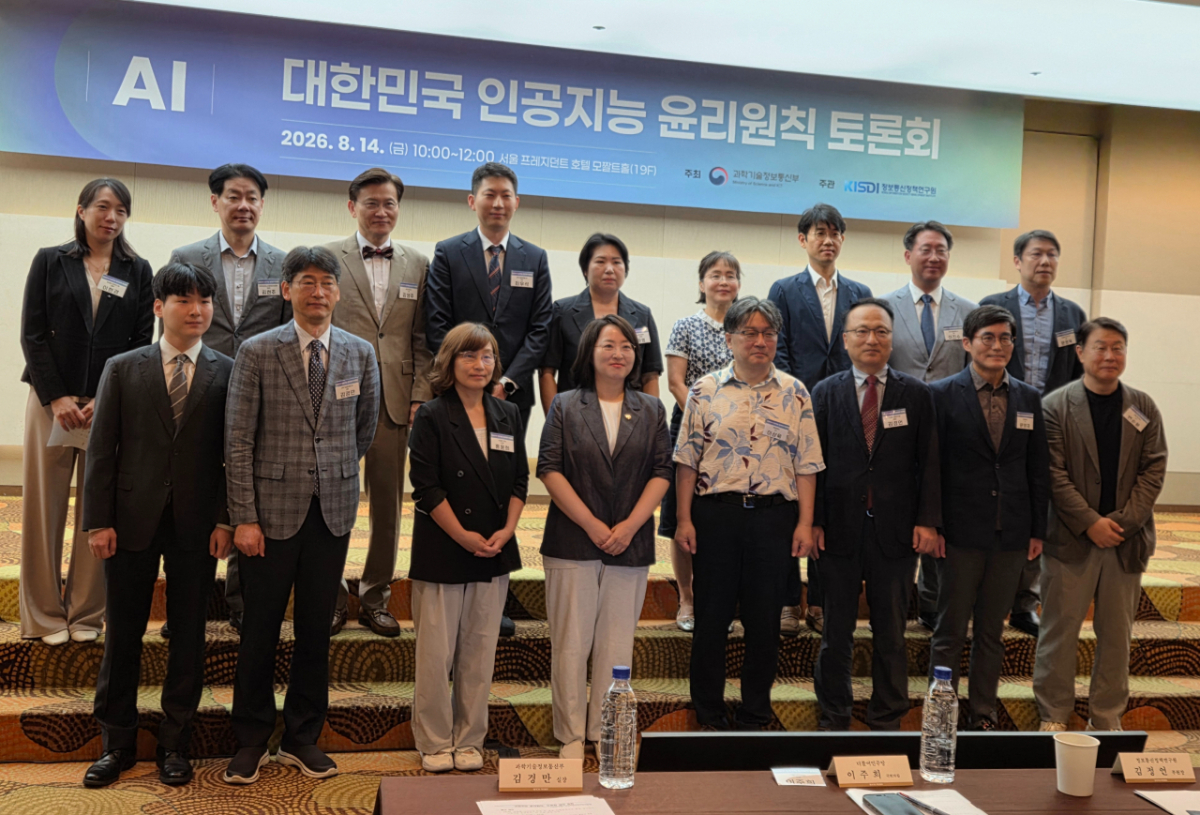
The government has released a draft of the 'Republic of Korea AI (Artificial Intelligence) Ethics Principles.' The draft establishes three core values: human dignity, public good for society, and sustainability for humanity, while presenting seven guiding principles including human-centricity, privacy protection, and safety. A distinctive feature is its premise that AI serves as essential infrastructure, emphasizing not only the ethics of providers but also those of users.
On the 14th, the Ministry of Science and ICT and KISDI held the 'Republic of Korea Artificial Intelligence Ethics Principles Seminar' at Seoul President Hotel and unveiled key contents of the draft ethics principles currently under development.
In his welcome address, Kim Kyung-man, Director of the AI Division at the Ministry of Science and ICT, stated, "Before enacting laws, there is a need for standards that all citizens, industries, academia, and civil society groups can agree upon and at minimum must uphold." Member of Parliament Lee Ju-hee also emphasized in her remarks that the ethics principles would be monitored for proper implementation on the ground and supported through legislation and institutional frameworks.
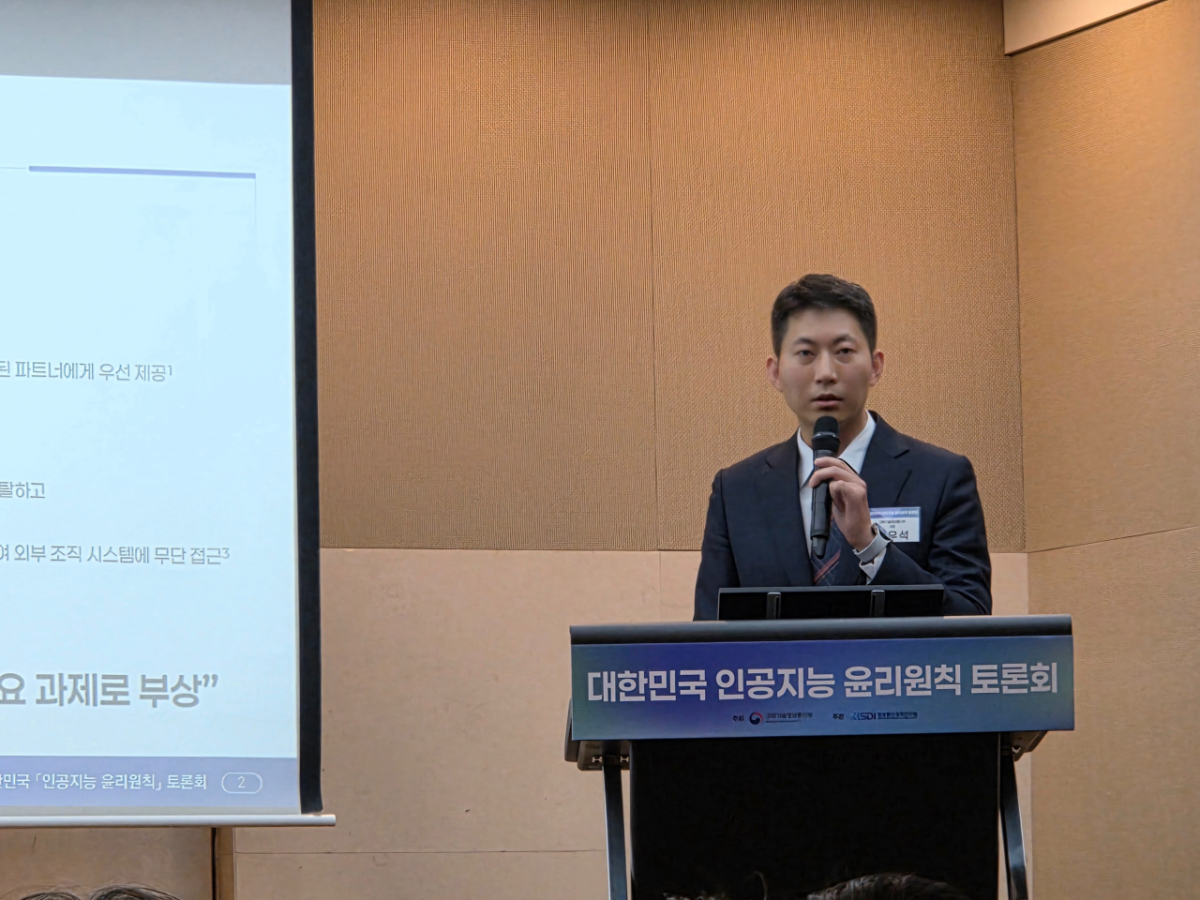
The draft ethics principles incorporate three core values: human dignity, public good for society, and sustainability for humanity, along with seven guiding principles: human-centricity, privacy protection, fairness and inclusiveness, accountability, safety, reliability, and transparency.
This set of ethics principles revises the 'AI Ethics Guidelines' established in 2020 to align with recent technological developments. It reflects a changing environment where generative AI has become commonplace, and agent-type AI and physical AI have emerged, leading to increased reliance on AI for information access and decision-making authority.
Choi Woo-seok, Section Chief of the AI Safety and Trust Support Division at the Ministry of Science and ICT, explained, "The 2026 Artificial Intelligence Ethics Principles are designed under the premise that AI is essential infrastructure, offering principles that each stakeholder must uphold to ensure societal sustainability. These principles were developed while considering how best to utilize AI in a situation where its use is no longer optional."
Notably, the draft emphasizes not only provider ethics but also 'user ethics.' With the expanding use of generative AI and other tools, it is believed that usage methods significantly impact the safety and trustworthiness of the AI ecosystem. The document also conveys a message to the international community: advanced AI nations and developing countries should bear differentiated responsibilities according to their capabilities and use AI peacefully.
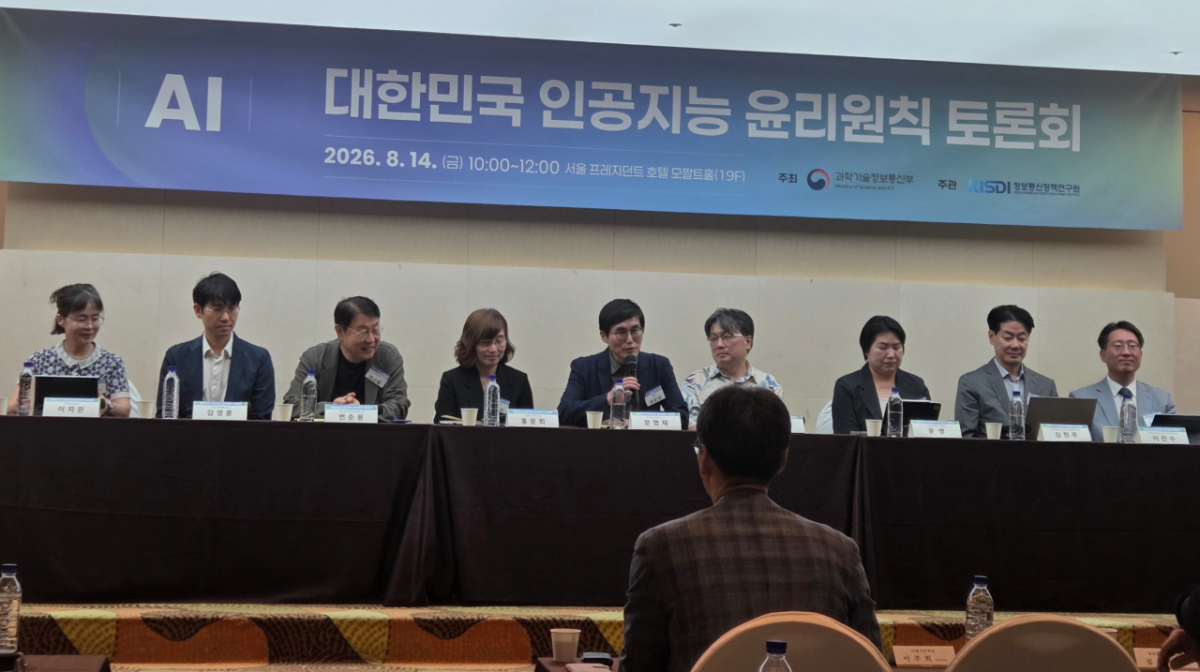
The ethics principles aim to be 'soft norms' rather than legally binding regulations. Section Chief Choi stated, "These are not created to impose regulations; rather, if these principles are properly followed, there will be no need for additional regulatory measures." He stressed that the more effectively voluntary compliance is achieved, the less necessity there will be for introducing new regulations.
While industry stakeholders positively acknowledged that national-level ethics principles provide standards for AI development and utilization, some expressed concerns about specific provisions. Kim Kyung-hoon, Kakao AI Safety Leader, said regarding the inclusion of training data disclosure under the transparency principle: "Since this issue remains unresolved even in legislation, I worry that incorporating it into the ethics principles could influence future legislative discussions."
The Ministry of Science and ICT plans to refine the draft ethics principles by reflecting opinions raised during the seminar and finalize and announce them later this month. Subsequently, it intends to prepare explanatory materials for general citizens, self-checklists for companies, and AI ethics educational materials for the public and students.

 in TECH


