

As vehicles have evolved like smartphones, the amount of location and driving data collected by cars has surged, yet the personal information consent system remains designed around car owners. While a car owner may have consented to data collection, a driver who is not the car owner has effectively not consented. Voices calling for the revision of relevant regulations are growing louder.
Connected cars are vehicles connected to networks such as the internet to exchange data. They offer functions including remote control, voice recognition, AI (artificial intelligence) services, and real-time navigation. Since a vehicle operates like a giant smartphone, it collects and utilizes user data. Each original equipment manufacturer (OEM) establishes its own personal information policy and terms of use to obtain user consent.
The problem arises when the contract holder (car owner) differs from the actual driver. The car owner has consented to data collection and utilization, but the data collected comes from the actual driver, creating a discrepancy. This applies to cases where spouses or family members share the same vehicle or when services such as designated driving or valet parking are used.
Connected cars are rapidly spreading. According to the Ministry of Science and ICT's 'Status of Wireless Communication Service Subscriptions,' the total number of vehicle control circuits reached 11.04 million in June. This means that over 11 million vehicles were connected to internet lines. This represents a 10.1% increase from the same month last year (10.03 million) and a 48.1% increase from June 2023 (7.46 million). Considering that the total number of registered vehicles was 26.64 million as of May, more than 40% are connected cars. This is why there are calls to quickly resolve the 'privacy blind spot' in connected cars.
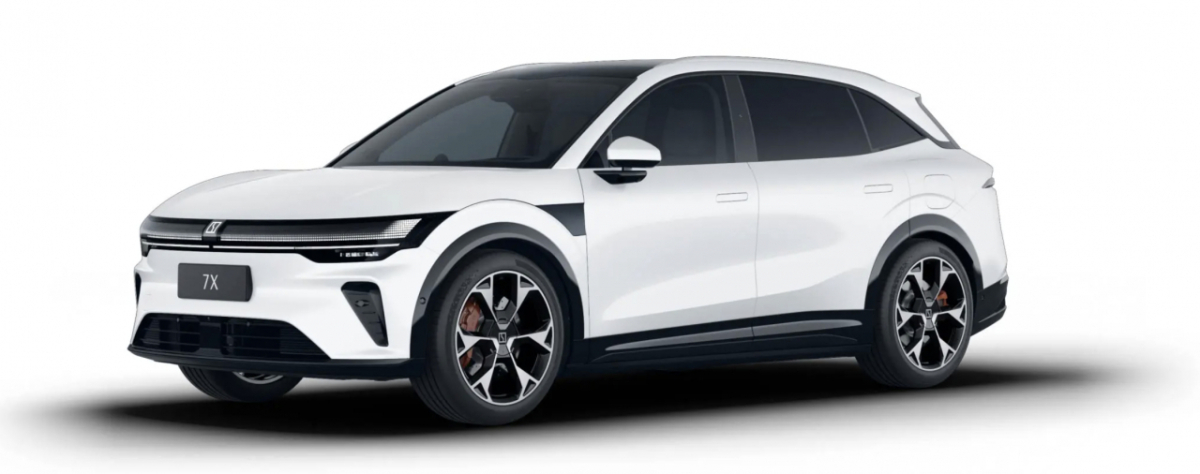
Market concerns are pouring in for Chinese electric vehicle brand Zeekr (Zeekr), which will enter the Korean market starting with the launch of the 'Zeekr 7X' model in the second half of the year. This is because it provides all mobile data, including real-time vehicle location, parking location, driving routes, and mileage, to its headquarters in China and its parent company, Geely Group. A spokesperson for the Personal Information Protection Commission said regarding Zeekr Korea's personal information policy, "I question whether this clause actually applies."
Domestic automakers such as Hyundai Motor, Kia, and Genesis have codified this approach in their personal information policies and terms of use. They acknowledged reality by stating, "When multiple drivers jointly use the same vehicle and terminal device for services, it is difficult to clearly distinguish whose driving and location data are being collected." They further noted, "Collected and generated data are estimated based on the driver selected at the terminal device; in the absence of a driver selection, they are estimated as belonging to the registered member."
Mercedes-Benz stipulates that when providing vehicles to other users, it must inform them of the fact that digital service-related information will be collected and how to deactivate such services. To prevent abuse by other vehicle users, there is also an obligation to disconnect third-party accounts or deactivate digital services. In such cases, the car owner is advised to check whether digital service-related functions are activated before driving.

 in TECH
