

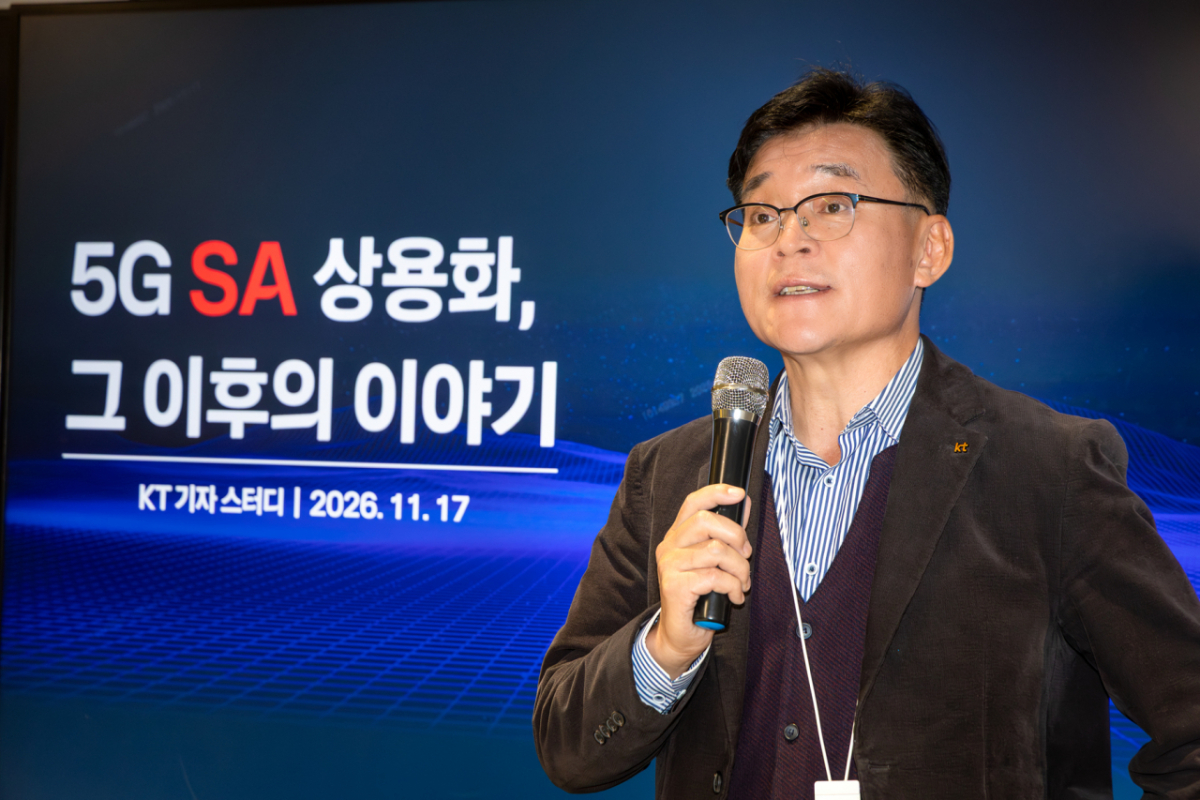
KT emphasized its lead over competitors by leveraging the experience gained from operating a 5G SA (Standalone) commercial network for five years, a feat unique among domestic telecom carriers. As SK Telecom and LG Uplus push to launch SA commercialization in December, KT outlined its vision of seizing the initiative as a first mover.
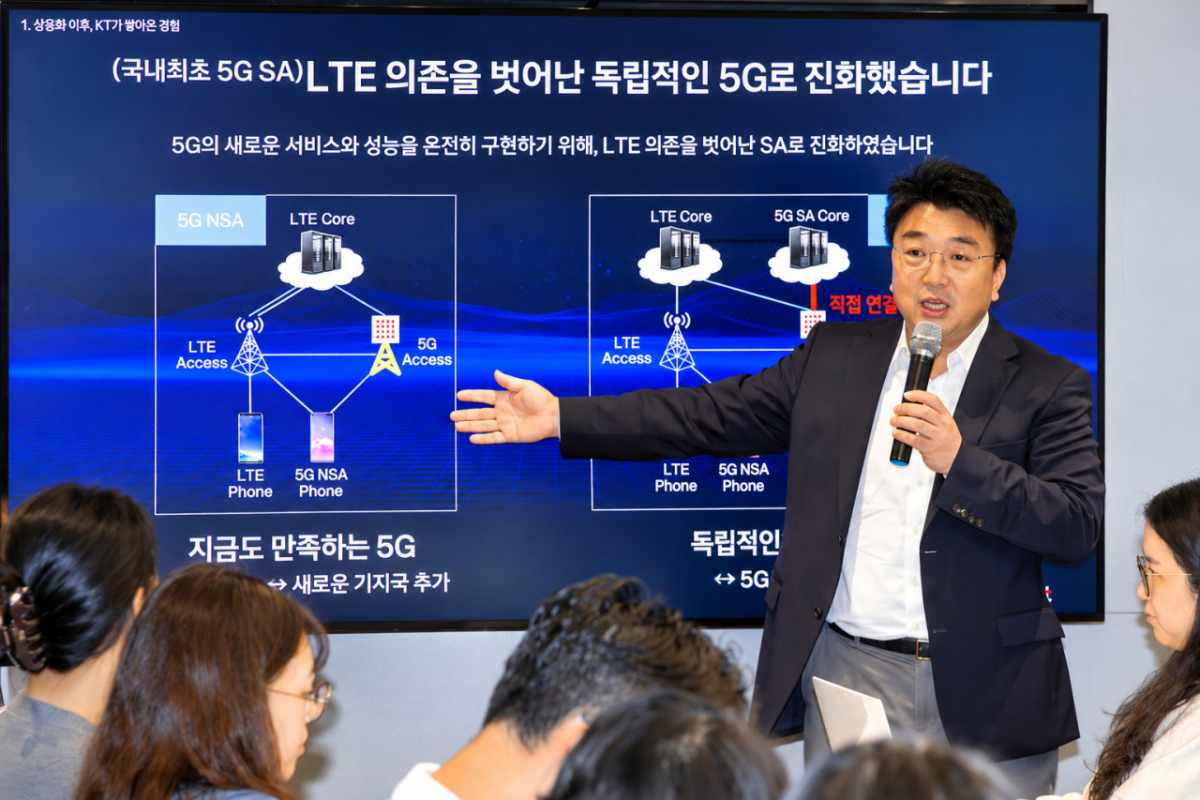
On the 17th, KT held a press study at the Seoul Jongno-gu KT Gwanghwamun Building to reveal its 5G SA operational results and future plans. Unlike NSA (Non-Standalone), which shares the LTE network, 5G SA is a method of providing services using only 5G base stations and core networks. It is also a foundational technology for implementing network slicing, which divides a single communication network by purpose to manage quality.
Park Soon-sun, Senior Executive Vice President in charge of Network Strategy at KT's Network Division, stated, "For KT, SA is not a technology we need to try in the future, but one that has been operated on commercial networks for five years and evaluated for its value as a customer service." She added, "I believe competitors have found it somewhat easier because of us." While only KT had been pushing for SA until now, making it difficult to secure cooperation from device manufacturers and leading to many trial-and-error experiences, the company stated that it has accumulated know-how by resolving these issues.
After commercializing SA for the first time in Korea in July 2021, KT introduced VoNR (Voice over New Radio) in 2024, which processes voice calls on the 5G network. This ensures that 5G data speeds are maintained during calls without switching to LTE. As of September this year, there are approximately 8.2 million SA-supported devices and about 5.4 million VoNR-supported devices across 32 models. Over five years, KT has applied 47 specialized technologies to the SA network in the fields of devices, wireless, and core networks. Kim Il-hwan, Head of the Next-Generation Technology Team at KT's Network Division, said, "Currently, the three major telecom carriers are having extensive discussions to promote SA adoption, and KT is taking the lead in sharing its experience."
KT also emphasized its real-world verification experience using commercial networks in the field of network slicing. This year, KT applied slicing to 25 wireless CCTV cameras and 10 emergency communication devices for the Seoul World Fireworks Festival, as well as 15 CCTV cameras for the Busan Fireworks Festival, ensuring stable transmission of surveillance footage even in crowded situations. In June, the company also completed a verification project linking the work terminals of the Jeonnam Provincial Fire Service to the SA commercial network.
KT is also targeting the enterprise market. Together with Samsung Electronics and Google, KT implemented "app slicing," which connects business apps on smartphones to corporate networks and personal apps to general networks. In business mode, use of YouTube and cameras is restricted, and storage is separated from personal mode. A pilot service will begin at the end of next month. The company is also preparing products that supply dedicated enterprise core networks to compete with 5G Private Networks (e-UMTS).
However, monetization remains a challenge. Team Leader Kim explained, "We approached it from the perspective of realizing a completed 5G rather than focusing on revenue." Senior Executive Vice President Park also acknowledged, "Although we have made significant efforts over five years, there were limitations in appealing with new businesses or differentiated technologies." She added, "Standardization for 6G is progressing in a direction that operates based on 5G SA," and "As the government leads discussions on policies to activate SA, KT wants to play a sufficient role as well."

 in TECH

