

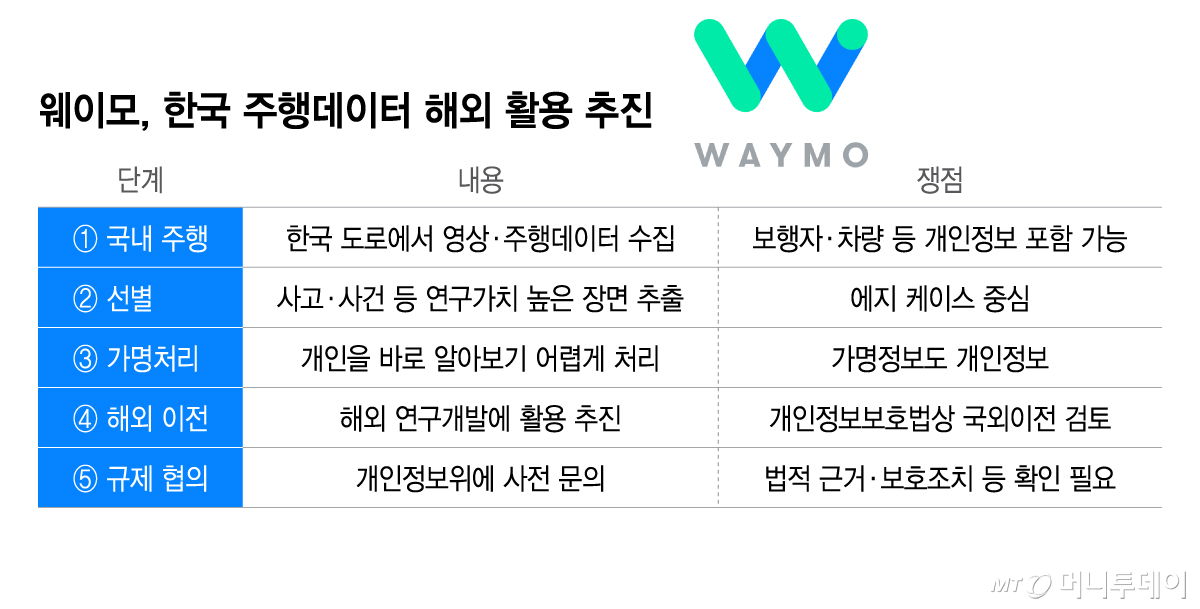
Google's autonomous driving subsidiary Waymo is pursuing a plan to select driving videos collected on Korean roads that have high research and development value, such as those involving accidents or incidents, anonymize them, and use them overseas. It has been confirmed that Waymo sought prior consultation with the Personal Information Protection Commission regarding whether relevant regulations would apply from the early stages of its entry into Korea.
According to related industry sources and the Personal Information Protection Commission on the 24th, Waymo is in discussions with the commission over a plan to select so-called "edge case" videos—footage where autonomous AI hesitated or required additional training—and utilize them for overseas research and development. The proposal involves anonymizing people and vehicles in the videos to make identification difficult before transferring them.
However, anonymization does not eliminate cross-border transfer issues under the Personal Information Protection Act. While anonymized data is processed so that specific individuals cannot be identified without additional information, it still qualifies as personal information unlike anonymous data. A commission official stated, "Anonymization may improve safety, but even anonymized data can raise cross-border transfer issues if taken abroad," adding, "Legality has not yet been confirmed; further review is required."
Waymo established its Korean subsidiary on the 24th of last month but has not yet applied for a temporary operating permit with the Ministry of Land, Infrastructure and Transport. This means Waymo is consulting with authorities on data processing structures before its vehicles begin driving on Korean roads. Since June 18, operators holding temporary permits have been allowed to utilize original driving videos for research and testing purposes. However, domestic use approval and overseas transfer are separate issues, as overseas transfer may require separate legal grounds and protective measures.

 in TECH
