

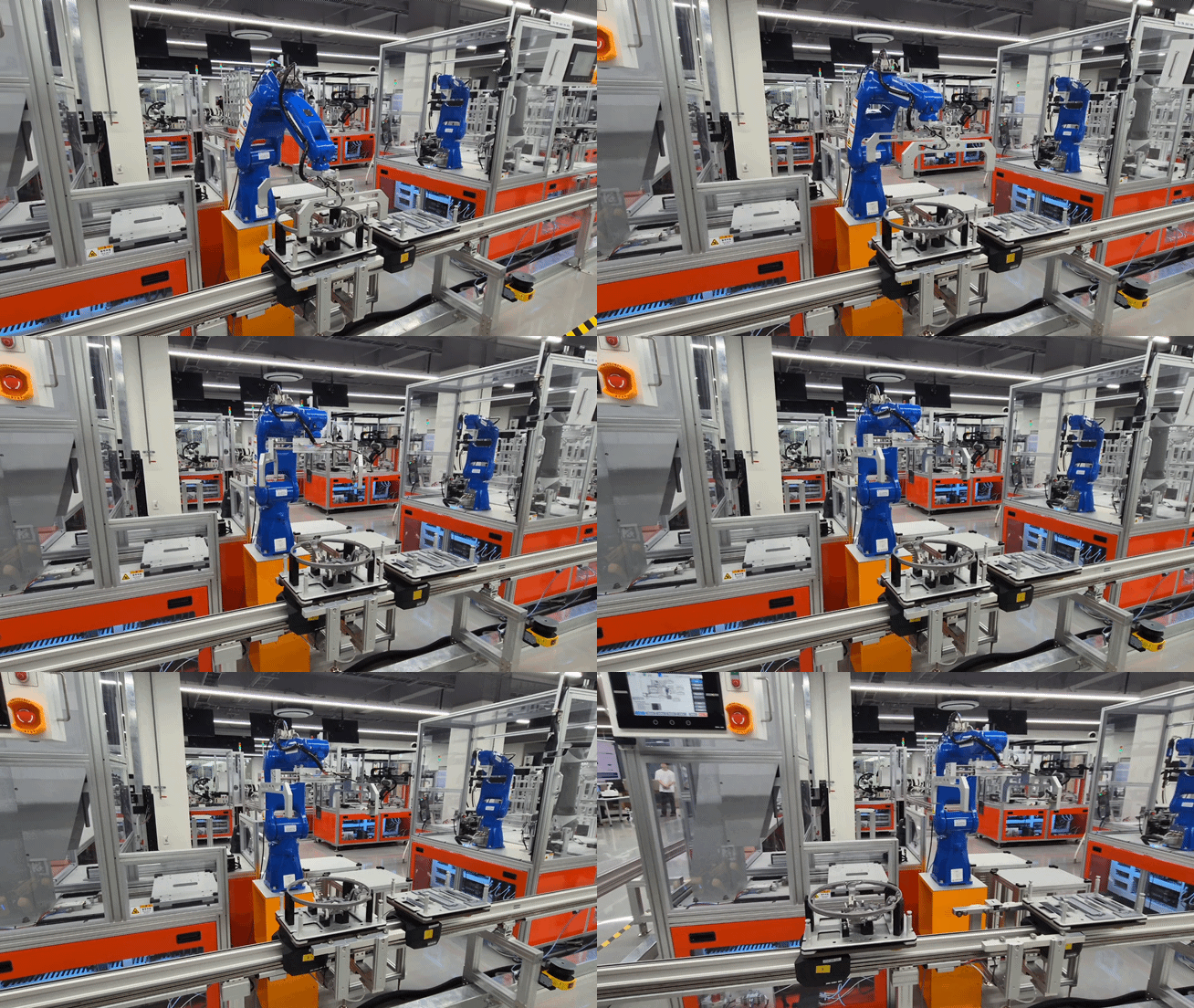
"Abnormal situation detected, abnormal situation detected" When a hand was placed on the production line making car steering wheels (handles), a large monitoring screen turned red and an alert notification appeared. An emergency bell, loud enough to startle passersby, also rang out. The hand was removed from the production line. The AI immediately recognized the change in situation and transmitted new information to the monitoring system. The emergency was automatically cleared, and the emergency bell stopped.
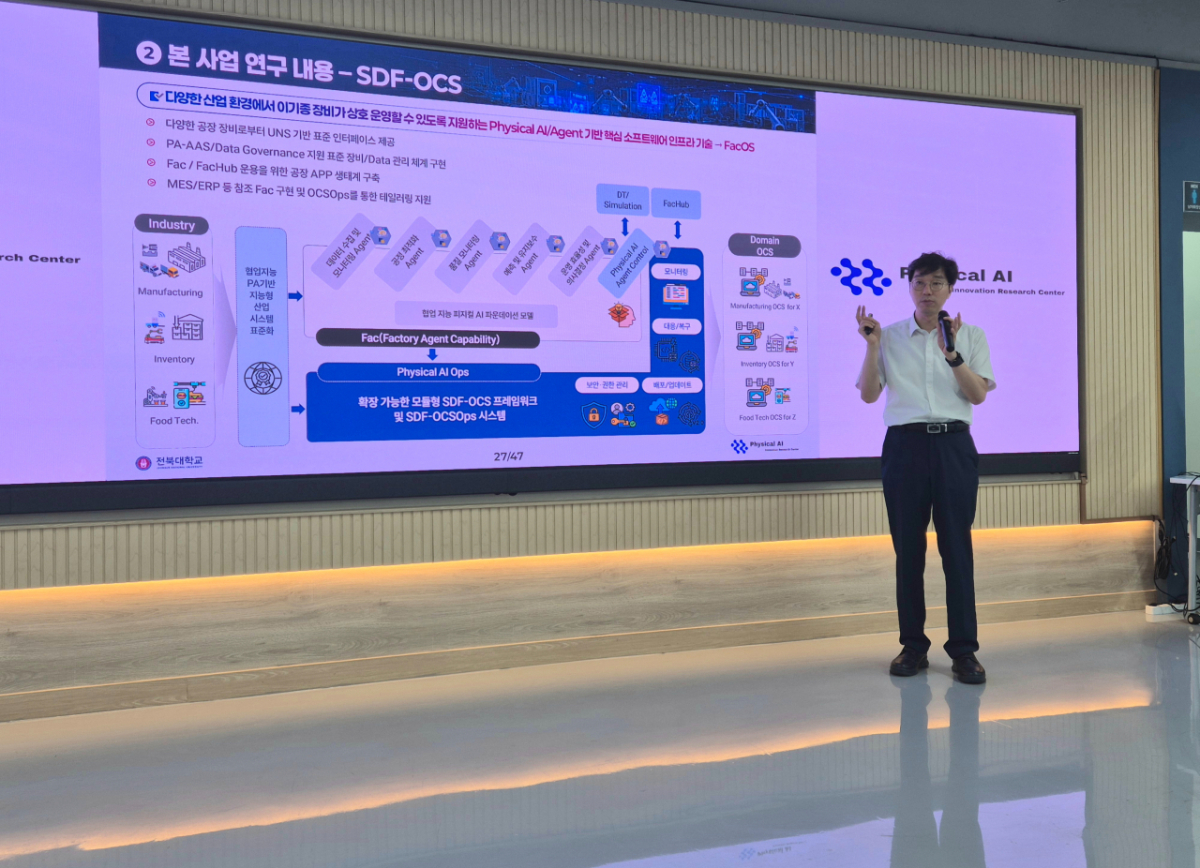
On the 27th, we visited the Physical AI Technology Demonstration Lab at Jeonbuk National University in North Jeolla Special Self-Governing Province. Professor Kim Soon-tae of the Department of Software Engineering at Jeonbuk National University, who led the demonstration, explained that it was "the actual operation of a collaborative intelligence physical AI model at DH Autride." Professor Kim is the overall person in charge of the Ministry of Science and ICT's "Establishment of Physical AI Leading Models and PoC (Technology Verification) Project," which involves Jeonbuk National University, KAIST, and Campic Comprehensive Technology Institute.
The PoC project prepares for the "Korean-style Future AI Factory" construction project to be carried out over the next five years. From August to December last year, a total of about 500 researchers worked together to design physical AI simulation technology and SDF (Software-Defined Factory) specialized models, and formulated a five-year plan. The goal is to develop an "AI factory" where heterogeneous devices such as advanced robots, AI, and digital twins collaborate seamlessly like human hands and feet, and spread this throughout the domestic industrial sector.
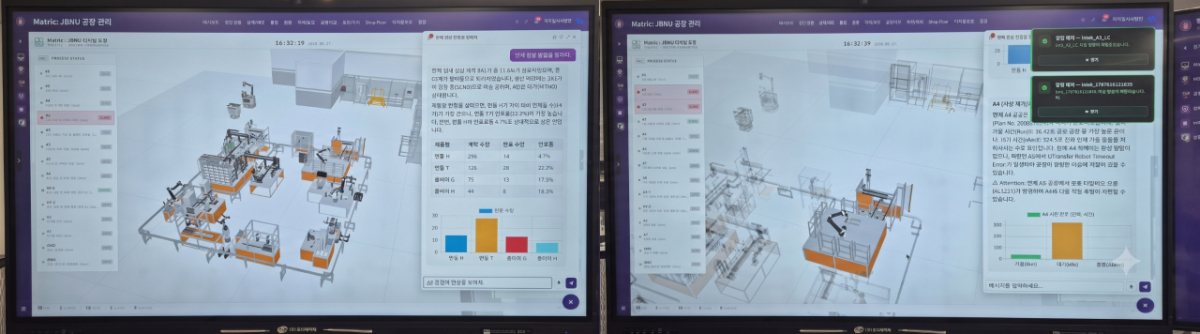
The 'Industry-Specialized Physical AI Technology Demonstration Lab' led by Professor Kim conducted an "automation experiment" on domestic automobile production lines during this period. The three target companies are DH Autride, which supplies parts such as steering wheels to global automakers including Tesla; Daesung Metal, which produces core components such as automotive hydraulic control blocks; and Donghae Metal, which supplies commercial vehicle body presses.
The key is "collaborative intelligence." It is a system where different equipment in the factory communicates smoothly and collaborates. It goes beyond simply having robots and unmanned vehicles process production processes together, advancing to recognizing and actually solving on-site problems without human intervention. Once collaborative intelligence technology is perfected, it is expected that fully automated factories operating 24 hours with only AI and robots, known as "Dark Factories," can be built.
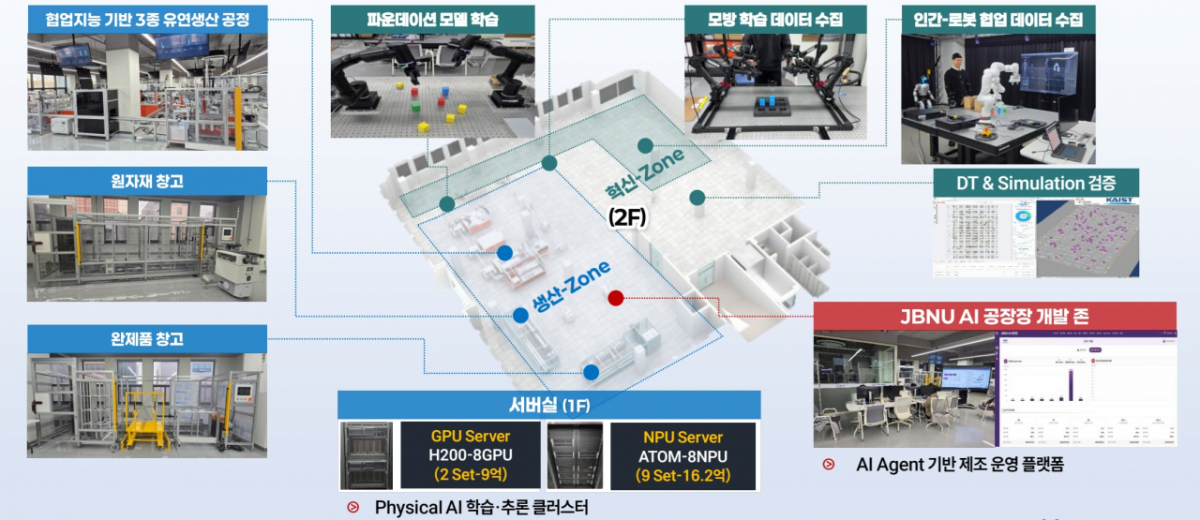
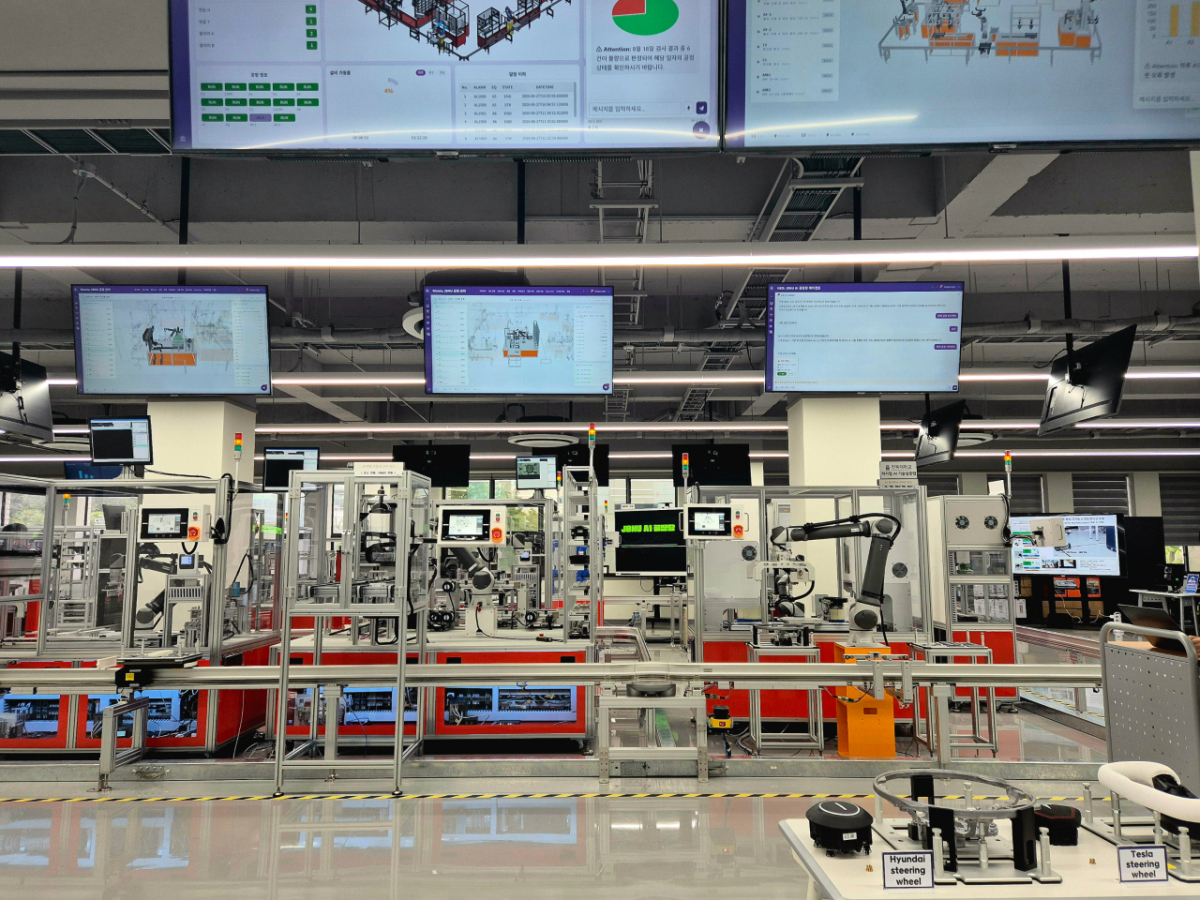
The research team built a simulation environment using data collected over the past five months and trained the AI model to link it with actual robot processes. During this period, three factories introduced robotic arms and unmanned transport vehicles to their production lines, reducing the effort of humans manually moving items on conveyor belts. A major change occurred in factories where dust and noise were so severe that workers had to wear masks double or triple-layered and could not endure for two months.
Production volume also increased. Production at DH Autride and Daesung Precision rose by 7.4% and 11.4%, respectively, compared to before the introduction. At Daesung Precision, the product defect rate was improved by 19.4%. Donghae Metal saw a 5.1% increase in production volume and a 10% reduction in process time. Professor Kim stated, "A 1% increase in production for a company with 1 trillion won in sales means potential revenue increases by 100 billion won." Companies targeted by the PoC are considering applying the physical AI system not only to domestic factories but also to overseas facilities.
In this project, the platform and demonstration scale will become larger. Jeonbuk National University plans to establish a Physical AI Demonstration Metafactory at its Seo Campus and build a "Physical AI NPU Technology Verification Station" for applying domestic NPUs (Neural Processing Units), aiming to involve more than 50 companies. Professor Kim stated, "We will export the K-Manufacturing Package, which can be built anywhere in the world, to capture the global market."

 in TECH


