

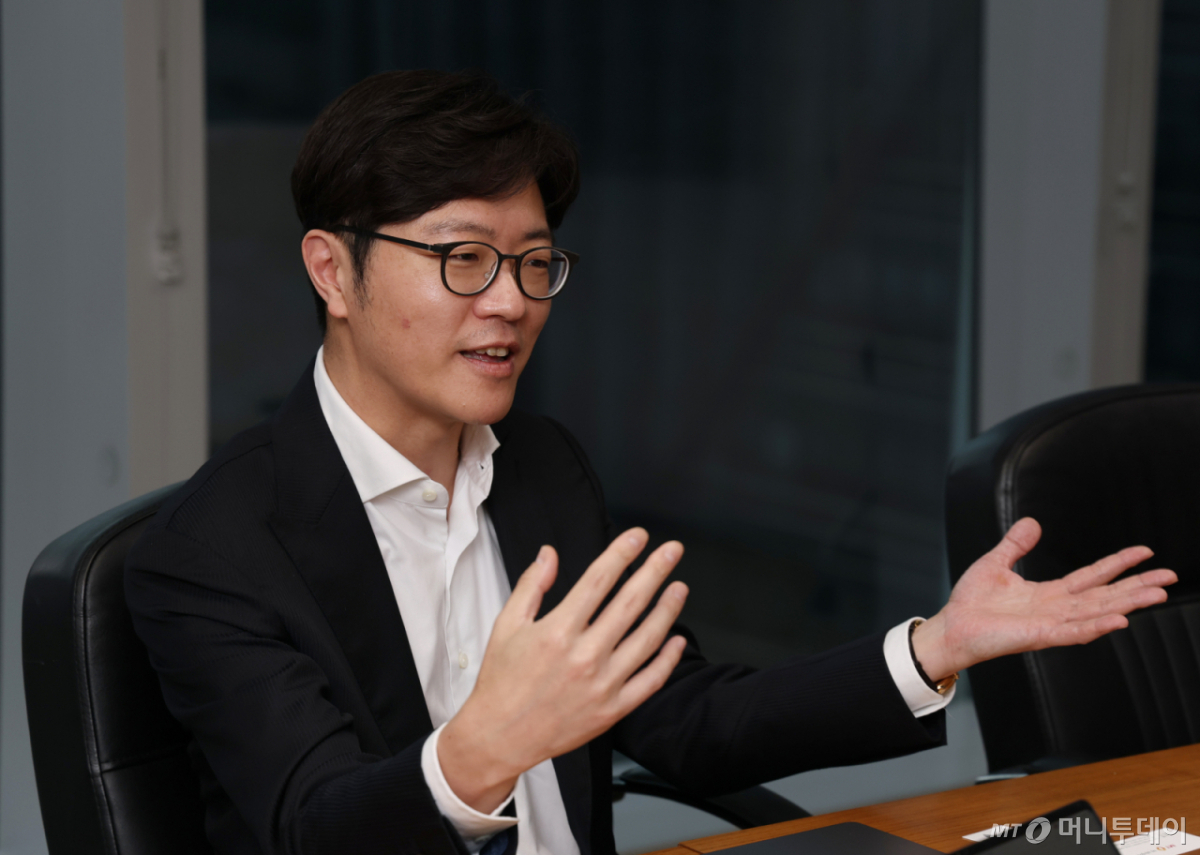
"Our goal is to become the first company in Asia to sell full-stack AI by 2030."
Yoo Kyung-sang, head of SK Telecom's AI model business, made this statement in an exclusive interview with MoneyToday on the 1st.
Yoo stated, "By 2030, AI data centers (DC) developed by SKT will reach the largest scale in Asia. At that time, we aim to become an exporter of full-stack AI capable not only of building data centers but also of fostering sovereign AI models and creating a proprietary AI ecosystem."
The target market extends beyond Southeast Asia and the Middle East to Europe. This is based on the judgment that South Korea can serve as an alternative amid the U.S.-China AI hegemony competition. He emphasized, "The U.S. will not sell its AI models as it seeks to retain control over AI, while there may be regions unable to purchase Chinese models due to security concerns. South Korea can become an alternative, and among such alternatives, SK is best positioned to deliver full-stack AI."
To export full-stack AI, securing price competitiveness for proprietary AI models is essential. With AI model performance becoming increasingly standardized, the company believes reducing inference costs is necessary to drive actual service adoption.
Accordingly, SKT plans to lower token costs through model lightweighting, distillation and quantization, and routing that selects the most suitable model among multiple options for each query. On the infrastructure side, it will optimize AI semiconductors, memory, and power efficiency in data centers. Yoo stated, "We will reduce token costs across multiple layers to create the most affordable model for end consumers."
Cost competitiveness is also a core pillar of SKT's 'AI for All' initiative. As citizens use AI daily, inference costs inevitably rise. SKT is preparing agent services where AI performs actual tasks, such as hospital appointments and public service applications.
He added, "We are pragmatic. When building AI agents for everyone, if our models do not meet quality standards, we will call third-party models to reduce costs."
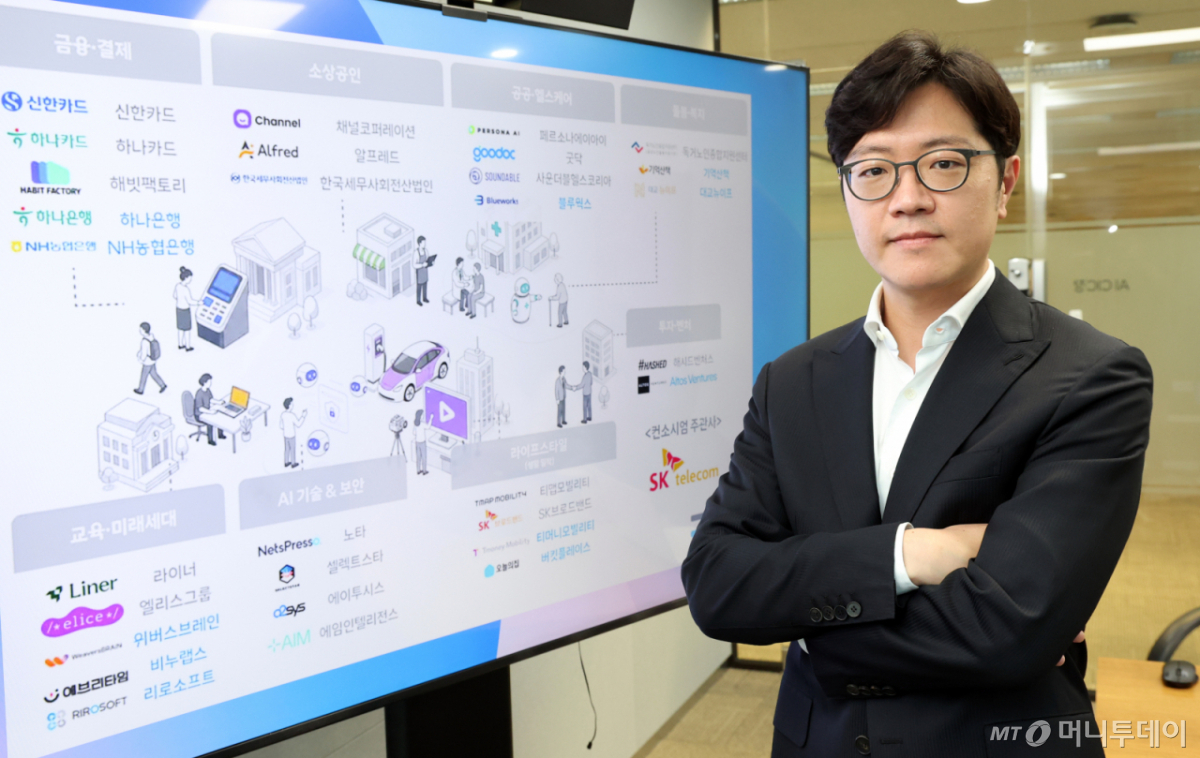
SKT is participating in all of the government's 'AI for All', 'Dokpamo', and 'Security-Specialized AI Foundation Model (Teukpamo)' projects. This is because real-world usage generates valuable 'signals'.
Yoo explained, "By analyzing signals from users' interactions—such as which answers and features they prefer or where agents struggle—we can rapidly improve models and offer them to enterprises on a paid basis. This creates an 'intelligence improvement loop' that identifies issues in actual use and reflects them in model updates."
Having secured first place in the second round of Dokpamo, SKT plans to strengthen coding and foreign language capabilities for the third round while enhancing multimodal functions alongside consortium partner Krafton to make A.X K2 a sustainable model. Yoo also expressed confidence regarding Teukpamo, stating, "SKT is one of the most targeted companies in Korea and among the top investors in security. The mToss incident proved that even the smartest models must excel in security."
Regarding South Korea's development of frontier AI models, Yoo stated there is "no disagreement" and strongly supported the initiative. He remarked, "South Korea possesses data centers, semiconductors, and services; failing to develop frontier models would mean benefiting others at our own expense. However, since we cannot do this alone, it is crucial for the government to act as the initial customer while private sector leadership drives commercialization."

 in TECH

