

As the era of AI (artificial intelligence) dawns, the three major telecom operators unanimously called for expanded tax, spectrum, and regulatory support for networks and AI data centers (AIDC). The government is also preparing to discuss investment environment improvement measures as a "package" and plans to include open-type AIDCs among the targets supported by the AIDC Special Act.
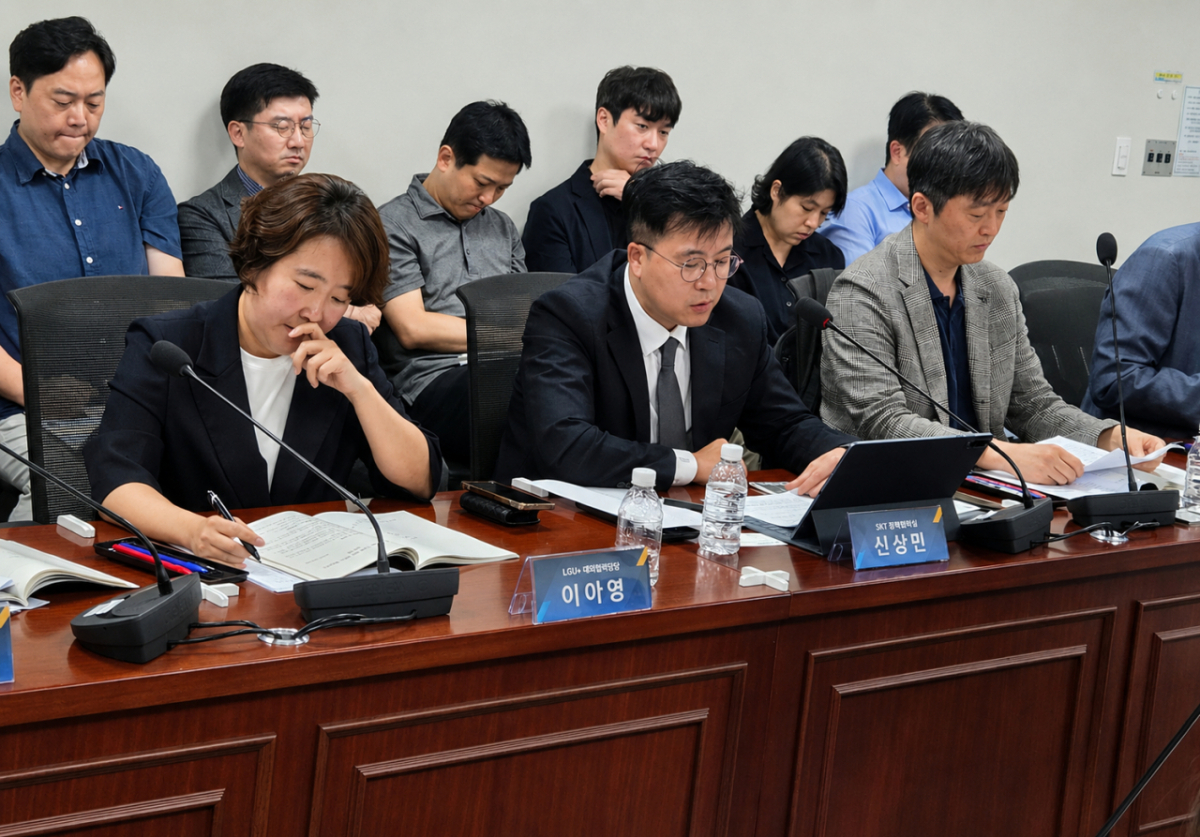
At the 'Policy Seminar on Advancing Network Infrastructure for the AI Era' held on the 2nd at the National Assembly, hosted by Lee Jeong-heon of the Democratic Party of Korea, representatives from SK Telecom, KT, and LG Uplus emphasized that investment should be promoted not only to secure GPUs (graphics processing units) and AIDCs but also to view networks connecting these facilities to industrial sites and end-users as part of AI infrastructure.
Shin Sang-min, executive at SKT Jeong Chaek-gae-bal (Head), proposed three key measures: transforming the AI network into a national strategic infrastructure, modernizing legacy networks such as 3G, and improving regulations to foster new services and revenue generation. Shin stated, "The core is shifting from policies that simply demand investment to those that enable investment."
Seo Eun-il, KT's telecom policy executive, proposed support for 'land, sea, and air networks.' Seo noted, "Geographically, Korea is effectively an internet island," adding that "about 99% of international data traffic is transmitted via submarine cables." KT plans to expand submarine cable capacity from the current approximately 38 Tbps to 128 Tbps by 2031. Seo requested support for submarine cable investment and licensing, as well as utilizing public demand for low-orbit satellite communications as a catalyst in the early market stage.
Lee Ah-young, LG Uplus' external strategy executive, requested that future network tax incentives, spectrum policies, investment incentives, and AI-RAN (AI-based radio access network) demonstrations be reviewed as "a single investment package." She further urged, "Support for open-type AIDCs should be approached not as assistance to specific data center operators but as support for open-type AI infrastructure that AI companies, which find it difficult to build their own data centers, can utilize jointly."
The government also expressed sympathy with the telecom operators' requests. Hong Sa-chan, section chief of the Telecom Policy Planning Division at the Ministry of Science and ICT, responded positively to the proposal to advance investment environment improvements as a "package," stating, "We fully agree" and promising to discuss specifics through a public-private consultation body. Regarding the termination of 3G services, he explained, "It is naturally a necessary step for promoting 5G and 6G investments."
The government also plans to include open-type AIDCs in the Special Act. Jeong Ji-cheol, section chief of the AI Data Promotion Division at the Ministry of Science and ICT, stated, "We strongly agree with including open-type AIDCs. We plan to incorporate this aspect into the enforcement decree" and added, "We are preparing to include not only private-use facilities but also open-type AIDCs within the definition of the Special Act."
Section Chief Jeong further noted that even for open-type AIDCs, if they are used for national strategic technology development by domestic AI companies, it would be desirable to include leased facilities in the tax credit target. However, he added the prerequisite that actual use for AI development and services must be substantiated.

 in TECH
