

The government has confirmed it has launched a comprehensive investigation into overseas 'eSIMs (embedded SIMs built into devices).' This move comes amid concerns that sensitive personal data of domestic consumers could be leaked overseas through eSIMs used abroad.
According to the telecommunications industry on the 20th, the Ministry of Science and ICT has begun an investigation since late last month targeting overseas eSIM sales companies. The probe aims to determine how these eSIMs are entering and circulating in Korea, who the original telecom operators are, and other related details.
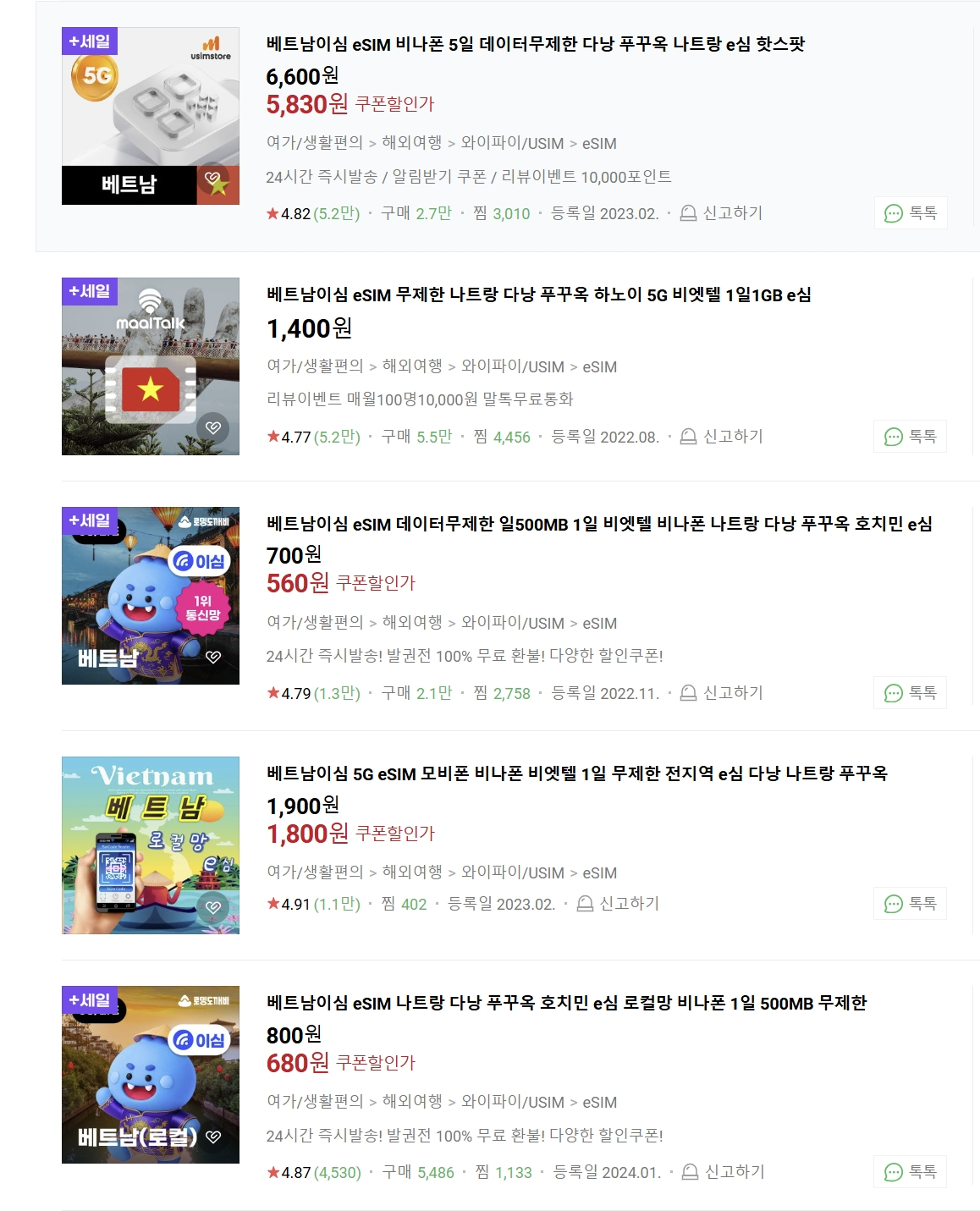
Overseas eSIMs are also familiar products for domestic consumers. Many travelers opt for eSIMs instead of using their domestic mobile carriers' roaming services abroad, choosing prepaid plans from the host country instead. Such overseas eSIMs can be easily purchased on online shopping platforms. The problem lies in the fact that the domestic companies selling eSIMs, the overseas companies providing the services, and the intermediary partner companies may all differ, creating ambiguity over who bears responsibility for data storage and management.
Domestic resellers indirectly or directly purchase prepaid data packages from foreign telecom operators and then resell them to domestic consumers. Consumers use their mobile phones by connecting to the partner networks of those local carriers when abroad. While the name of the network operator currently in use appears on the phone, it is often a local partner carrier rather than the company that originally sold the data.
For example, if a domestic consumer purchases a low-cost eSIM usable across 10 Southeast Asian countries before traveling to Vietnam, the original telecom operator could be an unidentified carrier based in China or Hong Kong. In such cases, consumers cannot identify the original telecom operator of the network they are using. Moreover, there have been ongoing concerns within the industry that some low-cost eSIMs route data through mainland China, creating a risk of personal information leakage.
Lee Jun-seok, a lawmaker from the Reform Party, also raised these issues during last month's plenary session of the National Assembly's Budget and Accounts Committee. He noted that if the network operator displayed on a mobile phone shows 'CM Link,' it is highly likely the device is using data from China Mobile, and using such an eSIM could result in the device's unique identification information (IMEI, EID) being stored on Chinese servers.
In response, the Ministry of Science and ICT has launched an investigation to directly verify these allegations. A ministry official stated, "Overseas eSIMs used while abroad are not domestic services and therefore fall outside the scope of regulation under Korea's Telecommunications Business Act." However, the official added, "Given that many domestic users are currently utilizing overseas eSIMs and deriving benefits similar to domestic roaming services, we are examining the situation closely."
A lawmaker from the Budget and Accounts Committee also remarked, "The Telecommunications Business Act focuses on whether fees or critical information were not disclosed to domestic users." The official further explained, "We are comprehensively reviewing whether the lack of disclosure regarding overseas original telecom operators should be subject to pre-emptive regulation or post-facto penalties."

 in TECH

