

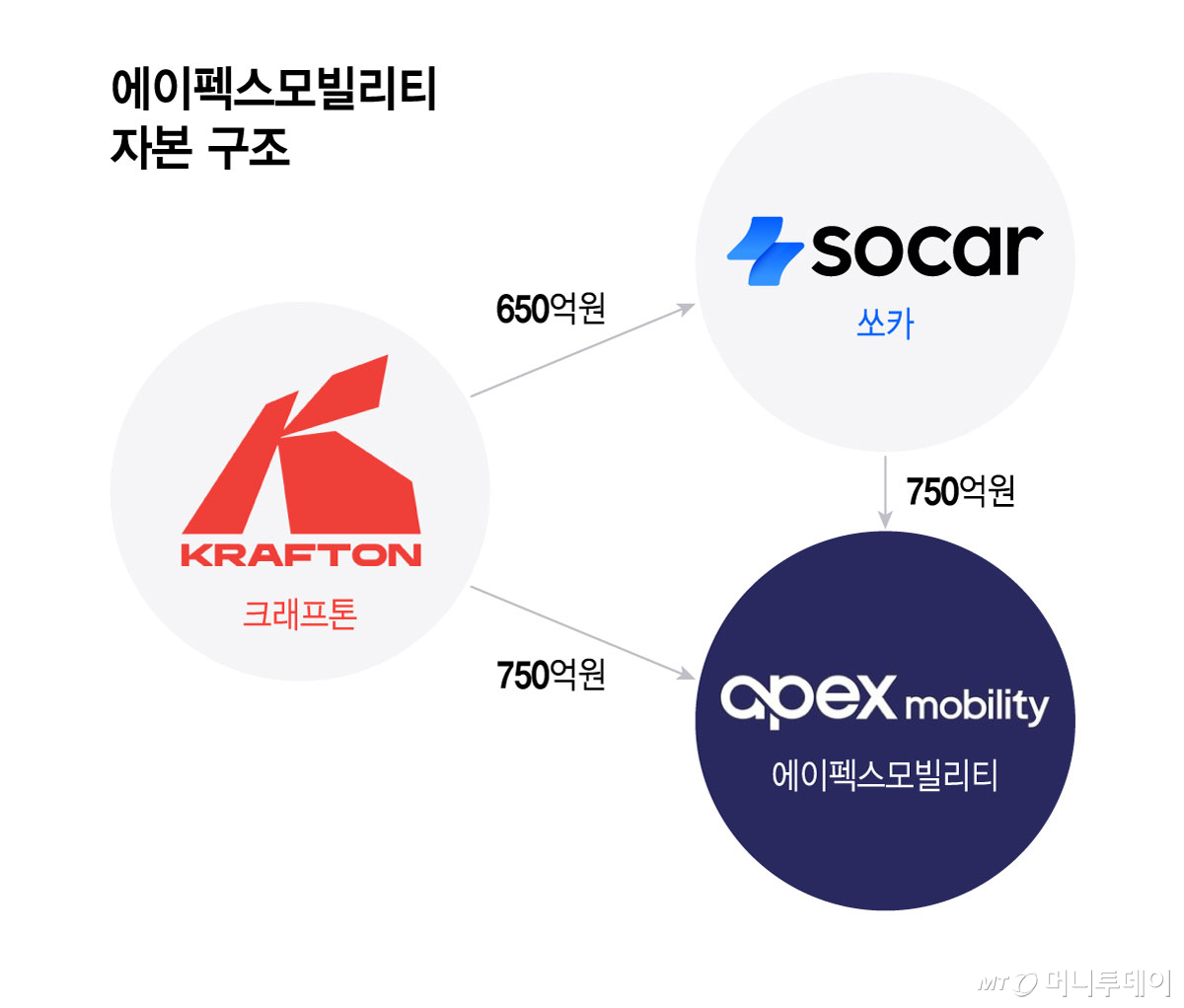
Krafton will begin full-scale research and development (R&D) on autonomous driving and physical AI by receiving driving data from SSGO. The 150 billion won autonomous driving alliance formed by both companies is seen as having moved beyond joint investment into the operational phase. In particular, SSGO's approximately 220,000 accident records are expected to become a key asset.
SSGO recently announced it will provide anonymized vehicle operation information, location data, and driving video footage to Krafton. To this end, the company notified on the 18th that it has revised its privacy policy. The purpose of the data provision is "new technology R&D related to autonomous driving and service enhancement." The data retention and usage period will last until the research objectives are achieved. SSGO also changed the purpose of processing its pseudonymized information to "new technology R&D related to autonomous driving and service enhancement."
The data will be provided to Krafton through Apex Mobility, a 150 billion won autonomous driving joint venture established by both companies in May. Under this arrangement, SSGO provides data to Apex Mobility, which then grants Krafton the right to use that data.
Krafton invested 65 billion won in SSGO and 75 billion won in Apex Mobility. SSGO contributed 75 billion won, adding 10 billion won to the 65 billion won it received from Krafton. However, SSGO holds one more share than Krafton, making it the largest shareholder of Apex Mobility.
Krafton is a major shareholder of SSGO and the second-largest shareholder of Apex Mobility. SSGO plans to provide its accumulated autonomous driving data to Apex Mobility. Earlier this year, SSGO established a "Future Mobility TF" to build a system that collects and processes 1.1 million kilometers of real-world driving data daily from 25,000 car-sharing vehicles (fleet) nationwide in real time. SSGO also possesses know-how accumulated over 15 years of operating a car-sharing platform.
SSGO also holds 40,000 annual accident records and a cumulative total of 220,000 accident data points. These represent "edge case data," the most difficult to acquire and highest in value for autonomous AI training. Edge case data refers to scenarios that AI cannot easily predict, such as pedestrians suddenly stepping into the roadway, vehicles abruptly merging from adjacent lanes, or lane markings disappearing due to construction. Normal driving—following lanes and stopping at signals—accumulates naturally with extended vehicle operation, but edge data required for actual learning does not, making it crucial to structure previously accumulated data.
SSGO processes data using an "anonymization" method that automatically detects and masks personally identifiable elements in videos. Targets include human faces, license plates, and contact information recognized on screens. SSGO has adopted a specialized non-identification solution and is conducting the process directly. The company completed an adequacy assessment for anonymization following review by external experts.
Apex Mobility plans to expand its business into B2C (business-to-consumer) services based on Level 4 fully autonomous driving technology. It will simultaneously pursue technological internalization and real-world service validation to build independent technical capabilities and operational expertise, while also advancing partnerships with global companies.
A representative from both companies stated, "We are currently in the stage of negotiating data specifications and formats; the specific timing for data provision will be determined later," adding, "No information that can identify drivers or passengers will be provided."

 in TECH
