

[For more diverse company information on the startups mentioned in this article, please visit the unicorn factory big data platform 'Data Lab'.]
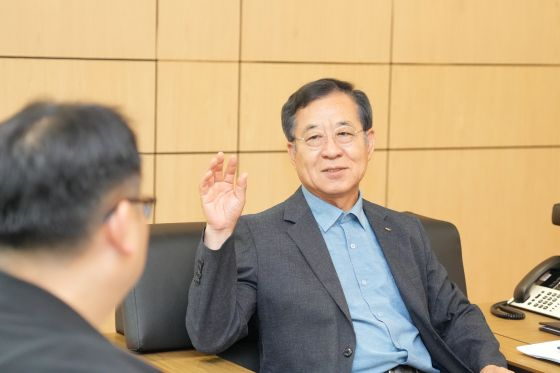
"I hope RIST will contribute to creating Korea’s first manufacturing unicorn case (a private company with a corporate valuation of 1 trillion won or more)."
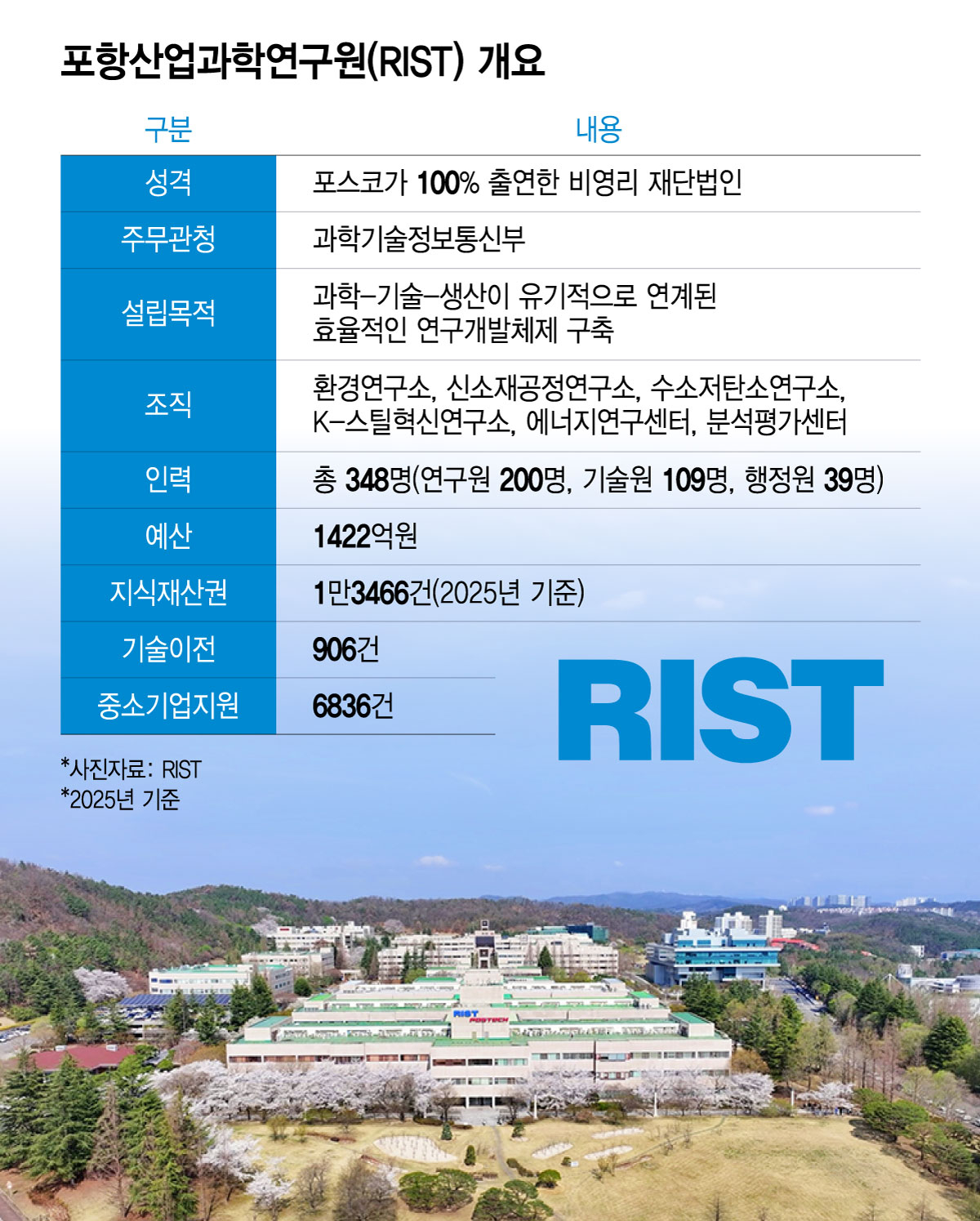
The future vision for RIST envisioned by Go Dong-jun, Director of Pohang Institute of Industrial Science and Technology (RIST), which was established in 1987 through full funding from POSCO, goes beyond being merely a 'research institution that excels at research.' Leveraging the vast industrial landscape of POSCO as a testbed, RIST aims to transform into an 'industrial technology commercialization platform' that connects research outcomes directly to actual industry and further supports the growth of deep-tech startups.
In a recent interview with MoneyToday’s startup media platform 'Unicorn Factory,' Director Go stated, "RIST's greatest strength lies in its ability to apply research results directly to the field based on POSCO's massive industrial operations." He added, "I want to build RIST into a research institution that not only validates deep-tech technologies but also supports the growth of startups."
From 'Steel Research Institute' to 'Materials Research Institute'… Expanding Future Growth Areas
Having served as Director of RIST's Environmental Research Institute and led initiatives in carbon neutrality, hydrogen-reduced steelmaking, carbon capture utilization (CCU), and other eco-friendly steelmaking fields, Director Go is redefining RIST's role ahead of its 40th anniversary next year. The core lies in industrial technology commercialization capabilities that flow from 'research → validation → commercialization.'
RIST operates nine pilot experimental buildings equipped with large-scale facilities to conduct repetitive validations, accumulating experience and expertise for researchers in scaling up technologies. Director Go noted, "RIST supports not only research needed by POSCO but also any research deemed necessary for the future by its researchers, even if it requires internal funding." He emphasized, "It is crucial to identify new research by looking at the industry five or ten years ahead, not just focusing on immediate needs."
Research areas are rapidly expanding from steel to materials, resources, and energy. With expansions into secondary battery materials, titanium and aluminum plates, rare earth elements, and more, RIST is now closer to being called a 'Materials Research Institute' than a 'Steel Research Institute.' Titanium materials recently received quality certification, and development of aluminum plate materials is nearing completion.
Notably, materials and resource technologies targeting the aerospace and semiconductor industries stand out. RIST has focused on rare gases such as xenon, krypton, and neon used in semiconductor etching gases and rocket ion propulsion fuels. These rare gases exist in trace amounts in the atmosphere, making direct extraction difficult, but they concentrate at relatively high levels during the oxygen production process in steel mills. RIST has developed quality analysis technology to recover these concentrated fractions, purify them to over 99% purity, and evaluate minute impurities down to the ppb (parts per billion) level.
Director Go remarked, "This project has been prepared for four or five years," adding, "Equipment operation has already begun, and initial batches have been delivered." He further stated, "We plan to first supply aerospace applications, with semiconductor-grade products undergoing quality certification procedures before full-scale operations begin next year."
"Bridging the Manufacturing Startup Death Valley as a 'Pre-Factory'"
One of Director Go's key priorities since taking office is the 'RIST Advanced Manufacturing Incubation Center,' which opened in July. This public-private partnership hub, co-created by the Ministry of SMEs and Startups, Gyeongbuk Province, Pohang City, POSCO Group, and RIST, aims to create Korea's first manufacturing unicorn. Director Go explained, "The center was established with the goal of lowering barriers for manufacturing startups that possess excellent technologies as they transition from research labs to prototype production, validation, Yangsan engineering, and market entry."
While existing startup incubation centers focused primarily on providing office space, this facility is closer to a 'factory-type incubator.' It is equipped with high-voltage power (380V or higher), hot and cold water supply, seven types of process gases, clean rooms, and infrastructure for importing large-scale equipment. Tenant companies are connected one-on-one with RIST research departments, receiving support ranging from testing and analysis to reliability evaluation, materials and process review, and Yangsan engineering.
Director Go refers to this facility as a 'Pre-Factory.' He explained, "Manufacturing startups often face setbacks during the validation and process stabilization stages when transitioning from prototypes to stable mass production. Our goal is to serve as a pre-stage factory that thoroughly verifies products and processes before major investment begins."
Currently, four companies in hydrogen energy, secondary batteries, solar power, and eco-friendly materials are housed at the center. RIST plans to establish a virtuous cycle system capable of nurturing up to 10 startups annually. In the future, the focus areas will expand to include AI, robotics, and process automation.
[MoneyToday startup media platform Unicorn Factory]

 in TECH

