

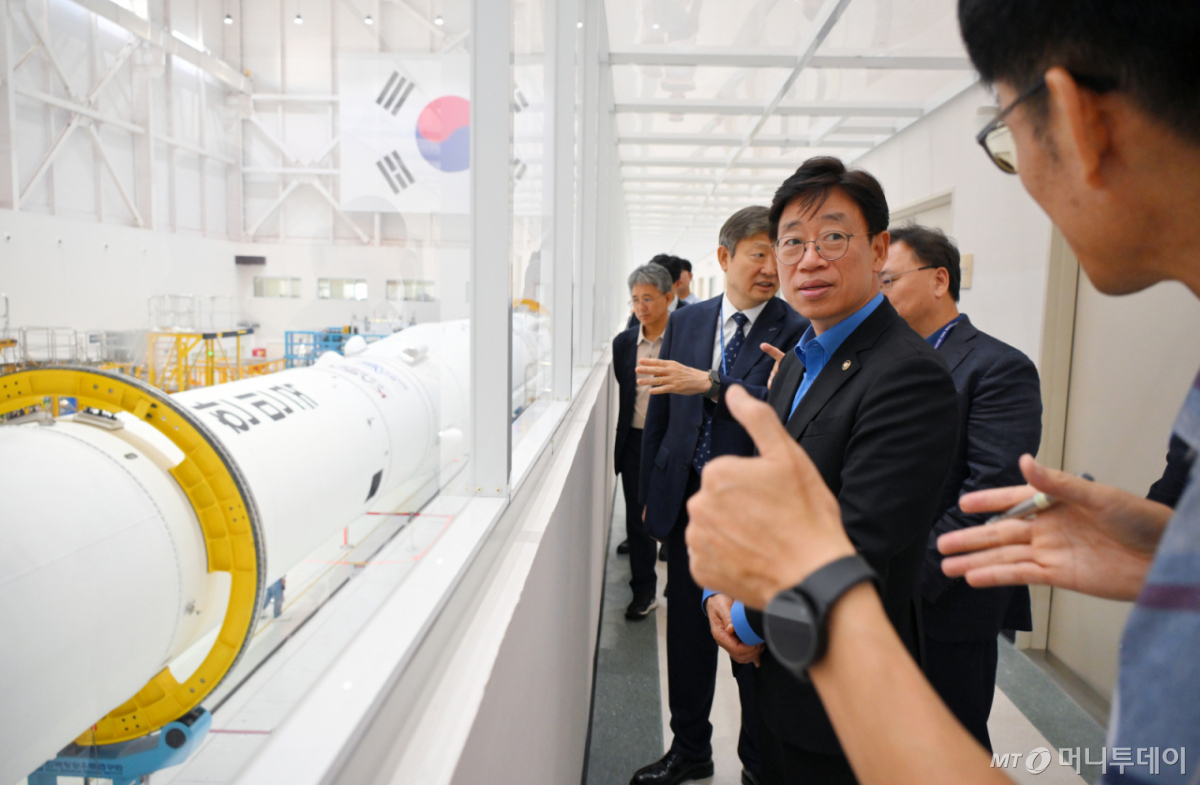
Once the 2027 government R&D (research and development) budget bill passes the National Assembly, the 7th and 8th launches that will continue Nuri's "dream" will be confirmed. Development of reusable launch vehicles will also officially begin.
As the National Assembly begins deliberating the 2027 government budget, attention in the aerospace sector is turning toward the legislature. This is because major future space projects are included in the Korea Aerospace Administration's next-year R&D budget proposal.
The Korea Aerospace Administration has allocated 562.9 billion won out of a total 1.6491 trillion won budget for next year to the launch vehicle sector, representing a 113.8% increase from the previous year.
Particularly anticipated is the follow-up launch support program for Nuri. If the budget bill passes, the Korea Aerospace Administration will invest a total of 75 billion won starting next year to prepare for the 7th and 8th Nuri launches. Under the existing Korean-type Launch Vehicle Development Project, Nuri was originally planned only through its 6th launch in 2027; now it gains two additional launch opportunities through 2029. Through this, the Korea Aerospace Administration aims to establish a "regular launch system" that conducts annual rocket launches. Starting from the 8th launch, the goal is to increase launch frequency to 2–3 times per year.
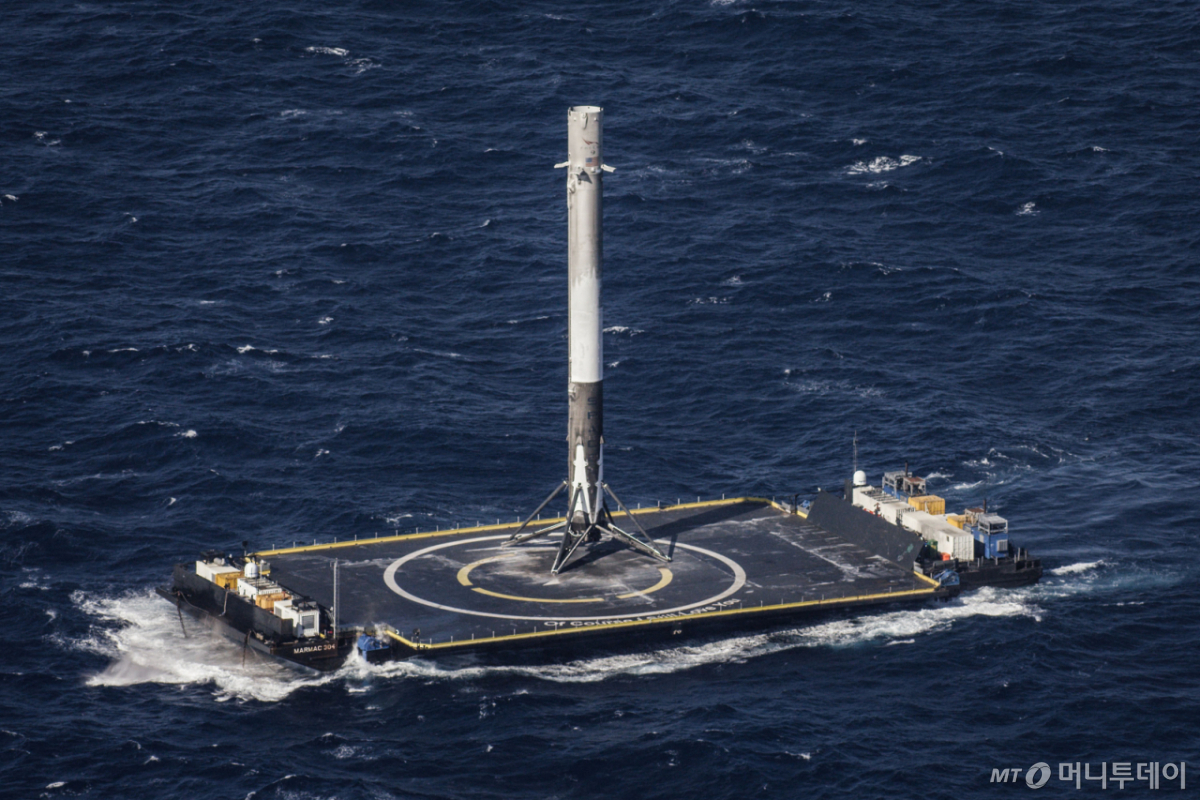
A budget allocation of 291.6 billion won for next year has also been included in the "Next-Generation Launch Vehicle Development Project," which will succeed Nuri. The Korea Aerospace Administration is developing the next-generation launch vehicle as a reusable launch vehicle. Reusable launch vehicles are technology that recovers propulsion stages launched into space and reuses them for subsequent launches. This approach reduces launch vehicle manufacturing costs, leading to evaluations that it offers higher economic efficiency compared to existing single-use launch vehicles.
SpaceX, the U.S. aerospace company, has successfully reused its Falcon 9 launch vehicle on multiple occasions Seong Gong-han (CEO). Recently, both Japan and China have also achieved success with reusable launch vehicles. JAXA (Japan Aerospace Exploration Agency) succeeded in the first flight test of its small-scale reusable launch vehicle prototype "RV-X" last July. In the same month, the China Aerospace Science and Technology Corporation (CASC) also successfully launched a reusable launch vehicle. Notably, it made headlines by demonstrating the world's first "sea-net catching" technology, which involves installing a massive net in the ocean to catch falling rocket stages descending from space.
South Korea previously planned its next-generation launch vehicle project as a single-use system but changed course last year to begin developing reusable launch vehicles. Starting this year, the project has entered the detailed design and component manufacturing phase for both the launch vehicle and methane engines. The goal is to launch a performance verification satellite aboard a reusable launch vehicle powered by methane engines (KSLV-III) in 2031, followed by launching a Korean-type lunar lander on a reusable launch vehicle in 2032.

 in TECH

