

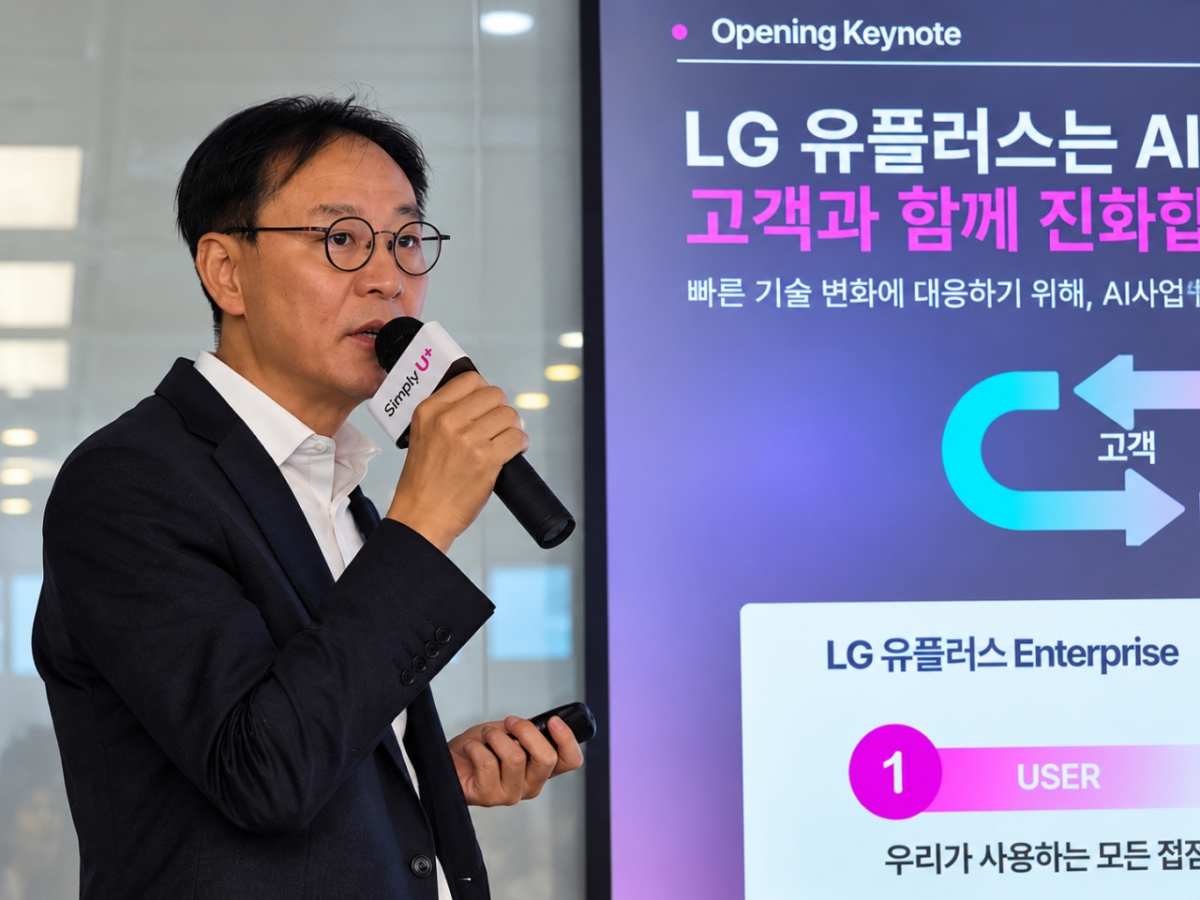
LG Uplus has applied artificial intelligence (AI) across the entire customer service process, reducing the average wait time to connect with an agent from 47 seconds in 2024 to within 5 seconds this year. The company aims to achieve “zero” wait times by evolving into an “AI-native contact center” by 2030, where AI proactively identifies customer intent and resolves issues.
LG Uplus disclosed these AI application results and business strategies at a press conference held on the 30th at the LG Gasan Digital Center in Geumcheon-gu, Seoul. The approach involves call bots and chatbots handling initial customer inquiries, AI providing agents with necessary information in real time during consultations, and automating quality assessments after the interaction.
“The core of AICC is time and quality,” said Ahn Hyeong-gyun, head of the Enterprise AI Business Group at LG Uplus. “It is not just about AI answering calls; the entire pre-, mid-, and post-consultation process functions as a single solution.”
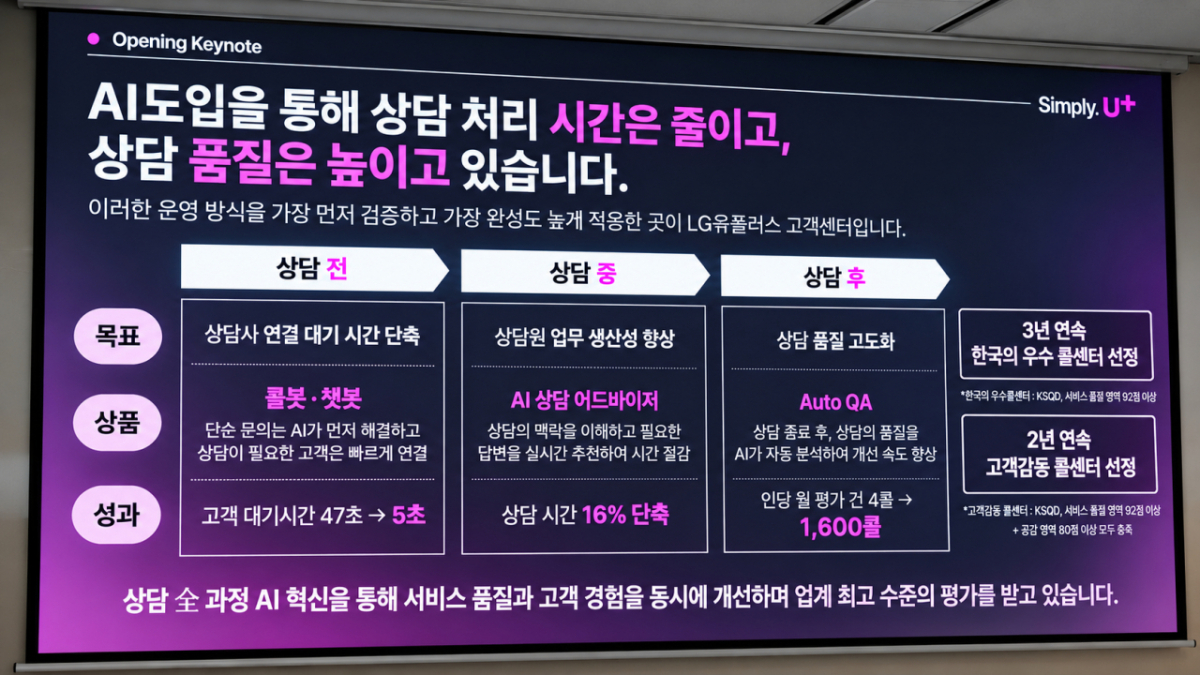
LG Uplus first utilizes and validates its AI Contact Center (AICC) within its own customer service center, where more than 4,000 employees work, before supplying it to external clients. This “insourcing AICC” strategy involves identifying problems on the ground, solving them with AI, commercializing the solutions, and then improving them further through actual operations.
Group Head Ahn explained that responding to rapid advancements in AI technology is the core of the insourcing strategy. “This year, AI performance has improved almost once a month, leading companies to worry whether their AI transformation (AX) will become outdated immediately after adoption,” he said. “We aim to provide services through a cyclical structure where we directly use and update the system before providing it back to customers.”
In practice, the introduction of AICC has reduced LG Uplus’s customer service consultation demand by approximately 33%. Previously, humans only sampled about 0.2% of all consultations for evaluation, but with the introduction of “Auto QA,” AI now evaluates all consultations, and coaching consultants use this data to coach agents on individual areas for improvement.
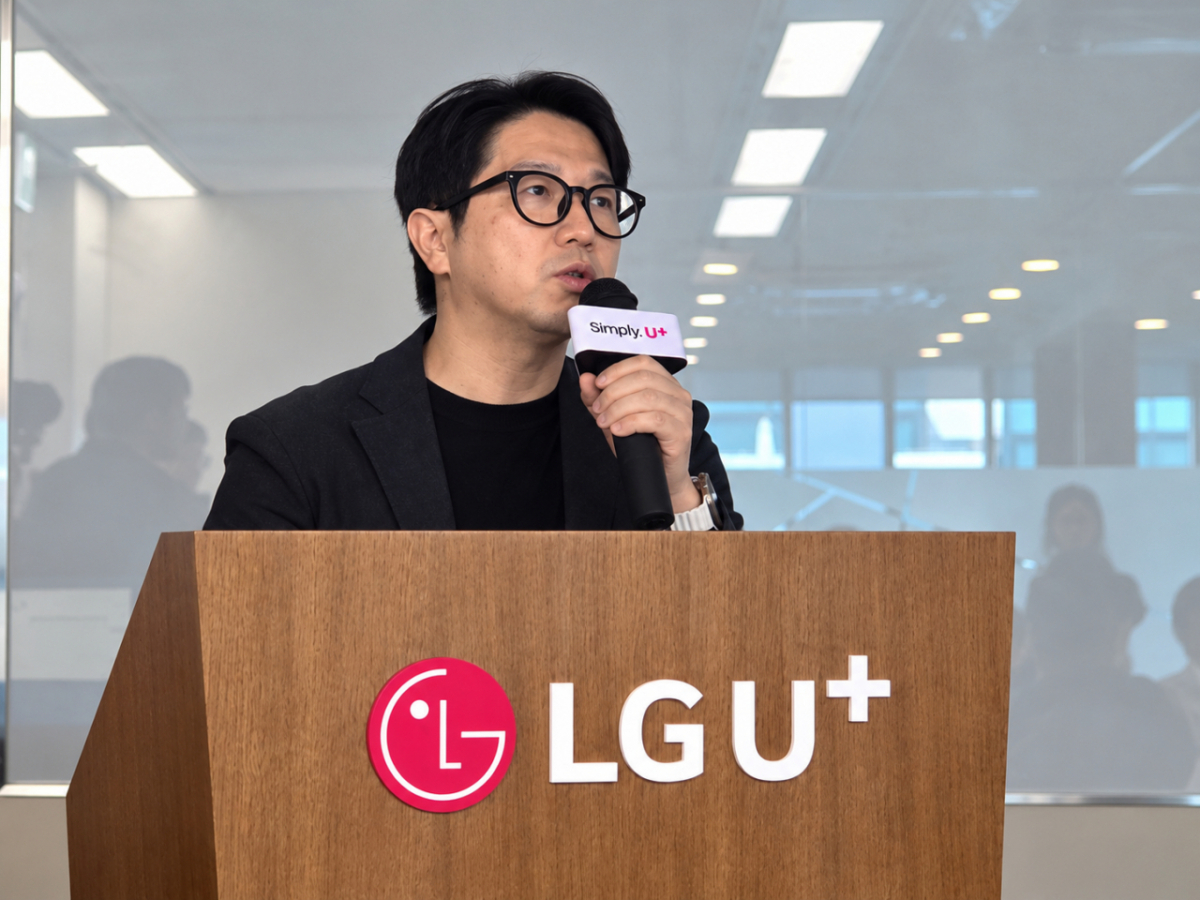
LG Uplus has emphasized properly resolving customer issues over cost reduction. Kwon Tae-gu, Product Tribe PO for AICC at LG Uplus, stated, “Even if the technical accuracy of problem recognition is 90%, it is a zero-point AICC from the customer’s perspective if their issue is not resolved.” He added, “We view whether the task the customer wanted to complete was properly finished as the standard for quality.”
On-site demonstrations also revealed an AI call bot utilizing a large language model (LLM) engaging in conversation with customers, recommending overseas roaming products, and processing actual sign-ups. The system continued consultations by grasping the overall context of the dialogue, even when customers paused or asked unexpected questions.
LG Uplus plans to develop AI that assists agents into a level where it autonomously resolves customer issues by 2030. Group Head Ahn stated, “After that, we will go all the way to ‘zero weight.’” He added, “The operational system will change so that AI analyzes and improves itself in real time.”

 in TECH


