

AI is poised to become the key that will drive major industries in the global market. The semiconductor-based AI industry has already helped lift South Korea’s growth rate, which had been sluggish for some time. Even if the United States, a leading AI nation, slows down, our country cannot afford to stand still. Rather, we must seek out opportunities. It is time to assess South Korea’s AI infrastructure centered on the government’s three mega-projects and explore the direction for advancing as an AI leader.
U.S., D.C. Feeds One State... Korea Needs Long-Term Investment Strategy
[K-Growth Engine 'AI Infrastructure'] <1> ① The Economic Impact of Data Centers Is Clear
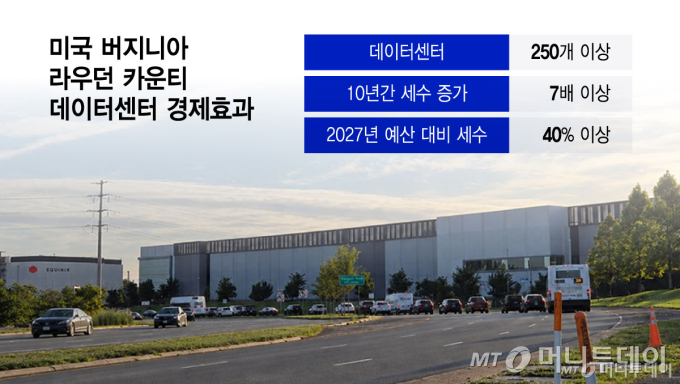
Loudoun County, Virginia, in the United States, home to the world’s largest concentration of artificial intelligence (AI) data centers (DCs), hosts more than 250 data centers. The county generates $1.1 billion (approximately 1.46 trillion won) in tax revenue from these facilities. Given that Sejong City’s annual expenditure budget is 19.708 trillion won, the resources needed to support a population of 400,000 for one year are derived solely from the AI data center industry.
Investments in AI data centers not only drive demand for semiconductors but also boost demand across related industries, including power and cooling equipment as well as construction. In particular, as heat generation and power consumption increase with high-performance AI semiconductors, the importance of liquid cooling technology and power supply infrastructure has grown. Companies that secure the technologies and equipment necessary for building and operating data centers will gain access to new export markets.
South Korea is considered well-suited to grow its AI industry, given the high-bandwidth memory (HBM) production capabilities of Samsung Electronics and SK hynix, a manufacturing base spanning automotive, robotics, and shipbuilding, and high-quality power supply infrastructure.
The key lies in a long-term infrastructure investment strategy that ensures stable power supply while also accounting for future technological shifts. Scott Wallace, senior vice president at global data center firm Digital Realty, advised, "Facilities being built today must be capable of supporting even chip design 36 to 60 months from now," adding, "It is particularly important to gain the understanding of local communities." Significant challenges remain in building infrastructure that anticipates future technological changes and linking it to the growth and expanded exports of related industries such as semiconductors, power generation, and cooling equipment.
[Report] Riding a kick scooter to check the servers, befitting its massive U.S. scale... "Whirring" of emergency generators outside
[K-Growth Engine 'AI Infrastructure'] <1> ② U.S. Virginia Data Center 'IAD39': 1.7 Times the Size of Naver Sejong Data Center, with a Power Capacity of 96MW; 16 Facilities for Customers Such as Oracle and Meta, Working Hard on Racks and Cooling Equipment; Wallace Director: "Consider Semiconductor Design When Building Infrastructure in Korea"
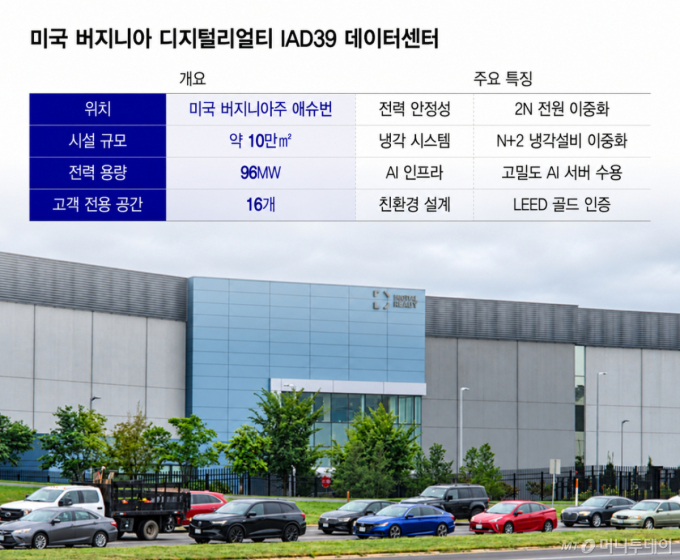
IAD39, a Digital Realty data center located in Ashburn, Loudoun County, Virginia, sits at the heart of "Data Center Alley" in Northern Virginia, the world's largest concentration of data centers. The facility boasts an electric capacity of 96 megawatts (MW) and a total floor area of 94,200 square meters, making it a super-large-scale data center. It is 1.7 times the size of "Gak Sejong," the 55th MW Sejong City data center that Naver plans to begin operating in the first half of next year.
Digital Realty's data centers in South Korea are vertically oriented, whereas IAD39 is low and elongated across a wide site. Daniel Romnoski, Director of Solutions Engineering at Digital Realty, explained, "The form factor of a data center depends on the available land and power capacity. In Ashburn, we can secure a large plot of land, while urban areas have limited space, resulting in a relatively vertical configuration."
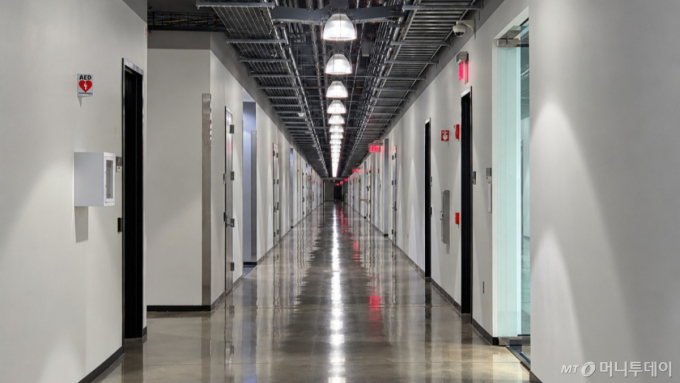
Upon entering the building, a long corridor stretches out, with kick scooters visible along the way. Given the vast size of the space, employees use them as a means of transportation. Scott Wallace, Senior Vice President of Digital Realty’s Solutions Architecture division, laughed and said, “I sometimes get lost in here too. I’ve actually gotten lost in this building several times.”
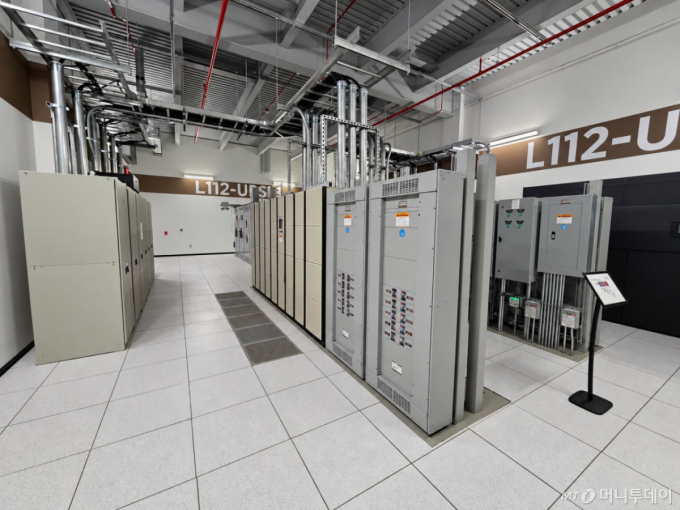
No server hum was audible in the hallway, but as the thick security door opened, a deafening roar from countless servers and cooling equipment struck the ears. It was a data hall (server room) where customers' servers run 24 hours a day. Each space is locked, with cameras installed throughout. Photography inside the data hall is prohibited.
The power capacity of the data hall on that day reached 6 MW. Numerous server racks were lined up, and cooling equipment operated nonstop. IAD39 has 16 customer spaces (suites), which can accommodate thousands of server racks.
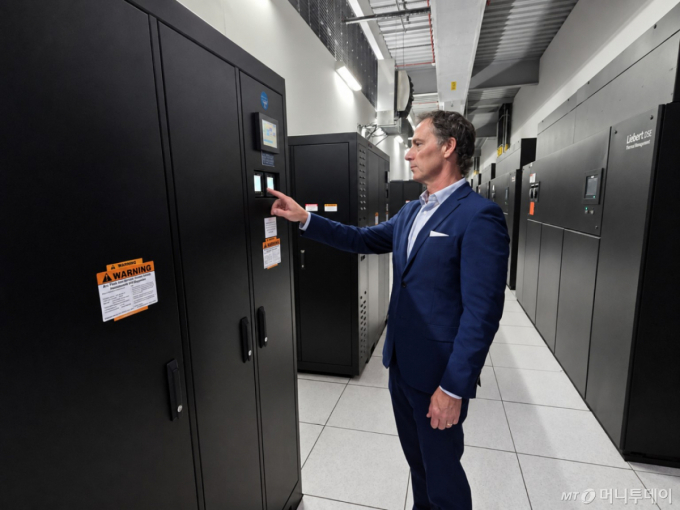
The scale of the cooling equipment used to manage the heat generated by the servers was also substantial. IAD39 employs air-cooling, which circulates cold air beneath the floor to cool server racks. A separate machine room houses a row of Vertiv’s large-scale cooling units. Director Romnorsky stated, “The capacity of a single cooling unit is approximately 165 kilowatts,” adding, “Other data centers also apply liquid-cooling systems to handle the heat generated by high-density AI (artificial intelligence) servers.”
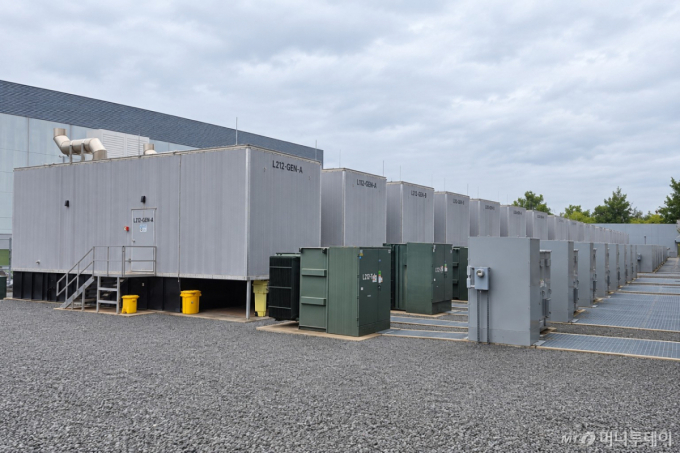
Outside the building, large container-type emergency generators are lined up in a row. Each unit has an output of 3 MW. They activate when the external power supply is cut off. As AI data centers have grown larger, securing not only electricity but also the necessary equipment in a timely manner has become increasingly important.
Digital Realty operates approximately 40 data centers in Northern Virginia, with a total IT load of 1 gigawatt (GW). Of these, more than 20 data centers are concentrated in Ashburn, operating at a capacity of 600 megawatts (MW). IAD39 is considered one of the largest among them. Its global customers include major IT companies such as Oracle, IBM, and Meta. The workforce across the entire Northern Virginia region numbers between 450 and 500 people, averaging about 20 employees per data center.
Regarding the construction of AI data centers in South Korea, Wallace, a senior executive, emphasized the importance of cooperation between power companies and semiconductor manufacturers. He stated, "Given the rapid pace of technological change, data centers being built now must be capable of supporting semiconductor designs that will emerge over the next three to five years." He pointed out, "Without sufficient consultation with relevant companies, there is a risk of building facilities that can only be utilized for just one year."
Ashburn, where data centers have been concentrated for more than 30 years, demonstrates that long-term design considerations are crucial when building data centers, extending beyond the securing of GPUs (graphics processing units) to include stable power supply and cooling, backup power sources, and next-generation semiconductors.
US Louden County tax revenue up sevenfold in 10 years… 17,000 jobs also “ON”
[K-Growth Engine 'AI Infrastructure'] <1> ③ Data Centers Supporting Local Government Finances: U.S. GDP Contribution Up 21% in 2024; Power Costs, Environmental Impact, and Noise Remain Challenges
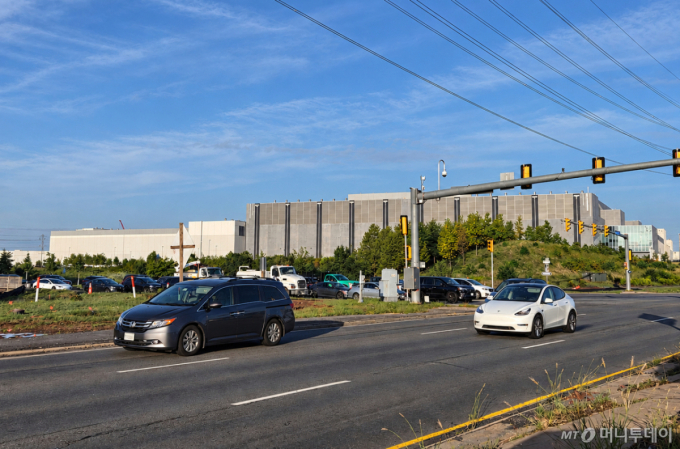
In Loudoun County, Virginia, buildings housing servers have become a major source of tax revenue supporting the local government’s finances.
According to Loudoun County, data center-related tax revenue for fiscal year 2027 is projected to reach $1.3 billion (approximately 1.7391 trillion won), accounting for 40% of general fund revenue. This refers to taxes levied on buildings and land, as well as internal computer equipment. Related tax revenue increased sevenfold over the decade, rising from $150 million in 2015 to $1.1 billion in 2025.
According to Loudoun County, direct and indirect jobs number more than 17,000. The increased tax revenue has been used for the expansion of schools, libraries, and roads, as well as support for police and fire services. The property tax rate decreased by approximately 30%, from 1.145% in 2016 to 0.805% this year. However, the actual amount paid varies depending on the assessed value of the property.
In Quincy, Washington, a city with a population of approximately 8,500, about 30 data centers account for 57% of the city's property tax revenue. The expanded tax base has supported the expansion of local infrastructure, including high schools and hospitals.
According to a study commissioned by the U.S. Data Center Coalition (DCC) from PwC, the contribution of the U.S. data center industry to GDP in 2024 was estimated at approximately $927 billion, a 21% increase over the previous year, while its tax revenue contribution was estimated at approximately $204 billion. These figures include the ripple effects on related industries and consumption associated with general and cloud data centers.
However, concerns remain over the burden of electricity rate hikes and power grid expansion costs, as well as strong local opposition to noise from cooling equipment and the construction of transmission facilities near residential areas. Virginia Governor Abigail Spanberger announced a policy last month aimed at preventing the full pass-through of power infrastructure costs to consumers and strengthening environmental management.
As Korea moves to attract AI (artificial intelligence) data centers, it must also weigh the implications for tax revenue and power and Ministry of Environment burdens. According to materials obtained by Democratic Party of Korea lawmaker Hwang Jung-ah from the National Assembly Budget Office, if domestic corporate performance is simply scaled up to the 1GW (gigawatt) level, annual corporate income tax would be calculated at 828.1 billion won and local corporate income tax at 82.8 billion won. However, these are hypothetical figures based on assumptions regarding profitability and utilization rates, not projections of actual tax payments.
Connecting the employment effects of the construction phase to long-term industrial growth is also a challenge. Jimmy Lee, president of ASI Foundry and former Deputy Secretary of Commerce and Trade for Virginia, told this newspaper in an interview, "After data center construction is completed, there are not many personnel needed for operation and maintenance," adding that "data centers must serve as the brain of the local community and industrial ecosystem." He emphasized that "data center construction is not the end, but the first stage."
Global AI market to grow 30% annually over five years... South Korea rushes to join in
[K-Growth Engine 'AI Infrastructure'] <1> ④ South Korea Pushes Three Mega-Projects
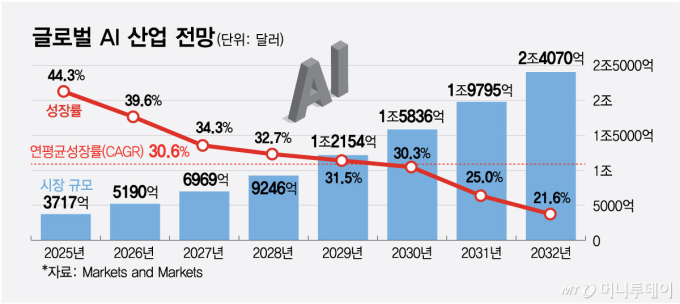
The global artificial intelligence (AI) market is a "hyper-growth" sector, projected to expand at an annual average rate of over 30% for the next five years. At the same time, it exhibits a "winner-takes-all" characteristic, making it difficult for those who fall behind the leading group to catch up again. The government's urgent push to advance three mega-projects—semiconductors, AI data centers (AIDC), and physical AI—reflects a sense of crisis that failing to ride this growth wave could cause South Korea to lose its engine of economic growth.
According to a 2026 industry outlook by market research firm Markets and Markets, the global AI industry is projected to reach a market size of $2.407 trillion (approximately 3,203 trillion won) by 2032. This represents a 6.5-fold increase in market size over seven years, compared with last year's estimated AI industry scale of $371.7 billion (approximately 495 trillion won).
The AI market is characterized by the fact that technological gaps translate directly into competitive advantage. It requires massive capital investment in areas such as GPUs (graphics processing units), data centers, and power infrastructure. Furthermore, it features a cyclical structure in which a specific model, once it secures high-quality data and users, can be used to develop even better models. Limited production factors, including high-performance chips, top-tier talent, and high-quality training data, also serve as barriers to entry that hinder the pursuit of latecomers.
According to the OECD, the AI infrastructure market is characterized by rapid innovation but high barriers to entry and concentration. NVIDIA’s estimated market share in GPUs for AI exceeds 80%, while in certain segments of the supply chain, the top three companies account for more than 60% of the market share.
The government's announcement in June of this year that it would unveil three major mega-projects and enter the top tier of global AI powers is interpreted as stemming from the assessment that falling behind in the current AI market would inevitably widen the gap with leading groups. This implies that, given South Korea's economy already possesses semiconductor production capacity and high-quality power infrastructure, it can expect high value-added returns in the AI data center and AI semiconductor manufacturing industries.
Deputy Prime Minister and Minister of the Ministry of Science and ICT, Bae Kyung-hoon, stated during the 2026 National Audit that "we will further solidify our position as one of the top three AI powers," emphasizing that "the three mega projects—AI data centers, physical AI, and semiconductors—are key areas that will change the landscape of our economic growth in the AI era."
[Production Support: Ministry of Culture, Sports and Tourism Citizen-Centered Communication Activation Project]

 in TECH


