

"Although it is possible to defend against hacking attacks, only a handful of companies and institutions in South Korea are currently capable of building such systems."
Yang Cheong-sam, secretary general of the Personal Information Protection Commission, made the remarks at a briefing at the Government Complex Seoul in Jongno District, Seoul, on Friday.
"Defending against AI-driven hacking requires modular systems, cloud-based infrastructure, rapid deployment and continuous monitoring," he said. "The approach is sound, but it requires investment in infrastructure, replacement of outdated equipment and a transition to cloud-based and modular systems."
AI hacking threats have become a reality. This is because the barrier to entry has lowered to the point where even non-experts can carry out hacking attacks.
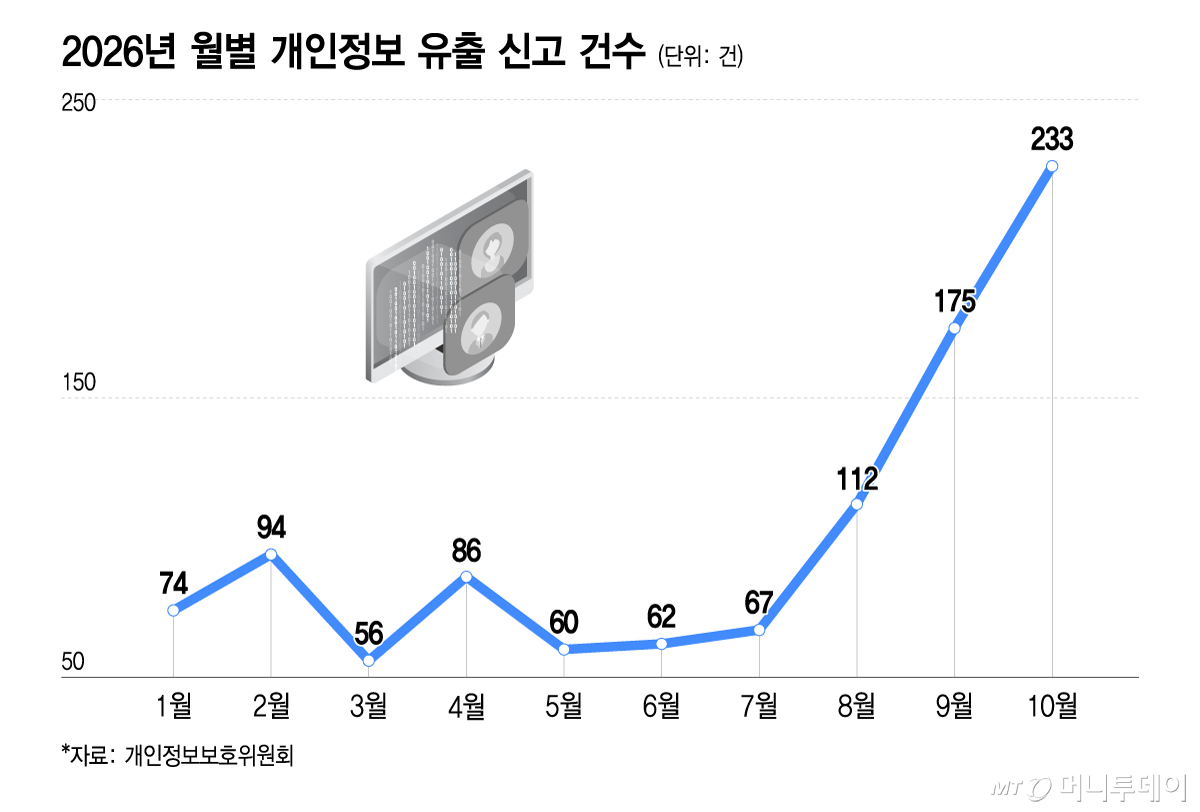
The automation of the attack process also significantly reduces time and cost. The number of personal information leakage cases reported to the Personal Information Protection Commission from January to October this year reached 1,019, already surpassing twice the total number of leakage reports for all of last year (447 cases).
This amounts to an average of more than 100 cases per month. Specifically, the figures are: the 74th cases, the 94th cases, the 56th cases, the 86th cases, the 60th cases, the 62nd cases, the 67th cases, August 112 cases, September 175 cases, and October 233 cases. The upward trend accelerated from August.
The issue is not so much that hacking techniques have become more sophisticated, but that attack attempts have become easier and faster.
Lee Jae-hyung, Director of the Investigation and Coordination Bureau at the Personal Information Protection Commission, explained, "Systems that were previously considered low in importance and thus ignored by hackers have become targets as attack costs have decreased."
Consequently, claims are emerging within the security industry that AI hacking attacks must be stopped with AI. This is because the volume of work that AI and humans can process differs, making the adoption of AI-based hacking defense inevitable.
Secretary-General Yang said, "There is much literature and expert opinion suggesting that AI can prevent hacking attacks," while adding, "Whether a system has been established to use it effectively within an organization is a separate issue."
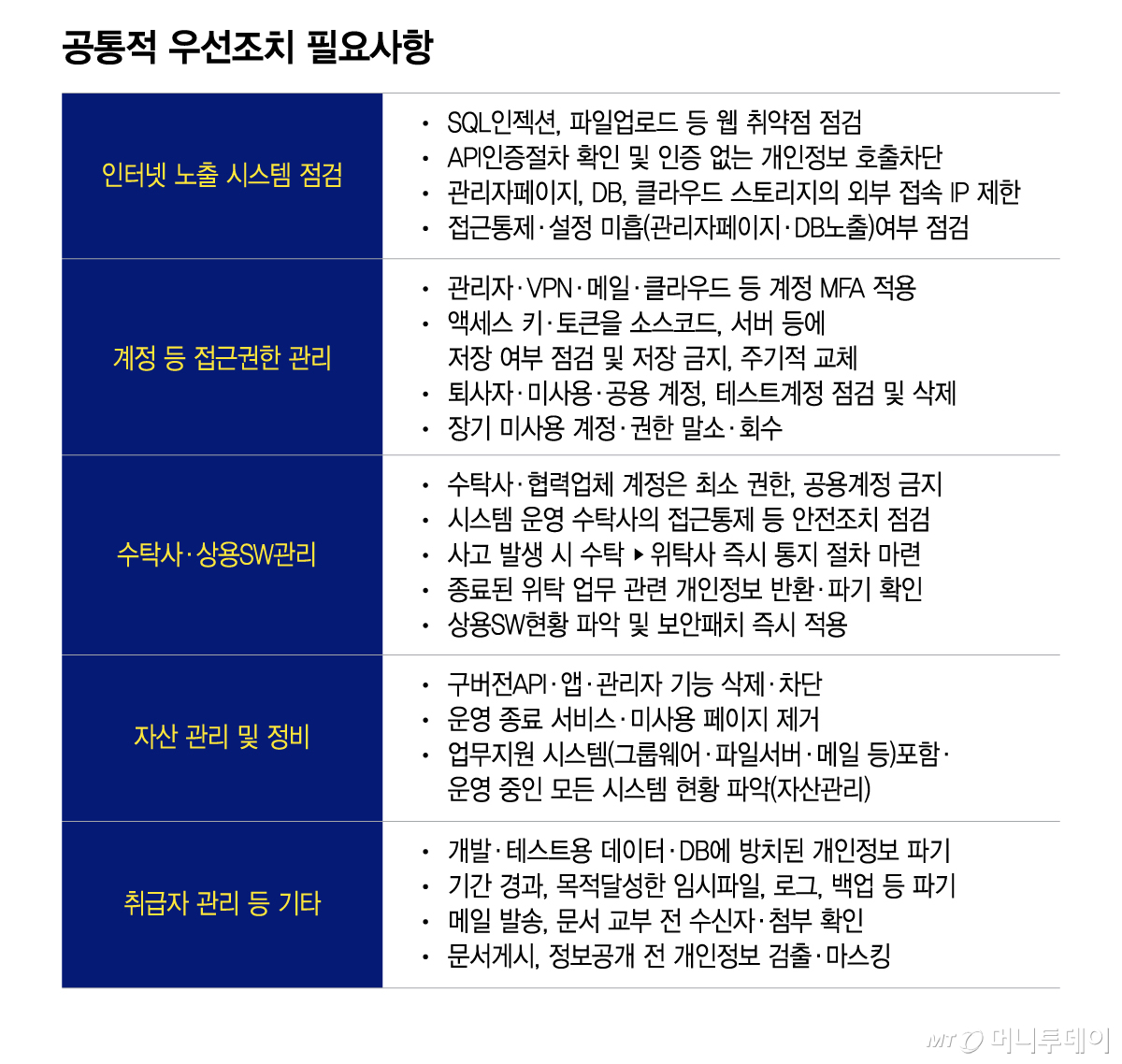
First, the Personal Information Protection Commission will activate its emergency response and inspection support system. The core of this involves strengthening cooperation with relevant ministries and supporting public and private sectors in implementing necessary priority measures.
Necessary priority measures are categorized into five themes: inspection of internet-exposed systems, management of access rights such as accounts, management of subcontractors and commercial software (SW), asset management and maintenance, and others (such as handler management). Each theme consists of 3 to 5 specific necessary items.
In addition, the Personal Information Protection Commission plans to intensively manage each institutional investor for three months starting from December.
First, each ministry and metropolitan local government must assign a team leader to a deputy head of the institution to activate an emergency inspection and response system.
Furthermore, the Personal Information Protection Commission plans to request guidance and supervision so that affiliated and subordinate institutions outside the headquarters can swiftly implement necessary priority measures.
Considering the reality that specialized personnel have been lacking, causing each ministry to inspect public institutions under their jurisdiction through written reports and commissioned services, the Personal Information Protection Commission will also actively support on-site inspections by ministries.
For private companies and institutional investors, plans are in place to guide them on necessary priority measures through channels such as the Council of Chief Privacy Officers (CPO) and self-regulatory organizations.
Additionally, emergency inspections will be conducted focusing on high-risk groups with significant potential impact in case of leakage. A technical support system capable of responding swiftly to technological issues through industry-academia-research cooperation will also be established and operated.
In the medium to long term, plans are underway to build a company-wide personal information protection system over 2 to 3 years to address the normalization of AI threats. The specific content aims to be announced within the year, with final discussions currently in progress with relevant ministries.
Incentive structures for security investment and government-level support measures are expected to be central.
Yang explained, "It is difficult to respond using a post-hoc method that involves preparing and checking checklists quarterly or monthly." He added, "The system must be changed and invested in to make the personal information protection system continuous and automated."

 in TECH

