

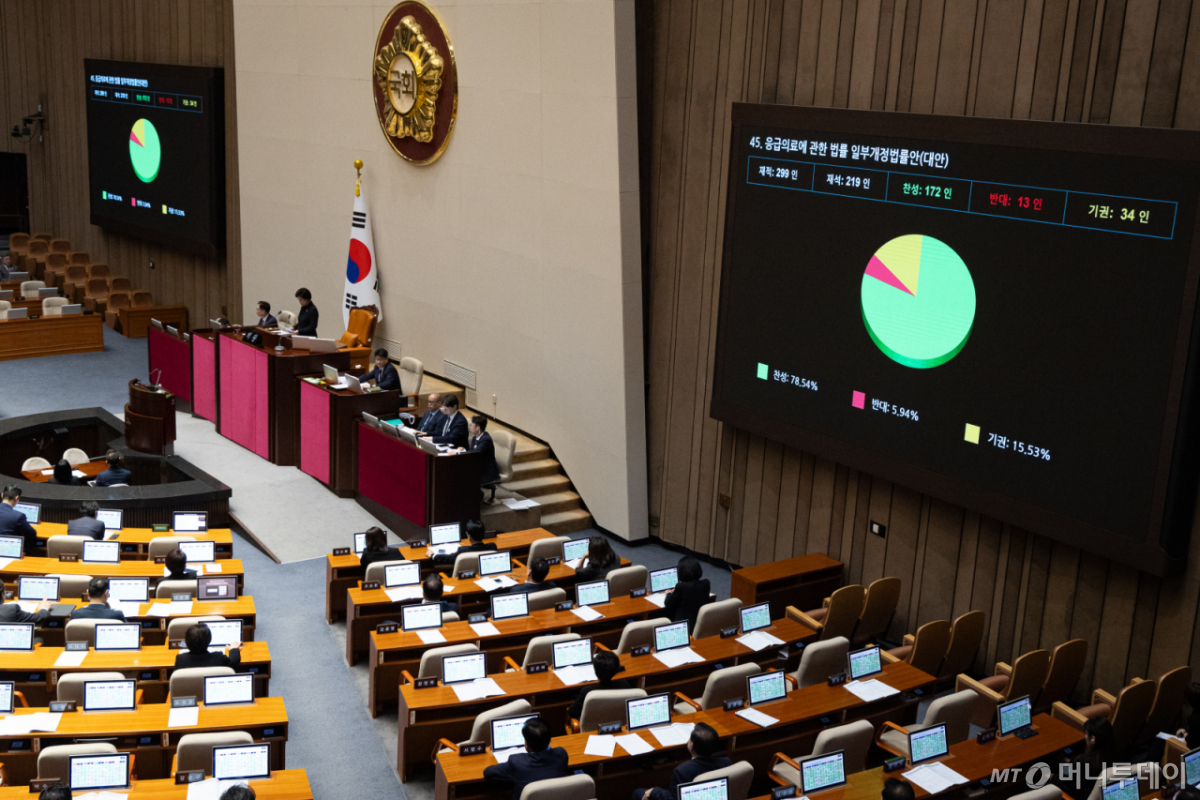
Following the police search of the pediatric emergency center at Ajou University Hospital, an amendment to the Emergency Medical Care Act mandating institutional investors in emergency medical care to admit emergency patients was passed by the National Assembly plenary session. In response, the medical community is raising its voice, arguing that gaps in pediatric emergency care could widen further.
On the 6th, the Association of Professors at National Medical Colleges (Medical College Professors' Association) issued a statement saying, "Emergency rooms are places where treatments are performed where delays of seconds or minutes can determine life and death, such as cardiopulmonary resuscitation, securing airways, and treating convulsions and shock," and criticized that "the police's forced investigation of the pediatric emergency room will unnecessarily suppress medical professionals in the future."
Previously, the Gyeonggi Southern National Police Agency searched the pediatric emergency center at Ajou University Hospital on the 30th of last month. This was to investigate whether there was medical negligence in a case where an infant, four months old, who had been receiving treatment for cyanosis at the hospital died in July. At the time of the search, medical staff were in the middle of emergency treatment, and it is known that police requested the staff to "step aside as we need to check the computer used for treatment."
In response, doctors strongly protested this as an "excessive investigation." The Korean Society of Pediatric Emergency Medicine issued a statement of condemnation, calling it an "investigation method that undermines the right to medical care of other pediatric patients and suppresses doctors' treatment." The Korean Medical Association also stated sharply, "Even if a warrant had been necessary, medical records could have been obtained from the medical records department and computer servers," and added, "The police must answer why they specifically targeted an emergency room where treatment was in progress, and whether the search was truly necessary."
Amid this, the amendment to the Emergency Medical Care Act passed the National Assembly plenary session on the 1st. The amendment allows the 119th Emergency Dispatch Center and the Central Emergency Medical Situation Room to designate hospitals for admitting emergency patients, and was proposed with the aim of preventing "emergency room ping-pong" (refusal to admit emergency patients). However, among doctors, it is called the "Emergency Room Patient Mandatory Admission Act" because it strengthens only the obligation to admit severe emergency patients without sufficiently considering actual patient admission conditions at institutional investors in emergency medical care, such as the availability of surgery and procedures, specialized personnel, and capacity for follow-up care.
Upon news of the amendment's passage by the plenary session, anxiety has spread among doctors who have guarded pediatric emergency rooms that "if we are forced to accept pediatric emergency patients and the treatment outcome is poor, will we not become targets of police search warrants?" Ryu Jeong-min, President of the Korean Society of Pediatric Emergency Medicine, expressed concern, saying, "In a situation where the number of doctors in the pediatric emergency field has rapidly decreased recently, the pressure on doctors regarding emergency patient admission policies has further worsened the pediatric emergency medical environment," and added, "This will lead to a rapid exodus of pediatric emergency and critical care personnel and a lack of support for successors, resulting in a break in the next generation soon."
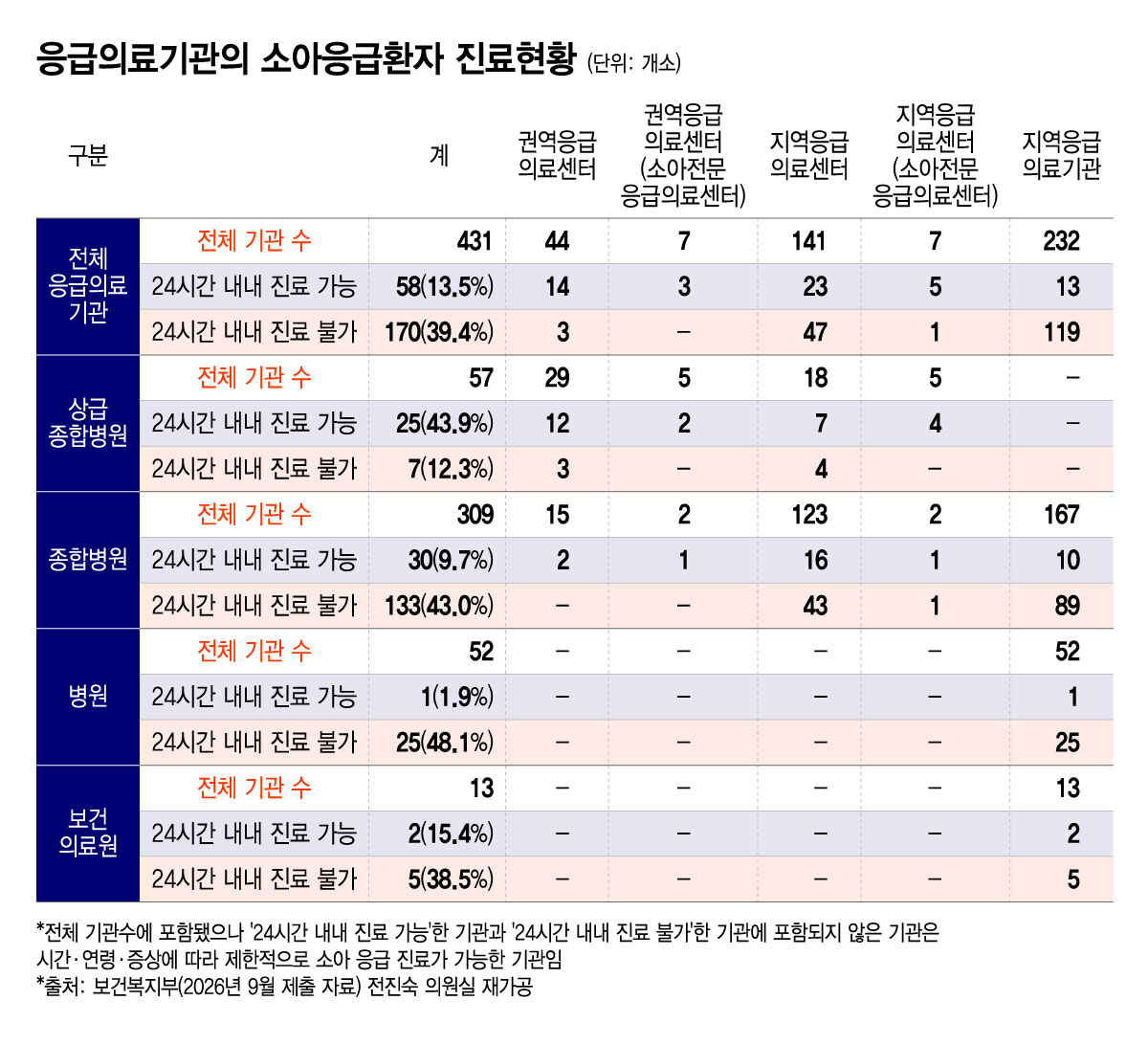
The lights are already going out in pediatric emergency rooms nationwide. According to the "Status of Pediatric Emergency Patient Care at Institutional Investors in Emergency Medical Care" submitted by Democratic Party of Korea legislator Jeon Jin-sook from the Ministry of Health and Welfare on the 6th, only 58 facilities (13.5%) out of 431 institutional investors in emergency medical care nationwide provide 24-hour pediatric emergency care without restrictions on time, age, or symptoms.
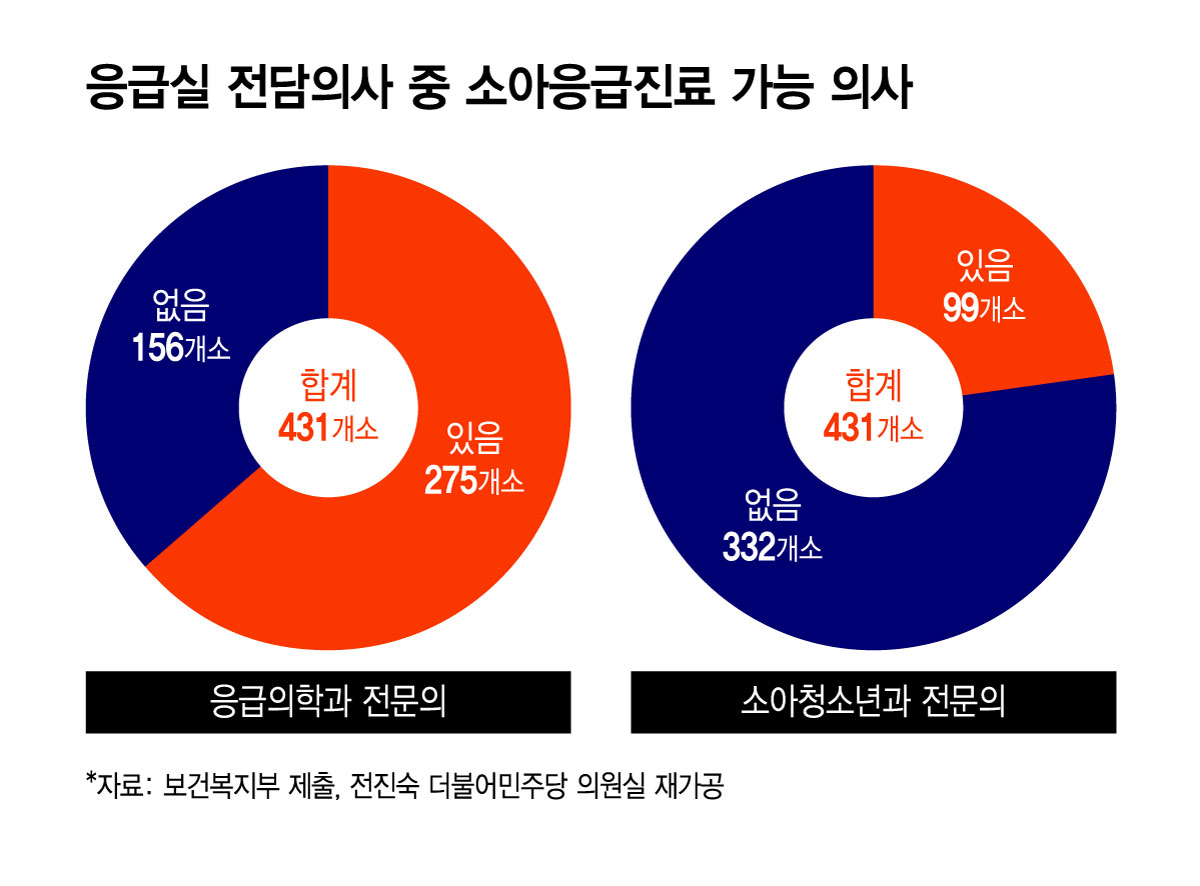
The number of specialists in pediatrics and emergency medicine responsible for pediatric emergency care has also decreased. Among the total 431 institutional investors in emergency medical care, only 99 facilities (23%) had a pediatric specialist working as a dedicated emergency room physician, while at the remaining 332 facilities (77%), no pediatric specialist worked as a dedicated emergency room physician. It was found that 275 facilities (63.8%) had an emergency medicine specialist capable of providing pediatric emergency care, while 156 facilities (36.2%) did not have such a specialist.
The number of residents aspiring to become pediatric specialists is at rock bottom. According to the "Status of Pediatric Residents and Training" submitted by So Byeong-hun (Rep.) from the Ministry of Health and Welfare, as of last September, the actual number of pediatric residents employed at training hospitals nationwide was only 113. Compared with 593 appointees in 2021, this means that 81% (480 people) have evaporated in just five years. Even in six metropolitan cities and provinces including Gangwon, Gyeongbuk, Gyeongnam, Jeonnam, and Sejong, the number of employed pediatric residents is "zero," indicating complete disappearance.
Pediatric hospitals that have been responsible for secondary pediatric care in local areas are concerned that this search warrant will lead to more cases where pediatric emergency patients are transferred "backwards" from tertiary hospitals to secondary hospitals.
Choi Yong-jae, President of the Korean Pediatric Hospital Association, told MoneyToday, "If the pediatric emergency centers at tertiary hospitals become suppressed due to this search of the pediatric emergency room, those patients will inevitably be transported to secondary hospitals (pediatric hospitals)," and predicted, "However, since a significant number of local pediatric hospitals are already responsible for night and holiday care, inpatient care, and moderate patients with dehydration, respiratory distress, high fever, and convulsions, there is a possibility that these patients will again find themselves wandering in search of higher-level hospitals."

 in THEBIO


