

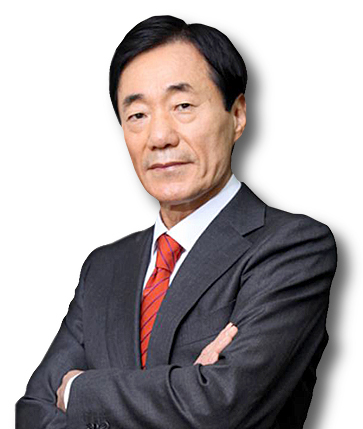
As suspicions of a violation of mandatory tender offer obligations by Shin Dong-guk, Han Yang-jeong-mil (Chairman), the largest individual shareholder of Hanmi Science, spread, criticism has emerged from some in the legal community that the rebuttal content from the Shin (Chairman) side does not make logical sense. The Shin (Chairman) side explained that it did not violate the Capital Markets Act because the number of counterparties was fewer than 10 when excluding special relationship parties and other exempted transactions, but there are points noting that Im Jong-yoon, Chairman of Core Group, who was a party to the management rights dispute, cannot be considered a special relationship party and therefore does not fall under the "fewer than 10" category.
"Management rights dispute counterparties in the same group?"… Complete conflict with large-scale holding report disclosures
According to multiple legal community sources on the 21st, the tender offer system stipulated in Article 133, Paragraph 3 of the Capital Markets Act is a core mechanism designed to provide shareholders in general with fair opportunities for sale. The reason special relationship parties are excluded from the count of counterparties is that such transactions are viewed as internal share transfers within a group sharing identical interests.
However, while Shin (Chairman) has been grouped with Song Young-sook, Han Mi-geu-rup (Chairman), to file large-scale holding reports, Lim Jong-yun (Chairman) and his family and companies (Core Pohang, DXVX, etc.) have fulfilled disclosure obligations as a separate group. The two camps are parties that have engaged in fierce management rights disputes for some time, leading to the interpretation that there is no room to view them as a group with identical interests.
In particular, according to Article 141, Paragraph 3 of the Enforcement Decree of the Capital Markets Act, even if they are special relationship parties, they are not considered special relationship parties under both the tender offer and large-scale holding report regulations unless they are "joint holders." In fact, Lim (Chairman)'s side has never been aggregated and disclosed as a special relationship party in Shin (Chairman)'s large-scale holding reports.
A legal community source primarily handling capital markets stated, "Since they have reported separately until now, they cannot be special relationship parties for the purpose of tender offer exemption, and if they were both special relationship parties and joint holders, the 5th% large-scale holding reports submitted over the past period would constitute false disclosures," pointing out that "the two claims cannot be true simultaneously."
Legal scope ends at "two stages"… "No basis to exclude executives' families"
It is also pointed out that the controversy has been fueled by the fact that the Shin (Chairman) side has failed to clearly specify even the applicable provisions. This is because, under current laws and regulations (Article 3, Paragraph 1, Item 1 of the Enforcement Decree of the Financial Companies Governance Act), the scope of special relationship parties based on an individual is recognized only up to a maximum of "two stages" and is clearly cut off.
The law divides an individual's special relationship parties from sub-item (a) to sub-item (j), with the core being 'sub-item (a) (Stage 1 corporation/executive),' which refers to corporations in which one invests 30% or more or exercises de facto influence, and their executives, and 'sub-item (j) (Stage 2 grand-subsidiary/executive),' which refers to corporations that the sub-item (a) corporation further invests 30% or more in to control, and their executives. Legal effect ends completely at this "sub-item (j) (Stage 2)."
When viewed based on Shin (Chairman) as an individual, Han Yang Precision, in which Shin (Chairman) holds a large shareholding, falls under sub-item (a) (Stage 1 corporation). However, the group holding company, Hanmi Science, does not fall under either sub-item (a) (Stage 1) or sub-item (j) (Stage 2) when viewed by shareholding ratio criteria (23.38% at the time of the first contract, 29.83% at the time of the second contract), as it falls short of 30%.
Even if Shin (Chairman) proves on his own that he exercises "de facto influence" over Hanmi Science and is recognized as a Stage 1 corporation, the impact would only extend to Hanmi Pharmaceutical (sub-item (j), Stage 2 corporation), which is a subsidiary of Hanmi Science.
Accordingly, Beijing Hanmi Pharmaceutical, a grand-subsidiary and overseas subsidiary of Hanmi Pharmaceutical, or its executives, exceed Stage 3, leading to the interpretation that they cannot fall within the scope of special relationship parties under any legal interpretation.
There is also a view that there are problems even when viewed from the perspective of the sellers. This is because the law recognizes only direct relationships such as "the person themselves or the spouse/blood relatives of an executive" as special relationship parties, and no exception clause exists to recognize "executives' families," such as Executive Jeon (President)'s spouse and four children, as special relationship parties.
Furthermore, Article 140, Paragraph 2 of the Enforcement Decree of the Capital Markets Act clearly calculates based on the "substantive number of counterparties." There is no provision to group sellers as one person just because they are family or under the influence of the same individual, and the Financial Services Commission's legal interpretation (November 18, 2020) also firmly stipulates individual calculation based on corporate personality and the subject exercising shareholder rights.
It is analyzed that while Shin (Chairman)'s side's disclosure documents explicitly state a total of 7 people, including "Hong Ji-yoon and 6 others," reducing this number only when determining tender offer requirements is a clear self-contradiction.
"Three core questions" the market demands from Shin (Chairman)'s side… Must clarify clear basis for special relationship parties, etc.
The legal community believes that to explain the controversy over avoiding mandatory tender offers, the Shin (Chairman) side must present clear grounds for the following three core questions.
The first is the authenticity of the disclosure. If the Lim (Chairman) family and related companies are special relationship parties of Shin (Chairman), they must clarify in which item of past large-scale holding status reports they were aggregated and reported as special relationship parties.
The second is the absence of legal basis. It is argued that it must be sufficiently explained exactly who the sellers excluded as transaction exceptions, which 'sub-item' under Article 3, Paragraph 1, Item 1 of the Enforcement Decree of the Financial Companies Governance Act they correspond to, and specifically on what basis the second-tier sellers, the spouse and four children, were excluded.
There is also a view that the "actual number of transaction counterparties" must be clarified. Sources interpret that suspicions can never be resolved unless it is clearly stated how many actual transaction counterparties remain after excluding exceptions, who they are, and whether there are overlapping figures among the identity-unrevealed sellers in the first and second transactions.
A legal expert who requested anonymity stated, "Tender offer regulations are a core norm of the capital market for protecting minority shareholders," pointing out that "it is not acceptable to consistently provide self-contradictory explanations such as 'fewer than 10 people if exceptions are removed' without specific statutory grounds, and it is a matter requiring thorough investigation by the authorities," adding that "it runs counter to the policy direction of the current government, which focuses on creating a fair capital market and protecting small shareholders."
Previously, Shin (Chairman) contracted to purchase Hanmi Science shares (13.74%) off-market in three instances this year: February, July, and October. He purchased shares through Lim Jong-yun (Chairman), the eldest son of the Hanmi Pharmaceutical owner family, DXVX, his wife Hong Ji-yoon, and others. In the process, he did not conduct 5% reporting (Report on Large-scale Holding Status of Shares, etc.), raising suspicions of violating the Capital Markets Act. The Capital Markets Act mandates a tender offer when shares are purchased off-market from 10 or more shareholders within a certain period, resulting in held shares exceeding 5%. In response, Law Firm Hwaoo, which recently handled the relevant share transactions, stated that Shin (Chairman)'s current transaction does not fall under the mandatory tender offer obligation as it includes transactions with special relationship parties, among others.

 in THEBIO

