

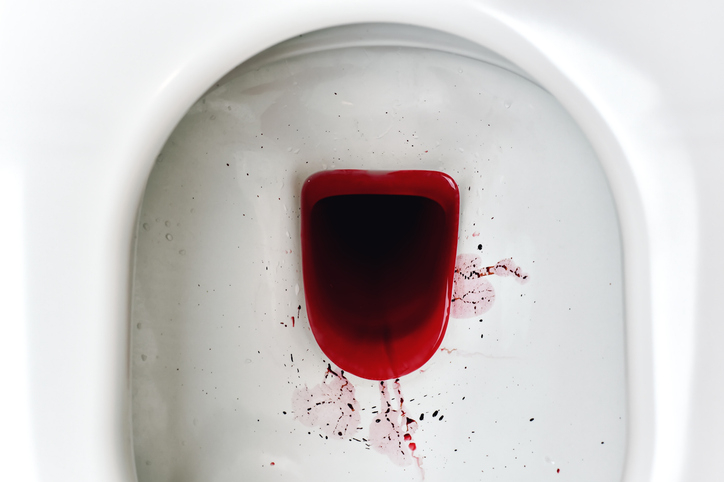
When bright red blood appears on toilet paper after a bowel movement, or when there is stinging and discomfort around the anus, most people assume it is hemorrhoids and do not take it seriously. However, if anal bleeding and pain recur or gradually worsen, or if symptoms persist despite treatment, one should suspect the possibility of anal cancer.
Anal cancer is a malignant tumor that occurs in the anal region. It is a distinct disease from colorectal cancer and rectal cancer, differing in location of occurrence, cell type, and treatment method. The most common form is "squamous cell carcinoma," while "adenocarcinoma" or "malignant melanoma" can also occur. These types of anal cancer account for a very small proportion of all cancers and are rare, but because their symptoms are similar to those of common anal diseases like hemorrhoids, they are often detected too late in many cases.
Anal cancer, particularly squamous cell carcinoma, is largely caused by infection with the human papillomavirus (HPV) through anal intercourse. In particular, there is a strong association with HPV type 16. In addition, immunosuppressed states, smoking, and a history of cervical cancer, vaginal cancer, or vulvar cancer increase the risk of anal cancer. Chronic inflammatory anal diseases such as fistula-in-ano (a condition where secretions flow through a hole connecting an abscess around the anus to the skin inside and outside the anus) can rarely be related, but hemorrhoids do not have a strong direct association with anal cancer.
In the early stages of anal cancer, anal bleeding is common, and it may be accompanied by anal pain, itching, a sensation of foreign body, or a feeling of a mass. As the disease progresses, symptoms such as changes in bowel habits, thinning of stool, a sensation of incomplete evacuation, non-healing ulcers, and enlarged inguinal lymph nodes may appear. Since it is difficult to distinguish from hemorrhoids based on symptoms alone, if symptoms persist or do not improve after treatment, detailed examinations should be received.
Diagnosis of anal cancer begins with a digital rectal examination, followed by confirmation of lesions through anoscopy, proctoscopy, and colonoscopy, and definitive diagnosis via biopsy. Subsequently, CT (computed tomography), MRI (magnetic resonance imaging), and PET (positron emission tomography) scans are used to evaluate the stage and presence of metastasis. For squamous cell carcinoma, which accounts for the majority of anal cancer cases, concurrent chemoradiotherapy is currently recommended as the standard treatment.
HPV vaccination, safe sexual practices, and smoking cessation help prevent anal cancer. Early treatment of chronic inflammatory anal diseases such as fistula-in-ano also helps in preventing anal cancer. Although anal cancer is a relatively rare disease, if detected early, there is a high possibility of treatment while preserving anal function, and treatment outcomes are good. Therefore, it is important not to miss even small changes in the body.
Text=Reporter Jung Sim-gyo [email protected], Consultation=Professor Im Byeo-ri, Department of Surgery, Suncheon Hyangdae Seoul Hospital.

 in THEBIO
