


"AriBio's global Phase 3 clinical trial for 'AR1001' was designed such that it would be successful if either the Overall population or the Monotherapy group demonstrated statistical significance. It is a 'smart design' in that it allows efficacy to be proven under any scenario within a single study."
Jang Seong-hoon, Head of the Global Regulatory Consulting Division at the National Clinical Trial Support Foundation, stated during an online interview with this outlet on the 18th that evaluating AriBio's Phase 3 clinical trial results as "monotherapy succeeded, overall failed" is a misunderstanding. Jang is an expert who served in clinical pharmacology review at the U.S. Food and Drug Administration (FDA) Center for Drug Evaluation and Research (CDER) for over 20 years since 2002. After working in industry, he has been engaged in global regulatory support and education activities at the Foundation this year.
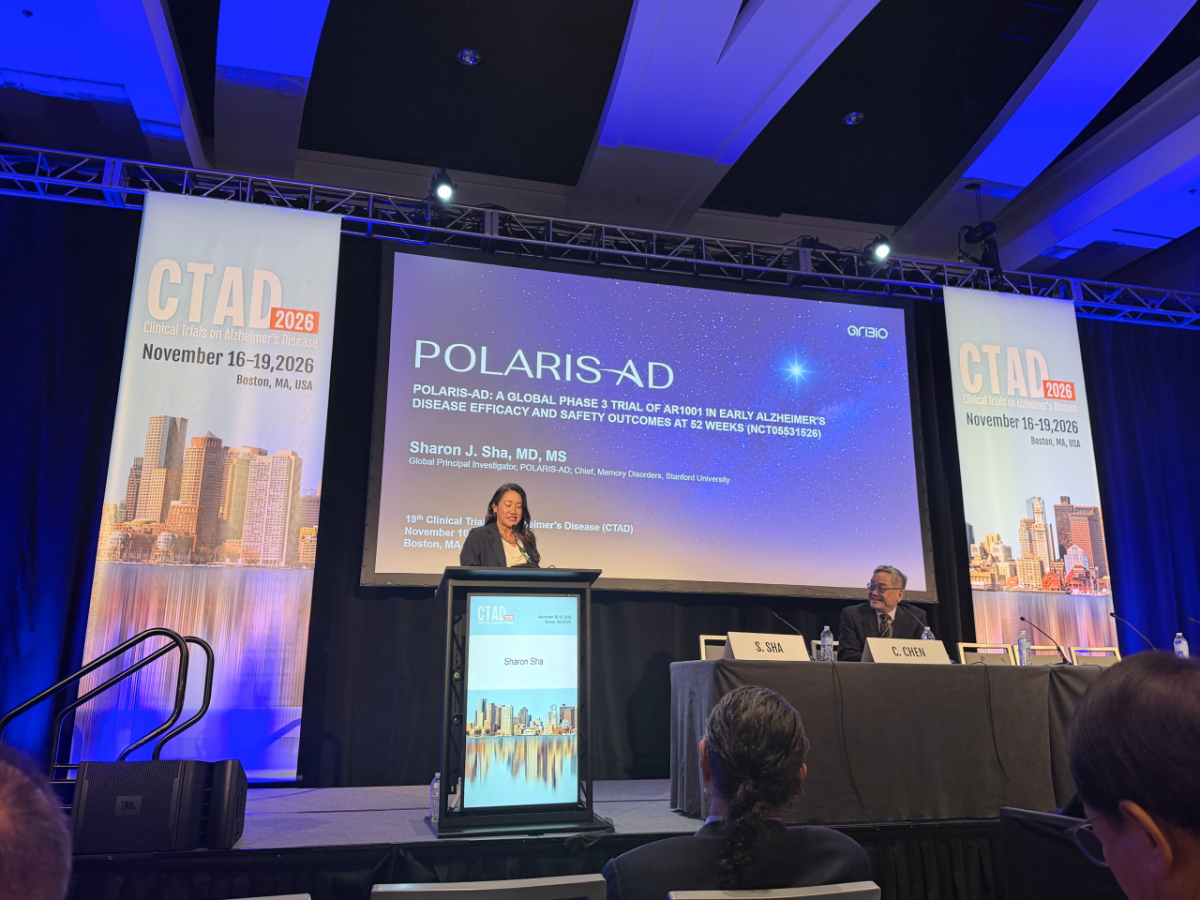
According to AriBio, AR1001, an oral treatment for Alzheimer's disease (dementia), showed a statistically significant difference in Phase 3 results, with the 'Clinical Dementia Rating Sum of Boxes' (CDR-SB) score being 0.44 points lower than the placebo group in the monotherapy group (604 patients). In contrast, in an analysis targeting all 1,535 patients, the CDR-SB score for the AR1001 administration group was 0.11 points lower than the placebo group, but no statistically significant difference was confirmed.
Regarding this, Jang explained, "AriBio's Phase 3 clinical trial is a study that pre-specified administering AR1001 and placebo for 52 weeks and using the CDR-SB improvement score of the Overall or Monotherapy group as the primary efficacy endpoint," adding, "It only requires one of the two to demonstrate statistical significance." He further stated, "If statistical significance is secured in the previously untreated monotherapy group, the indication can be set accordingly," adding that it is a clever method that allows for regulatory approval grounds regardless of the outcome.
The FDA generally conducts a comprehensive evaluation during the new drug approval process, including large-scale clinical trials, non-clinical trials, clinical pharmacology, and manufacturing and quality control (CMC) data. The long-term extension study (OLE), conducted separately after the 52nd-week trial, is not expected to have a significant impact on the approval process as it is difficult to maintain a placebo (control) group.
Jang stated, "While I cannot predict FDA approval, it is unlikely that this Phase 3 clinical trial data will be an obstacle to the marketing application," evaluating that "producing results in global clinical trials despite the enormous cost burden is encouraging." AriBio plans to apply for product approval to global regulatory institutional investors such as the FDA as soon as detailed analysis of the key Phase 3 clinical trial results is completed.

 in THEBIO

