

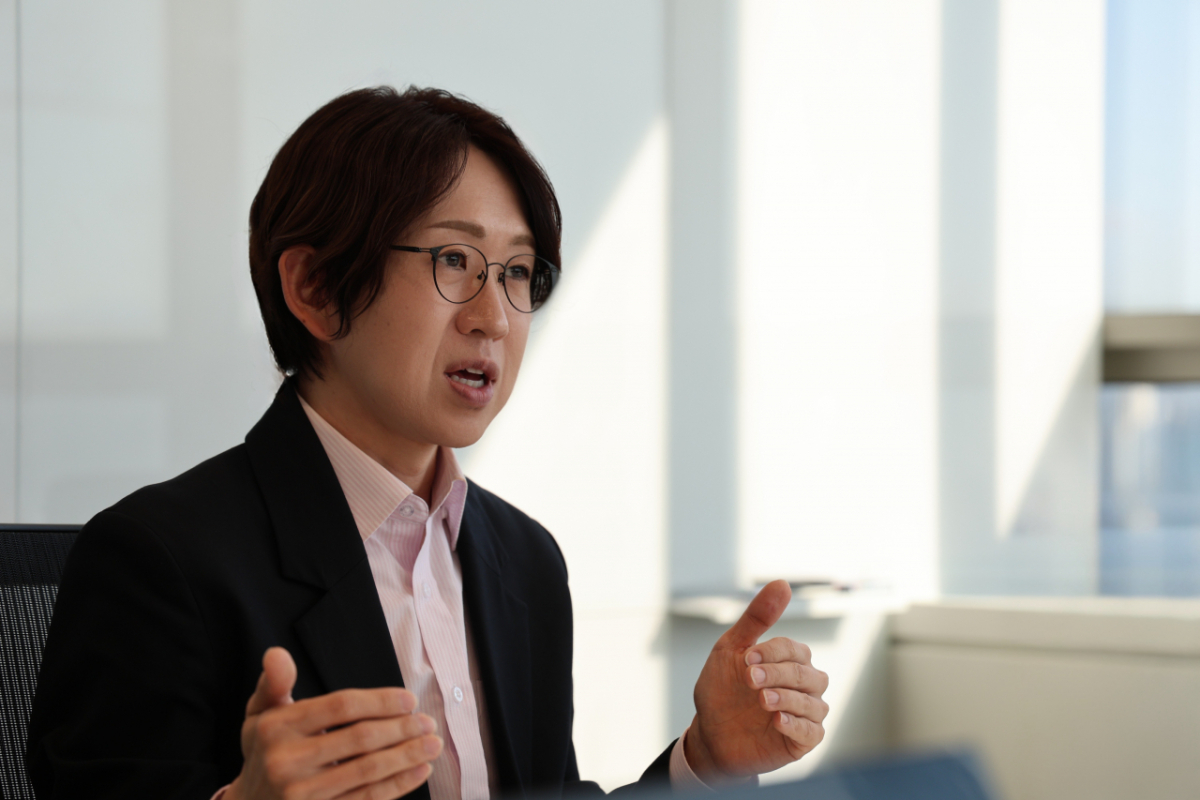
"Our goal is to enable anyone to create and control a robot without writing a single line of code, if there is a robot they need."
Gong Kyung-cheol, CEO of Angel Robotics and a professor of mechanical engineering at the Korea Advanced Institute of Science and Technology (KAIST), recently outlined the company's vision for its physical AI business in an interview with MoneyToday at its headquarters in Gwangjin-gu, Seoul.
The plan centers on two technologies: "phact," an actuator, and "phorce," a control platform comprising circuit boards and algorithms. Building on drive and control technologies developed through its wearable rehabilitation robots, the company aims to create a platform that allows anyone to build robots with ease.
Angel Robotics, founded by Gong in 2017, became the first domestic wearable robotics company to successfully list on KOSDAQ in 2024. Its main products are rehabilitation robots such as the "Angellex M20" and "Angelsuit H10."
Following its acquisition of health insurance reimbursement rates domestically, the company has also expanded into overseas markets, including Malaysia.
These products incorporate phact, which takes on the role of muscles, phorce, which controls movements, and AI to grasp users' behavioral intentions in real time and assist their movements, thereby enhancing rehabilitation effects.
Gong judges that the platform's competitiveness is sufficient, given that the company has researched and verified robots' force and directional control capabilities for decades.
She said, "I have long studied the resistance and friction of rehabilitation robots for patient treatment, and this has become a business competitive advantage in the era of physical AI," adding, "As the physical AI ecosystem expands, synergies will arise with the wearable rehabilitation robot business due to data refinement and reduced component costs."
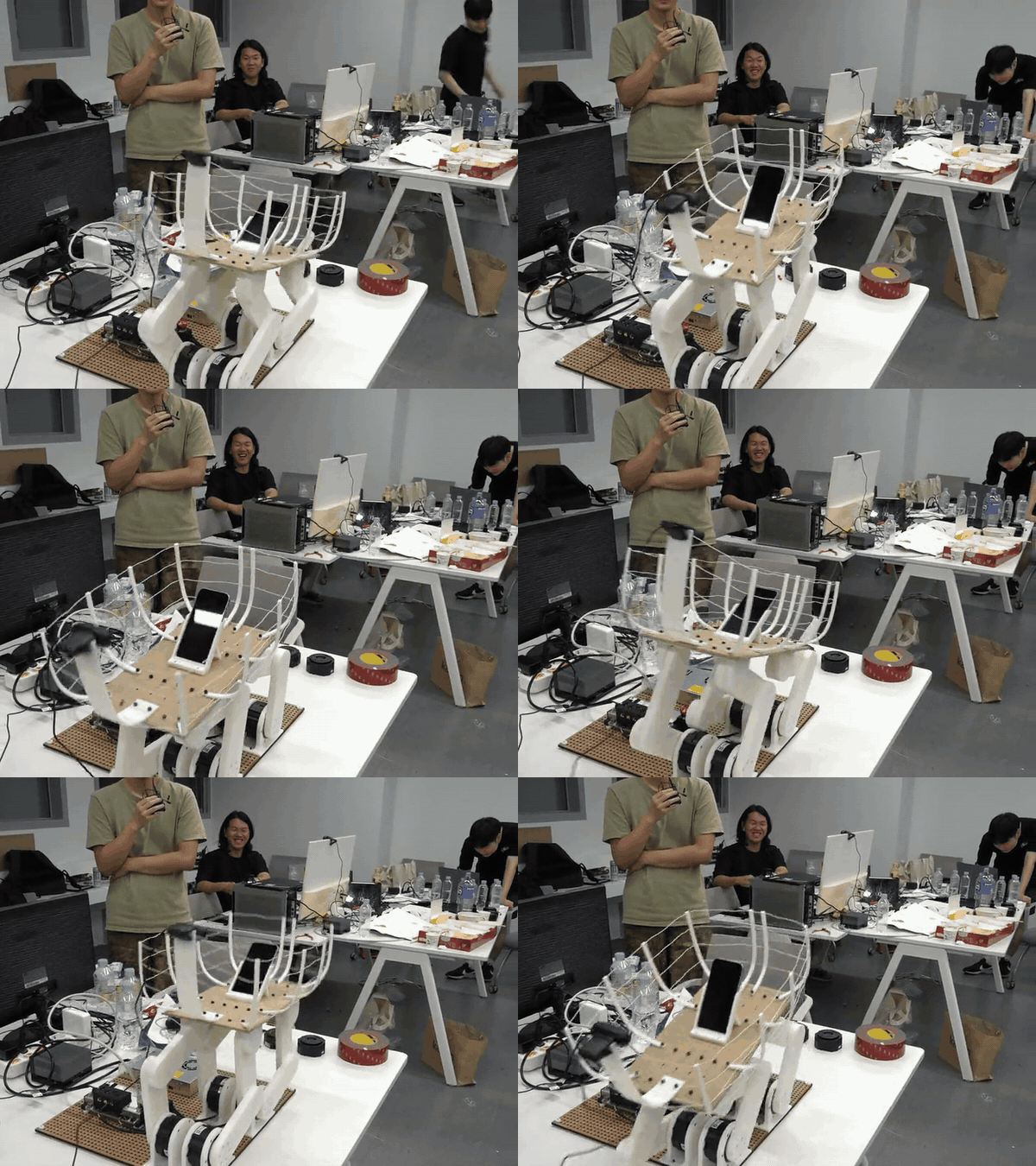
The scalability of the physical AI platform was demonstrated at the "1st Robot Hackathon" held at KAIST last August. All 10 teams, consisting of undergraduate students from KAIST and Seoul National University who were mostly non-robotics majors, succeeded in creating robots for tasks such as box packaging and grilling lamb skewers using phact and phorce within 100 hours. Some students also launched startups with their own robots.
Gong said, "Physical AI has a wide range of applications and is highly individualized—so much so that even a robot for filling rice and a robot for filling red bean paste require different data and must be built separately—so platform demand will be sufficient."
She added, "Ultimately, we will significantly lower the barriers to physical AI so that ordinary people can use it without burden, becoming the leader of the 'robots for all' ecosystem."

 in THEBIO

