

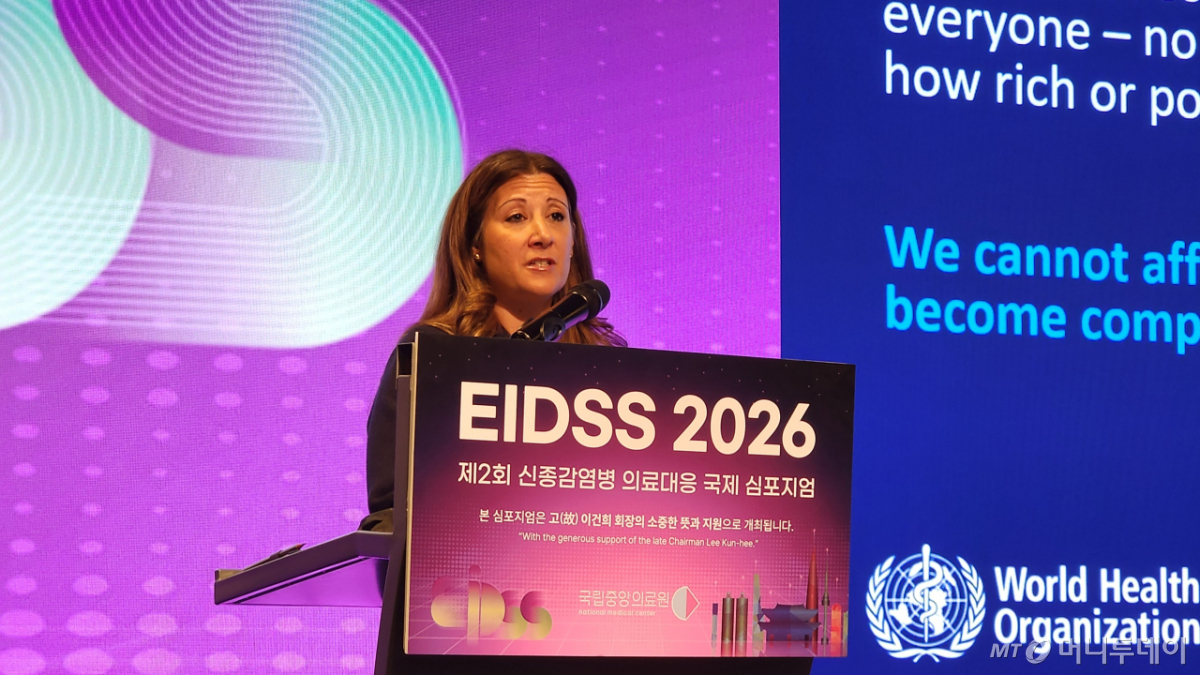
The World Health Organization (WHO) is seeking ways to prepare for new pathogens that could be created by artificial intelligence (AI).
At the "2nd International Symposium on Medical Response to Emerging Infectious Diseases (EIDSS 2026)" held by the National Medical Center at JW Marriott Dongdaemun Square Seoul on the 23rd, Maria Van Kerkhove, Director of the WHO Department of Epidemic and Pandemic Threat Management, who delivered a keynote speech, warned, "I believe that if AI can simply read human genetic sequence information, it is fully capable of creating new pathogens," adding, "Human health could be threatened by AI."
Director Maria Van Kerkhove, who was in charge of the keynote speech on the topic of "Latest Trends in Viral Infectious Diseases: From the Perspective of the World Health Organization" that day, introduced global trends in infectious disease outbreaks since the coronavirus pandemic and the WHO's response strategies. She stated, "The WHO will establish preparedness for infection from new pathogens created by AI," emphasizing, "Infectious disease response systems should not function only during actual crisis situations; they must be able to detect new risks early."
The WHO is advancing related projects in a direction that integrates its experience in responding to coronavirus infectious diseases such as the coronavirus pandemic, Severe Acute Respiratory Syndrome (SARS), and Middle East Respiratory Syndrome (MERS), and builds a long-term preparedness system beyond short-term crisis response.
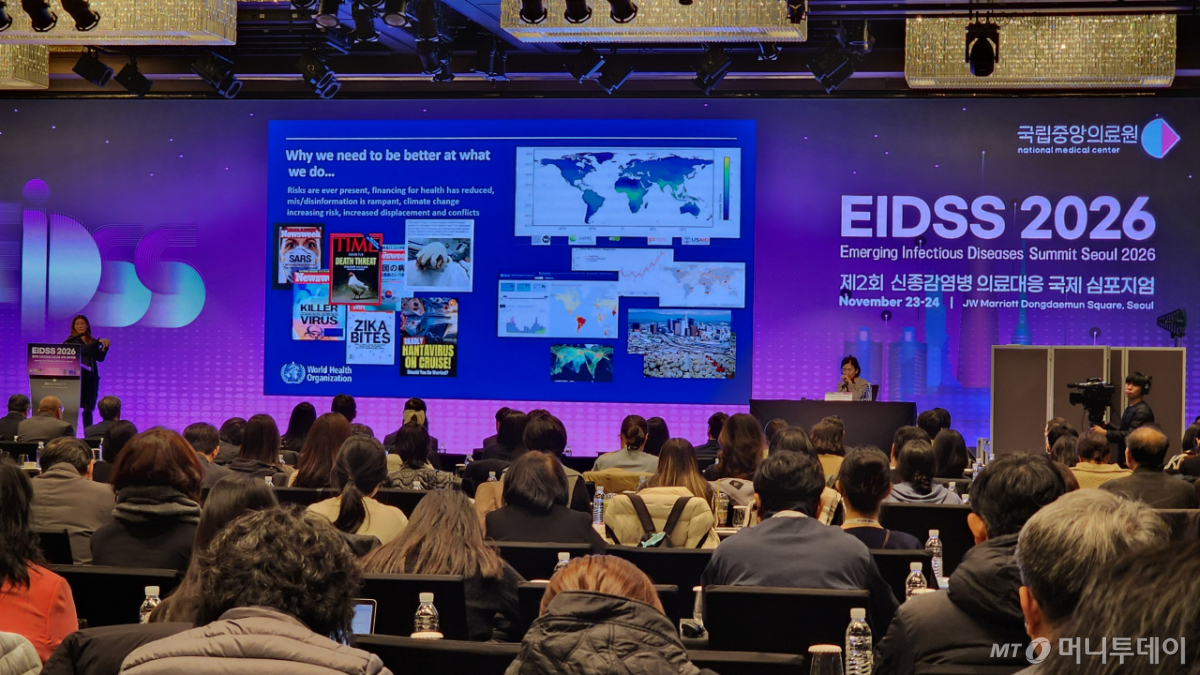
She diagnosed that the world is facing not only the risks of infectious diseases themselves but also complex risks such as international conflicts, geopolitical changes, climate change, population movement, and antibiotic resistance. She pointed out that these changes are making public health activities responding to the occurrence and spread of infectious diseases more difficult. She further stated, "Infectious disease response systems should not function only during actual crisis situations," mentioning, "Even in peacetime, surveillance, testing, research capabilities, and field investigation systems must be maintained so that new risks can be detected early."
A case study of Japan, which has formulated a new strategy for high-risk infectious diseases, was also shared. The Japanese government conceived the "Strategy to Strengthen the Development and Production System for Medicines, etc., in Response to Infectious Disease Crises" at a cabinet meeting on March 24 last year. As part of this, it decided to promote national-level MCM (Medical Countermeasures), or "medical response means." A notable feature is that it has expanded from the existing "vaccine-centric policy" to an integrated national strategy encompassing vaccines (infectious disease prevention), treatments (infectious disease treatment), and diagnostic products (rapid infectious disease diagnosis).
That day, Norio Omagari, Director of the Japan Institute for Health Security (JIHS), presented "Diagnosis, Research, Patient Management, and Infection Prevention Strategies in Preparation for the Unknown Infectious Disease 'Disease X,'" stating, "Japan missed the initial suppression during the previous coronavirus pandemic due to a lack of policy flexibility and communication." He added, "Taking that time as a lesson, we have designed new medical countermeasures (MCMs) to prepare for upcoming new infectious diseases."
According to MCMs, infectious diseases are divided into five groups—severe infectious diseases (Group X), emerging infectious diseases (Group A), and general infectious diseases (Group B)—and researched precisely. He explained, "During the coronavirus crisis, Japan had no research and development (R&D) history regarding the coronavirus, so it could not save patients, stabilize society, or return society to normal." He added, "In accordance with the MCMs system, we have decided to accumulate research capabilities by dividing infectious disease types in detail."
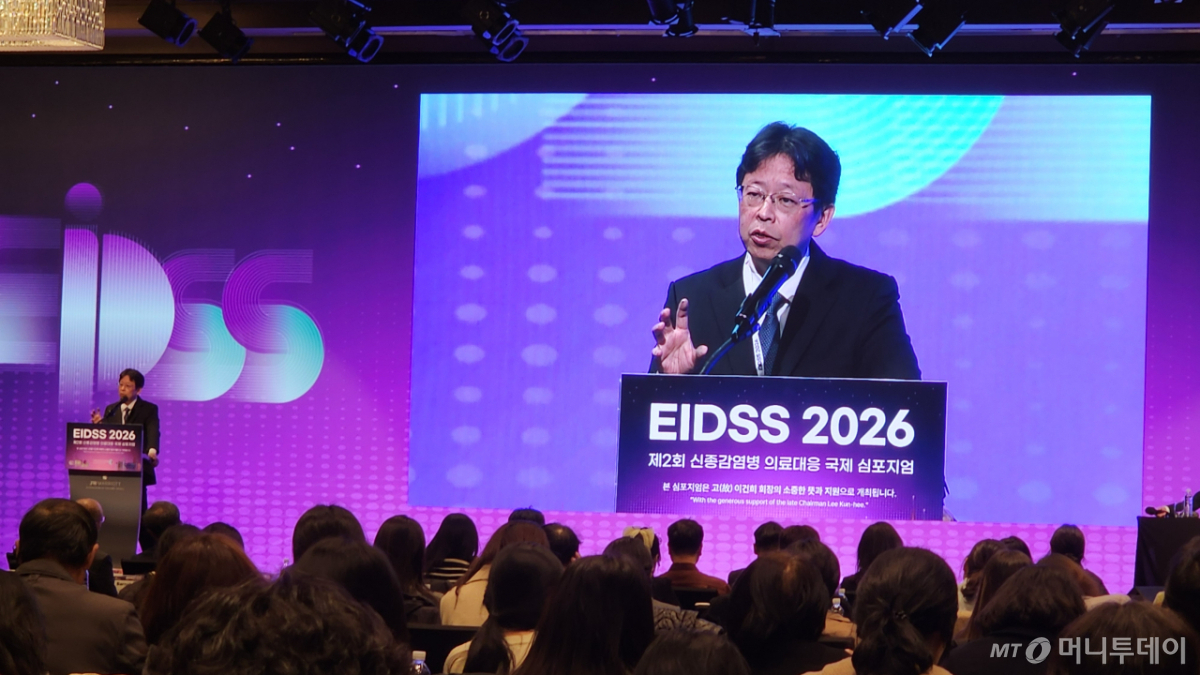
This symposium was prepared as part of the "Korea Infectious Disease Overcome Support Project," which is being promoted based on the 700 billion won donated by the family of the late Chairman Lee Kun-hee to the National Medical Center in April 2021. The project aims to expand national infrastructure necessary for infectious disease treatment and research, and to strengthen national response capabilities against emerging and high-risk infectious diseases. The Ministry of Health and Welfare, KDCA, and the National Medical Center signed a donation agreement in May 2021 and have been promoting this project.
This event, held for the second time following 2024, was attended by approximately 300 experts, including medical professionals in the field of infectious diseases at home and abroad, and officials from government and related agencies. Participants shared the latest insights and trends on medical response to emerging and high-risk infectious diseases, as well as domestic and international medical response strategies, and discussed plans for building an integrated medical response system connecting national and regional levels.
In his opening remarks, National Medical Center Director Seo Gil-jun stated, "We must maintain continuous preparation at the national level, such as steady cultivation of specialized personnel and research, and establish domestic and international response cooperation systems so that all citizens can receive necessary treatment in a timely manner even during infectious disease crises." He added, "As the hub of public health institutions, the National Medical Center will steadily promote the construction of the Central Infectious Disease Hospital and infectious disease research projects, and strive to strengthen infectious disease response capabilities based on the experience and research results accumulated by medical professionals at home and abroad."

 in THEBIO


