

The Korea Development Institute (KDI) diagnosed that the improvement trend of the economy is expanding centered on semiconductors. However, uncertainty from the Middle East war continues to hold back the outlook for future economic trends.
In its August 'Economic Trends' report released on the 10th, KDI stated, "Our economy shows an expansion in the improvement trend centered on semiconductor-related sectors." This marks a shift from the expression "moderate improvement trend" used since June to "expansion of the improvement trend" after three months, indicating that the Korean economy has entered a stable phase.
Specifically, total industrial production for June (4.2%) saw an expanded growth trend as manufacturing rebounded. Industrial production (5.8%) showed only moderate growth due to the base effect of semiconductors (2.2%), but most sectors, including automobiles (12.6%) and machinery and equipment (14.4%), rebounded and turned to growth.
The service sector also maintained a favorable trend. Service industry production (94.2%) showed favorable growth centered on finance and insurance (9.2%) and professional, scientific, and technical services (13.7%).
Consumption also continued its improvement trend. The retail sales index for June (4.2%) rose centered on durable goods, expanding the rate of increase. Durable goods (10.9%) saw a significant rise in passenger cars (12.2%), influenced by some demand being anticipated ahead of the termination of the reduction in individual consumption tax on automobiles amid easing parts supply and demand disruptions. Additionally, the increase in home appliances (13.1%) expanded due to gift certificate refund events by major companies.
Equipment investment also rebounded in sectors other than semiconductors, showing a favorable trend (21.7%). Machinery (22.2%) maintained high growth with semiconductor manufacturing equipment (58.5%), while other machinery such as general industrial machinery (9.3%) and electrical and electronic equipment (19.2%) also rebounded due to base effects. However, KDI noted that external uncertainty stemming from instability in the Middle East could constrain equipment investment outside the semiconductor sector.
Construction investment continued to stagnate centered on residential construction. Leading indicators suggest non-residential construction may continue to improve, but the pace of improvement is expected to be moderate due to stagnation in the housing sector and rising construction costs.
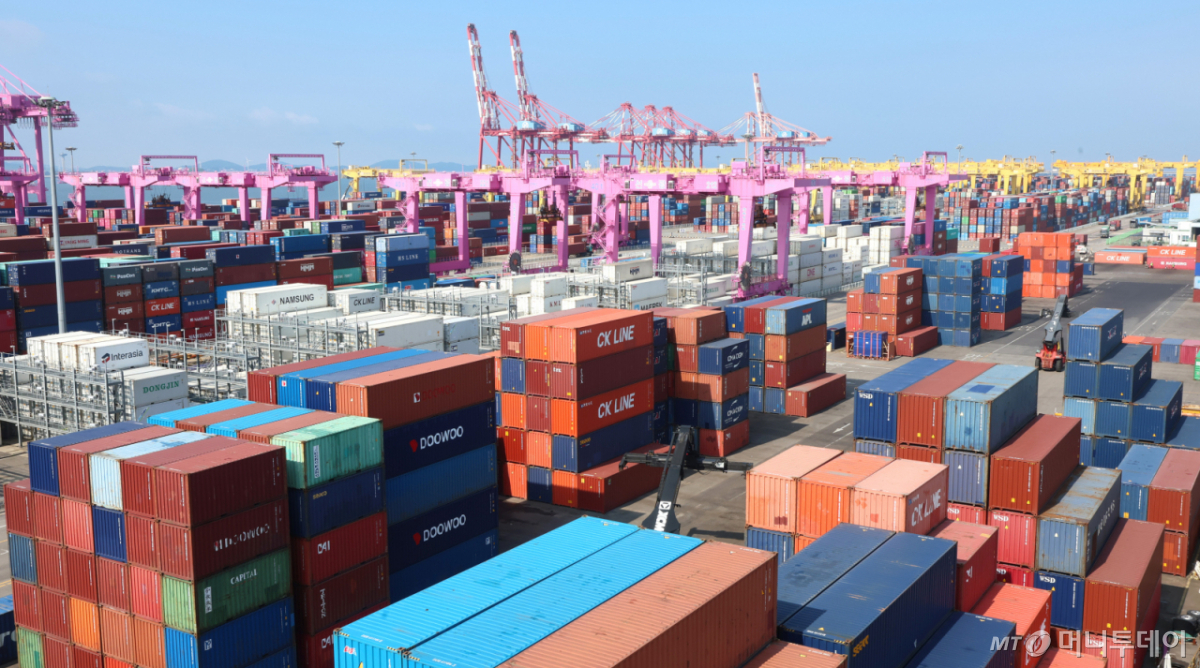
Exports maintained an increasing trend driven by strong demand related to AI. July exports (62.8%, daily average 69.6%) recorded a growth rate reaching 178.2% for ICT (information and communication technology) items centered on semiconductors. However, uncertainty in trade conditions is expanding due to U.S. tariff measures and tensions in the Middle East region.
Conversely, employment continued its slowing trend. The number of employed persons in June (63,000) improved compared to the previous month (-40,000), but remained significantly below the first-quarter average (183,000), indicating that the employment growth trend remains sluggish.
Consumer prices also recorded a lower rate of 2.8% compared to the previous month's 3.2%, as the increase in petroleum products (15.5%) significantly contracted. Due to falling international oil prices and adjustments to the petroleum price cap, the contribution of petroleum products (0.6 percentage points) decreased, but they remain a major downward factor for inflation rates. Conversely, the core inflation rate (excluding food and energy, 2.6%) expanded slightly centered on durable goods.
As such, the impact of the Middle East war is spreading across all sectors, including employment and prices. In particular, anxiety is intensifying due to expectations of additional base rate hikes.
KDI stated, "While exports and equipment investment have shown high growth centered on semiconductors, and consumption has expanded with durable goods," it added, "with U.S. tariff measures and instability in the Middle East continuing, inflation rates remain at a high level and employment conditions are slowing, indicating that domestic and external uncertainties persist."

 in ECONOMY
