

Following President Lee Jae-myung's directive to clearly define the criteria for labor disputes under the amended Labor Union Act (Yellow Ribbon Act), Kim Young-hoon, Minister of Employment and Labor, stated that he would "actively review" the matter. This reflects concerns from the business community that since the implementation of the Yellow Ribbon Act, the scope of labor disputes has expanded to include issues such as factory relocation or expansion—matters of business judgment—and even performance-based pay, which they consider excessive.
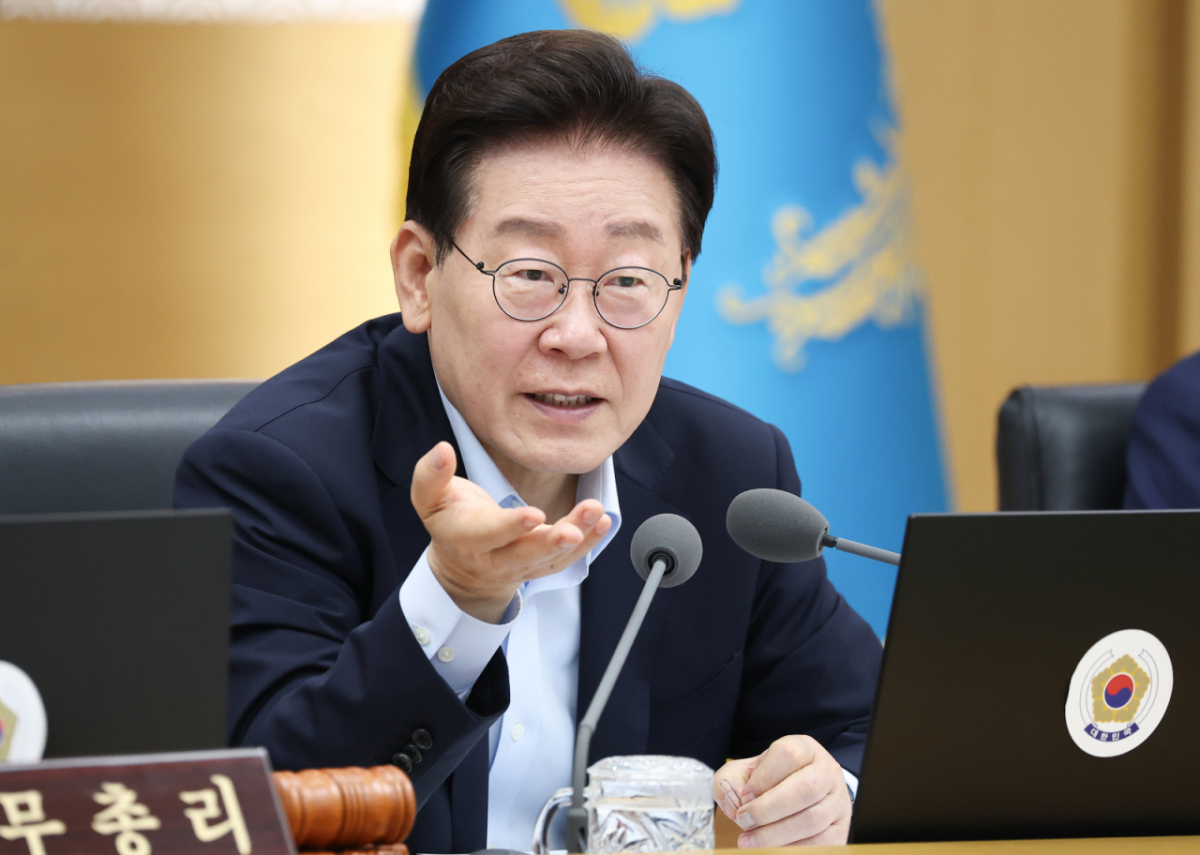
At the State Council meeting held at the Sejong Government Complex on the 11th, President Lee pointed out to Kim (Minister) that "there is criticism that the Ministry of Labor has not established clear regulations or precedents regarding whether a dispute falls under the Yellow Ribbon Act."
In response, Kim (Minister) explained, "The intent is that it cannot be addressed through an enforcement decree," adding, "Administrative interpretations have already been issued on all such judgments."
President Lee then remarked, "Interpretation and guidelines are different. Interpretations are merely opinions," and continued, "It was stated that unions cannot oppose where a company builds a factory; it would be better if this were clearly codified in regulations."
He further emphasized, "Saying via ministerial ordinance that such cases do not qualify as disputes is different from stating that the Ministry of Labor's opinion is that interpreting them as such is correct," and added, "The request to clarify the criteria has some merit; please review this more actively." In response, Kim (Minister) replied, "We will review it even more actively."
It is understood that after the implementation of the Yellow Ribbon Act, the scope of employers was expanded to include main contractors, and the industrial sector urged Woo Ryeo-ha-ja (President) to clarify guidelines on what constitutes a dispute through an enforcement decree. In particular, this can be seen as expressing determination to accelerate factory establishment by including in the enforcement decree that new semiconductor factories in the Honam region cannot become subjects of labor disputes.
On this day at the State Council meeting, Kim (Minister) also addressed plans to expand leave for family caregiving. Kim (Minister) stated, "People should not have to quit their jobs due to family caregiving or nursing responsibilities; this issue particularly affects women," and added, "We will activate the family caregiving leave and unpaid leave system."
Kim (Minister) noted, "Among the cases I heard, there was an instance where a worker applied for caregiving leave but the employer demanded proof of employment from their mother-in-law's workplace," and pointed out that one reason employers give for rejecting caregiving leave is "that other family members may be able to provide care."
He further emphasized, "This time, we are working to remove 'cases where family members other than the applying worker can provide care' from the list of reasons employers may reject caregiving leave applications," and added, "We will ensure that at least families do not have to worry about whether they must quit their jobs when someone in the family needs care."

 in ECONOMY
