

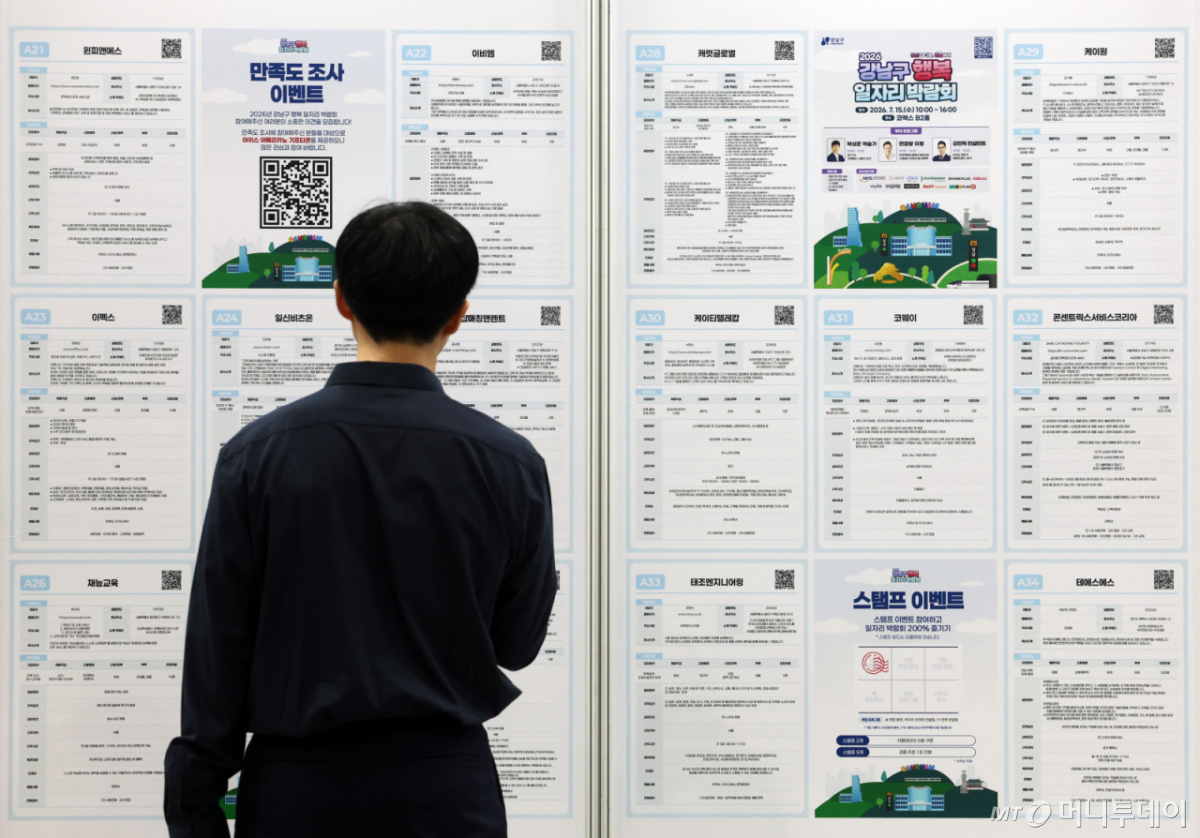
The number of employed persons increased by 108,000 last month. The employment rate for the population aged 15–64, which serves as the OECD comparison standard, reached 70.3%, the highest level recorded in July since relevant statistics began in 1989.
According to the "July 2026 Employment Trends" released by the National Data Administration on the 12th, the number of employed persons last month totaled 29.136 million, an increase of 108,000 compared to the same period last year. This marks two consecutive months of growth following a reversal in June.
The overall employment rate stood at 63.3%, down 0.1 percentage points (p) from a year earlier. However, the employment rate for those aged 15–64 rose by 0.1 p during the same period, reaching its highest level in July since statistics began in 1989.
The employment rate for youth (ages 15–29) was 44.2%, a decline of 1.6 p compared to the same month last year. This represents 27 consecutive months of decline since May 2024. During the same period, the number of employed youth decreased by 191,000.
By age group, employment fell by 204,000 among those in their 20s and by 31,000 among those in their 40s. Conversely, increases were recorded among those aged 60 and over (231,000), those in their 30s (65,000), and those in their 50s (33,000), driving the overall rise in employment.
The number of unemployed persons reached 776,000, an increase of 50,000 (6.9%) compared to the same month last year. The unemployment rate stood at 2.6%, up 0.2 p from a year earlier. Youth unemployment was 6.8%, the highest level since July 2022 (also 6.8%).
Employment increased in sectors including health care and social welfare services (+173,000, +5.3%), arts, sports, and leisure-related services (+48,000, +8.4%), and public administration, national defense, and social security administration (+46,000, +3.5%).
Conversely, employment declined in agriculture, forestry, and fisheries (-80,000, -5.4%), manufacturing (-68,000, -1.6%), and construction (-57,000, -3.0%).
The non-economically active population totaled 16.103 million, an increase of 99,000 (0.6%) from a year earlier. This resulted from decreases in those caring for children (-76,000), but increases among students and trainees (+134,000) and homemakers (+50,000). The number of those "resting" and job seekers also declined by 62,000 and 3,000, respectively.

 in ECONOMY
