

Switzerland has extended a "love call" to Korean healthcare companies. The strategy is to actively promote Switzerland as a cost-effective European hub for domestic healthcare companies seeking to enter the European market, including by establishing European subsidiaries.
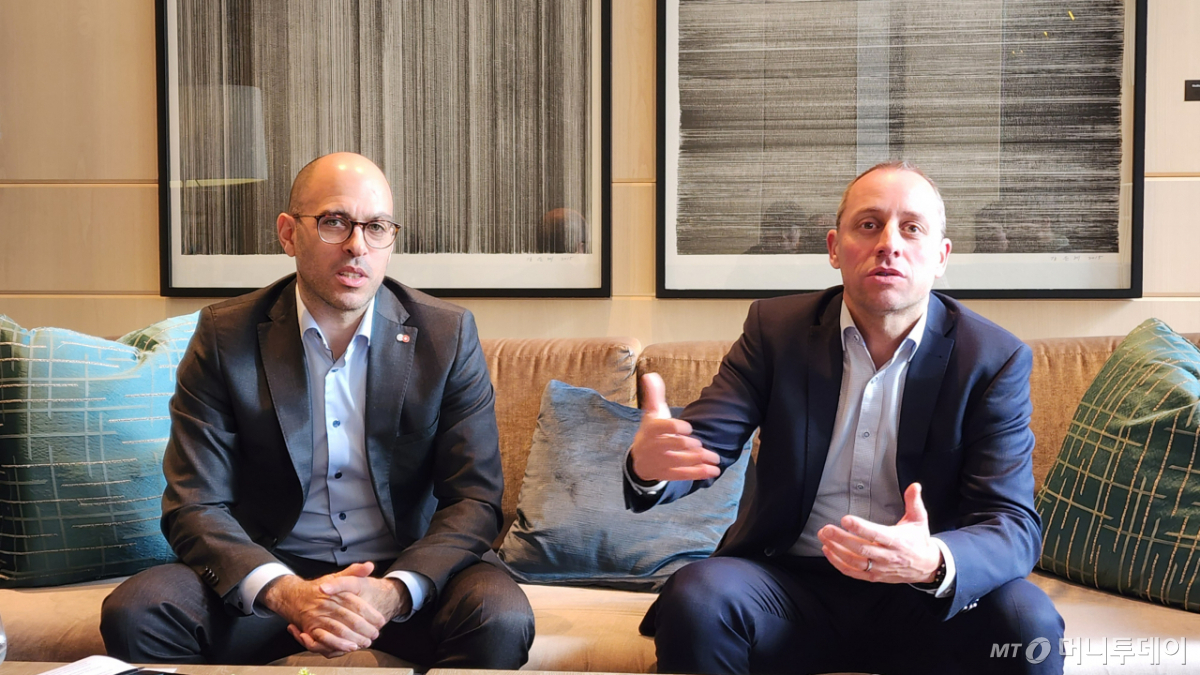
On the 25th, the Swiss Embassy's Trade and Investment Office in Korea (hereinafter the Swiss Trade and Investment Office) held a press briefing at the Four Seasons Hotel in Jongno-gu, Seoul, stating, "Switzerland has been paying close attention to the capabilities of Korea's excellent healthcare companies," and adding, "We will actively support Korean healthcare companies considering entry into and investment in Switzerland."
Previously, the Swiss Federal Government approved the "Measures for the Development of Digitalization in the Healthcare Sector" in November 2023. This medical digitalization program, known as DigiSanté, will incur costs of approximately 400 million Swiss francs (Hanwha approx. 600 billion won) from 2025 to 2034. The DigiSanté program is characterized by its focus on improving the basic conditions for digitalization in the healthcare sector, such as data collection and building compatibility.
The Korea Trade-Investment Promotion Agency (KOTRA) also analyzed that "Switzerland's DigiSanté is underpinned by a strategy to expand the scope of digital health technology used by medical professionals, patients, and caregivers from an industrial perspective."
According to a 2021 report titled "Digitization in Healthcare" prepared by McKinsey & Company Switzerland and the Swiss Federal Institute of Technology Zurich (ETH Zurich), the potential for leveraging digitalization opportunities in the Swiss healthcare system reaches up to 8.2 billion Swiss francs annually (Hanwha approx. 1,240 trillion won). This means that when the benefits of individual digital technologies in the Swiss healthcare system are converted into monetary value, they amount to approximately 1,250 trillion won.
On this day, Andrea Clementi, head of the Swiss Trade and Investment Office, stated, "We are confident that Switzerland is a strategic hub for the global business expansion of Korean pharmaceutical and biotech companies," adding, "Switzerland already leads other European countries in various aspects, including drug approval systems, taxes, and production efficiency."
He cited the "Good Manufacturing Practice Mutual Recognition Agreement (MRA)" as a key system that Korean healthcare companies should note. According to his explanation, Switzerland and the EU (European Union) mutually recognize GMP inspections and related manufacturing licenses in the fields of pharmaceutical manufacturing and quality control. He emphasized, "The drug approval and manufacturing/quality control systems are linked with those of the EU (European Union)," noting that this is "an area that pharmaceutical and biotech companies considering entry into Switzerland should pay attention to."
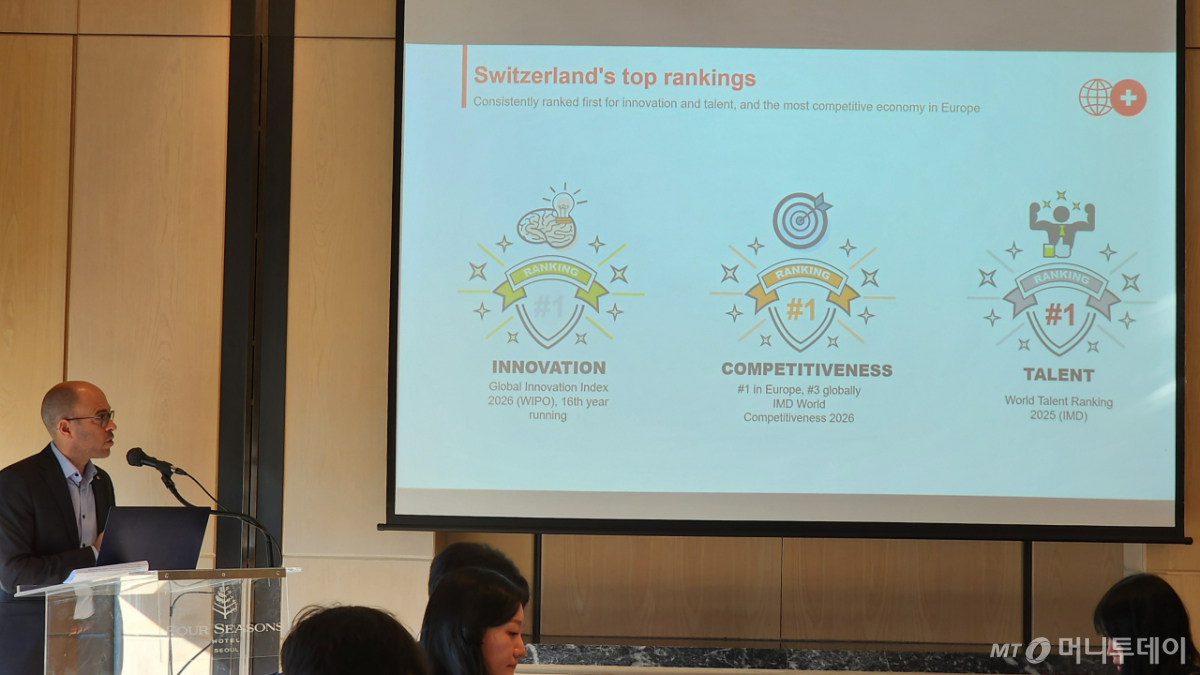
They also mentioned that corporate tax burdens in Switzerland are relatively low among European countries. Switzerland operates a tax system where the federal government, cantons (Canton·state), and local governments share tax revenue. Among European countries, Switzerland's corporate tax rate is the lowest at 11.66% (based on some low-tax regions), which is lower than France (26.6%), the Netherlands (25.8%), Austria (25%), Italy (24%), and Denmark (22%).
David Dixon, senior consultant at the Swiss Trade and Investment Office, emphasized, "Switzerland's Value Added Tax (VAT) also has a lower standard rate than major European countries, reducing the operational burden for companies entering Switzerland." As an example, he noted that Switzerland's standard VAT rate is 8.1%, which is low compared to major European countries such as Hungary (27%), Sweden, Norway, and Denmark (25%), Ireland (23%), and Italy (22%).
Furthermore, in the Basel region of Switzerland, when work productivity (the economic effect obtained from one hour of work by an employee) is converted on a per-hour basis, it amounts to 115 Swiss francs per hour (Hanwha 185,000 won), which is higher than Boston and London in the UK (53 Swiss francs each, Hanwha 85,000 won). Senior Consultant David Dixon emphasized, "This shows that it is difficult to judge Switzerland's labor cost competitiveness based solely on high wages," adding, "In particular, the Basel region, where global pharmaceutical and biotech companies are concentrated, has a life sciences industry ecosystem that creates high value-added based on highly skilled human resources and industrial infrastructure."
On this day, the Swiss Trade and Investment Office announced that it will hold an event called "Swiss Biotech Day" in Basel, Switzerland, from the 26th to 27 next year to help Korean healthcare companies enter Switzerland. Prior to this, it plans to hold an online pre-event titled "Swiss Business Hub Korea" in January and February of next year.
Head Andrea Clementi added, "We plan to support Korean companies considering participating in Swiss Biotech Day so that they can gain a preliminary understanding of the Swiss bio ecosystem and event program, and prepare for business meetings with local companies and potential partners."

 in THEBIO

