

[For more diverse corporate information on the startups mentioned in this article, visit Data Lab at Unicorn Factory's big data platform 'Data Lab.]
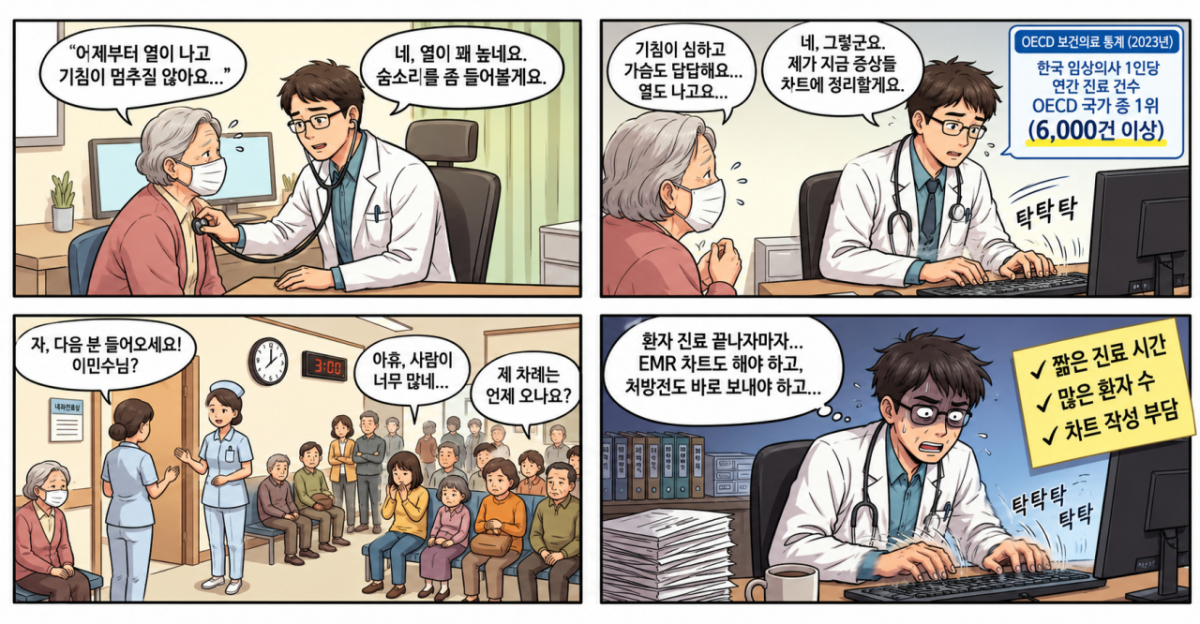
"Tap tap tap."
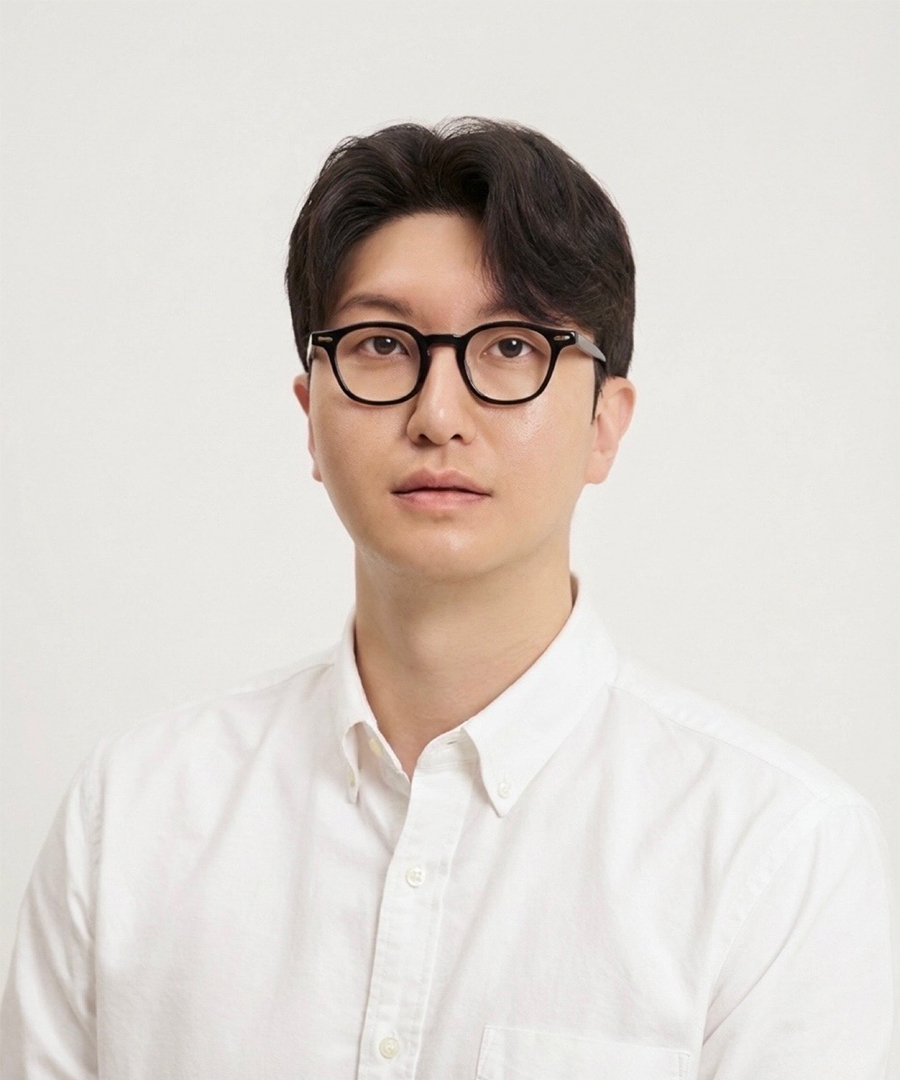
A patient enters the examination room and pours out their symptoms. Yet the doctor's gaze remains fixed not on the patient but on the computer screen. The sound of keyboard typing fills the room more than the dialogue between patient and physician.
Last year, Kim Se-hoon Studio Kiko CEO visited a hospital more than 10 times due to severe headaches of unknown cause. Experiencing this medical process repeatedly, he suddenly had a thought.
'Couldn't you look me in the eye a little more while explaining?'
However, once he understood the reasons, he could not blame the doctors. In reality, physicians must treat numerous patients while simultaneously entering vast electronic medical records (EMR), leaving no one with any choice but to do so.
According to OECD's "Health at a Glance 2023" statistics, the average annual number of patients treated per clinical physician in Korea is 6,113—the highest among the 32nd surveyed countries. With insufficient staffing, doctors must treat patients while also completing charts.
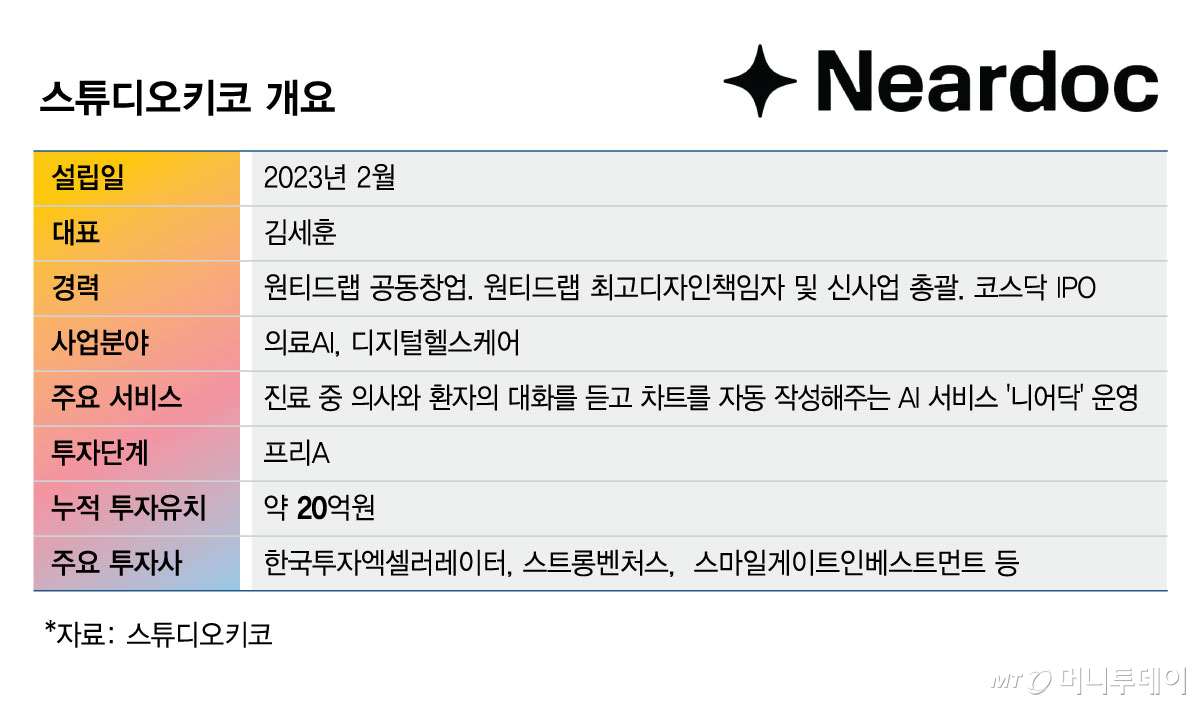
Kim (CEO) said, "I began to wonder if AI could automatically generate charts instead of requiring manual input by humans, allowing physicians to focus more on patients even within limited consultation times." Thus was born the medical AI (artificial intelligence) chart automation service 'Neardoc'.
'Returning doctors' attention to patients'… Word of mouth secures 300 hospitals and clinics
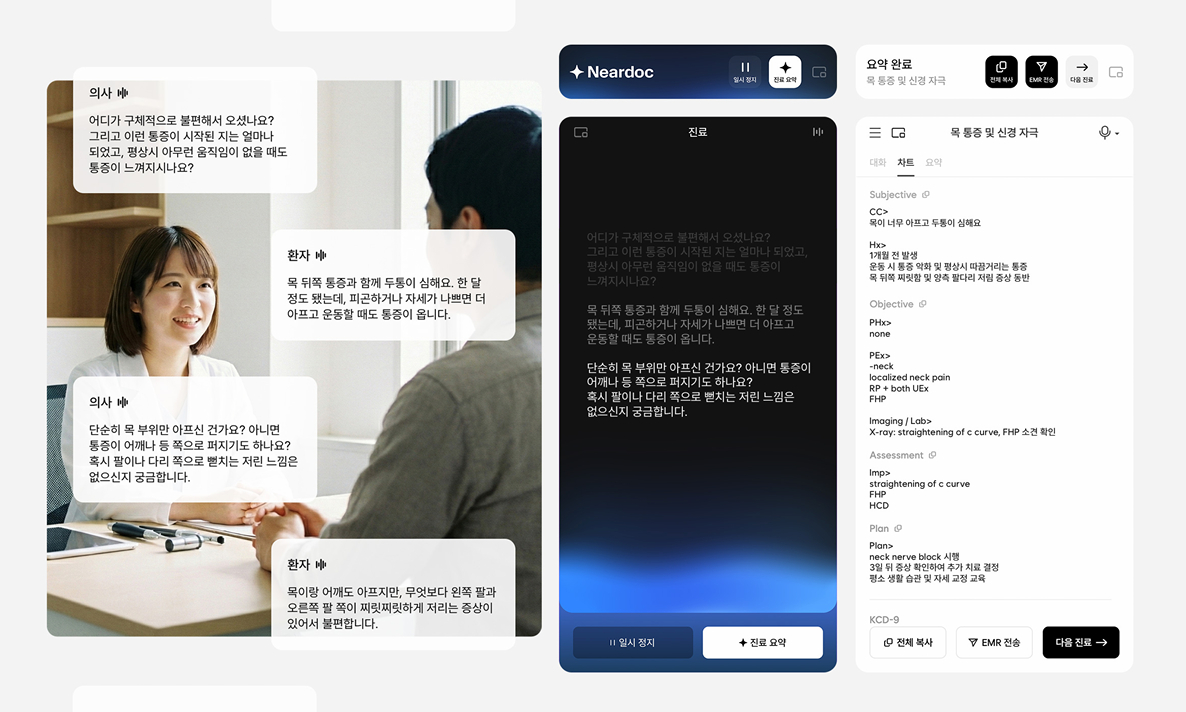
Neardoc, developed by Studio Kiko, analyzes the real-time dialogue between physicians and patients in examination rooms, automatically generating SOAP (Subjective symptoms, Objective findings, Assessment, Plan) charts without separate input and immediately entering them into EMR. Chart completion takes just five seconds after the consultation ends. Thanks to this, doctors can focus their gaze on patients rather than computer screens during consultations.
A survey of hospitals that adopted the service revealed chart-writing time decreased by an average of 70%, while the number of patients treated in the same timeframe increased by approximately 1.5 times. As physicians could focus on patients instead of monitors, patient satisfaction and re-visit rates also rose.
Riding on word-of-mouth, Neardoc secured over 400 hospitals and clinics as customers within just two months of its May launch, without any separate advertising or marketing. The paid conversion rate exceeded 50%, and current monthly recurring revenue (MRR) stands at 12.3 million won.
The combination of AI technology and medical expertise is Studio Kiko's strength. Kim (CEO), who previously co-founded Wanted Lab, led the company's business and growth for nine years. Additionally, Ryu Kyung-mook, former head of service development at Wanted Lab and now Chief Technology Officer (CTO), and Lee Chang-min, a specialist from Severance Hospital and now Chief Medical Officer (CMO), joined forces to build a team combining AI product development capabilities with hands-on medical experience.
Kim (CEO) stated, "At Wanted Lab, we aimed to resolve information asymmetry in the job market and change the structure where job seekers become 'the subordinate party.' Now, through AI, we aim to create an environment where physicians can focus more on patients, ultimately enabling anyone anywhere in the world to receive high-quality medical services."
'Understanding Mixed Korean-English Consultation Contexts… Generating Personalized Charts per Physician'
Neardoc's core is not simple speech-to-text (STT). Its key competitive advantage lies not merely in transcribing doctor-patient dialogues into text, but in understanding the consultation context and reconstructing it into chart formats actually used by medical staff.
Specifically, Neardoc possesses a 'Consultation Dialogue Context Recognition Engine' capable of accurately comprehending complex medical dialogues mixing native language, medical English, and abbreviations. Unlike Western medical environments such as the U.S., where English is the native language, it is designed to precisely understand dialogue context even in Asia's unique multi-language healthcare settings.
Furthermore, the system has learned approximately 17,000 medical terms across over 20 clinical departments. This enables generation of charts tailored to each department's context and accurate understanding of medical terminology and abbreviations appearing during consultations.
Beyond generating department-specific charts, Neardoc also reflects varying documentation styles among medical staff. By learning differences in terminology, sentence structure, and recording formats based on alma mater, training hospitals, clinical departments, and supervising professors, it creates personalized charts similar to those previously written by individual medical professionals.
Safety measures have also been implemented to prevent fatal hallucinations in medical environments. The company developed the medical AI engine 'Xynar' and established a four-stage verification system.
Before generating responses, the AI consults domestic clinical practice guidelines and international medical literature, then cross-checks the generated charts against actual consultation dialogues. Items that could lead to medical errors—such as medication dosages, test values, and negative expressions—are designed for stricter verification.
Kim (CEO) stated, "While processing approximately 40,000 cumulative consultations, there has not been a single error leading to medical accidents or disputes." He added, "With high accuracy secured, physicians are now confidently using the service in actual clinical settings."
Based on this technological capability, Studio Kiko is advancing into Asian markets including Japan and Vietnam. The strategy involves leveraging an AI engine capable of understanding even the unique consultation contexts of Asian healthcare environments to capture the Asian medical AI market.
Ultimately, the company plans to develop a Clinical Decision Support System (CDSS) based on accumulated consultation data from the chart automation process. This system will analyze diagnostic and prescription cases for patients with similar symptoms, presenting them to medical staff to support clinical decision-making.
Kim (CEO) remarked, "When physicians focus on patients rather than paperwork, both the quality of dialogue between patient and physician and the quality of care improve." He continued, "As such records accumulate and assist physicians' judgments, the overall level of the medical system will rise accordingly."
[MoneyToday Startup Media Platform Unicorn Factory]

 in FUTURE


