

The government is reviewing various alternatives, including revising executive decrees and supplementing existing systems, regarding the issue of exceptions to the 52nd-hour workweek for research and development (R&D) personnel in advanced industries such as semiconductors. While examining options that can reduce companies’ burden in managing working hours by utilizing current systems, in addition to separate special legislation, it has decided to seek common ground through tripartite dialogue among labor, management, and the government.
According to the government on the 27th, the Ministry of Employment and Labor is examining solutions that can be addressed under existing systems regarding the flexibility of working hours for semiconductor R&D personnel. Revisions to executive decrees and simplification of procedures are key areas under consideration. However, specific improvement measures have not yet been finalized.
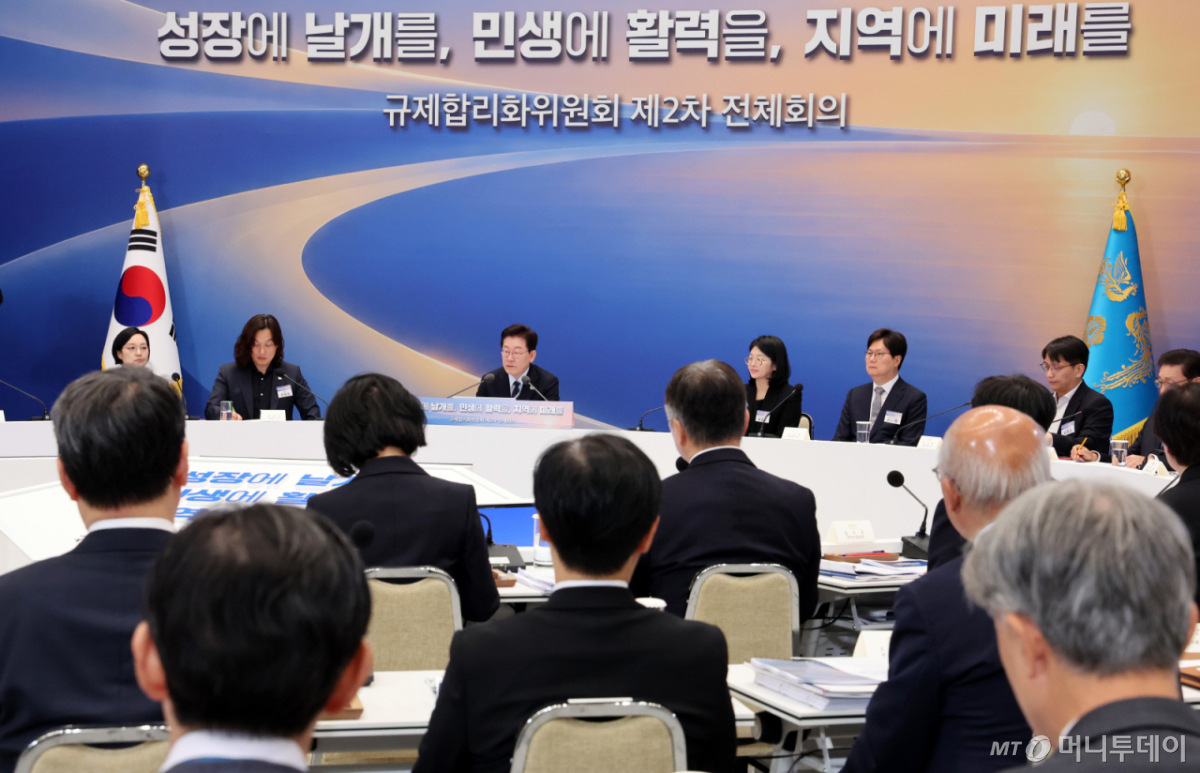
This discussion followed President Lee Jae-myung’s directive on the 23rd at the second plenary meeting of the Regulatory Rationalization Committee held in the Cheong Wa Dae guesthouse to review related matters. At the time, when Park Geon-su, Senior Vice Chairman of the Korea Semiconductor Industry Association, requested that special provisions for working hours of key R&D personnel be established by law, President Lee instructed them to discuss whether existing executive decrees could be revised or procedures simplified.
President Lee also made it clear that fair compensation for overtime work must be a prerequisite. This is in the sense that premium wages should be paid for additional labor, and certain limits need to be placed on working hours to prevent infringement of health rights due to long working hours.
The Ministry of Labor plans to continue social dialogue among labor, management, and the government while examining the possibility of institutional improvements. It will gather opinions from labor and business sectors to discuss the necessity of special provisions for working hours and measures to protect workers’ health rights, and review whether difficulties raised in the field can be reflected in institutional improvements.
In the National Assembly, legislative discussions are also underway as bills have been submitted regarding including a 52-hour workweek exception in the Special Economic Zone Act. The government appears set to focus on narrowing differences between labor and management while examining both legislative discussions and the possibility of improving existing systems.
The industrial sector maintains that working hours for R&D personnel must be managed flexibly to respond to technological competition in advanced industries such as semiconductors. On the other hand, the labor sector is concerned that easing working hour regulations could infringe upon workers’ health rights. How to reflect the two principles of overtime compensation and health protection into the system is expected to be the key to future discussions.

 in ECONOMY
