

"From 5 years to 6 weeks: AI-driven 'inverse design' technology for alloy development"
A student-founded startup from Pohang University of Science and Technology (POSTECH), "AstroMat"
Showcases AI-based alloy inverse design and automated experimental solutions
Kim Rae-eon (CEO) “First Space Verification of a Medium-Entropy Alloy Based on the First Material”
[For more diverse corporate information on startups, please refer to the 'Data Lab' of the Unicorn Factory big data platform .]
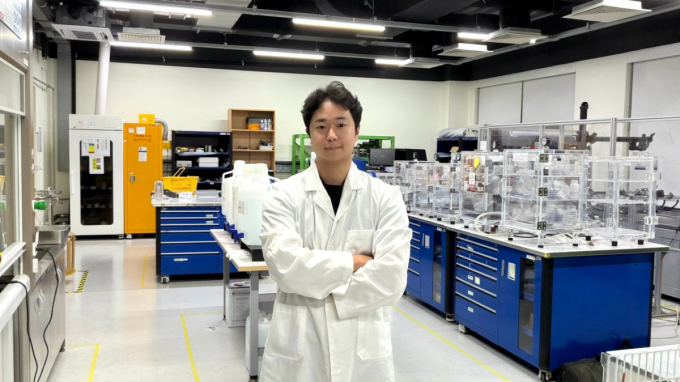
Although the domestic production rate of components for the Nuri rocket exceeds 95%, the country relies heavily on imports for core materials such as special steel and alloys used to manufacture these components. Industry analysis suggests that, excluding some general-purpose materials, the import dependence for space and aerospace-grade special steel is effectively at 99%.
Pohang University of Science and Technology (POSTECH) student startup team AstroMat is addressing the overseas dependence on such space materials through artificial intelligence (AI) and experimental automation. The team aims to design new alloys tailored to the temperature, load, weight, and cost conditions under which spacecraft launch vehicles and satellite components operate, and then manufacture these alloys into actual parts.
The development of new materials has often relied on researchers' experience and intuition, requiring repeated trial and error in which alloy compositions are altered, materials are manufactured, and their physical properties are verified. The material development process alone can take more than five years, while actual commercialization may require 10 to 20 years.
Astromat employs a strategy of combining AI-based alloy inverse design with automated experimentation to shorten the period for exploring candidate materials and verifying initial performance to as little as six weeks. The starting point of material development is also shifted from alloy composition to the required performance specifications of customer companies.
For example, if a client specifies conditions such as the temperature, pressure, load, weight, and price required for a rocket nozzle, the AI generates candidate alloy compositions that can meet the target material properties. It then reviews literature and thermodynamic data to predict the material properties and manufacturing processes for each candidate composition.
The candidates proposed by the AI are manufactured and evaluated using automated equipment. The experimental results are then accumulated as training data and incorporated into the design of the next material. This is a "closed-loop" approach that connects the entire process—from design to manufacturing, evaluation, and data learning—into a single closed iterative structure.
It also utilizes Laser Powder Bed Fusion (LPBF), a metal 3D printing technology. This process selectively melts metal powder with a laser to build parts layer by layer, making it suitable for manufacturing space components with complex shapes.
Kim Rae-eon, CEO of Astromat, said, “We plan to powder the alloy discovered by AI, produce a prototype using 3D printing, and validate it in the customer’s actual operating environment.”
Astromat's first advanced material is "Astromat-1," an iron-based medium entropy alloy. The design strategy employed applies a "hierarchical heterogeneous structure" that combines microstructures of various sizes to simultaneously secure strength, ductility, and high-temperature characteristics.
Conventional high-temperature alloys primarily use nickel or cobalt. While they maintain excellent performance at high temperatures, they are limited by their high cost and density. Inconel, a representative nickel-based superalloy, offers outstanding high-temperature durability, but its weight and cost pose challenges for the lightweighting of space launch vehicles and cost reduction.
In the preliminary research that served as the foundation for Astromat-1, alloys were designed centered on iron to enhance economic efficiency and reduce weight. The study found that the material exhibited mechanical performance comparable to existing commercial high-temperature materials at both high and room temperatures, while reducing manufacturing costs by half and achieving a weight lighter than pure iron.
The study was published in the international academic journals "Acta Materialia" and "Materials Science and Engineering A," respectively. Based on this research, Astromat is advancing its technology by developing materials tailored to the operating conditions of space launch vehicles and satellite structures.
However, Astromat-1 is currently a preliminary material at the laboratory stage. To be applied to actual space launch vehicles, it requires verification of its physical properties under extreme space conditions such as extreme temperatures and vacuum, official certification, component manufacturing, and the acquisition of a flight track record known as "space heritage."
Kim Rae-eon (CEO) stated, “We will advance proof of concept (PoC) with domestic small launch vehicle companies and research institutional investors.” The company added, “Initially, we will supply materials for prototypes and test components, verify performance in real-world environments, and then assess the feasibility of mass production of the materials as well as the Yangsan process.”
Detecting, reading, and removing cancer cells in blood on a single chip… Aimed at post-surgical recurrence monitoring
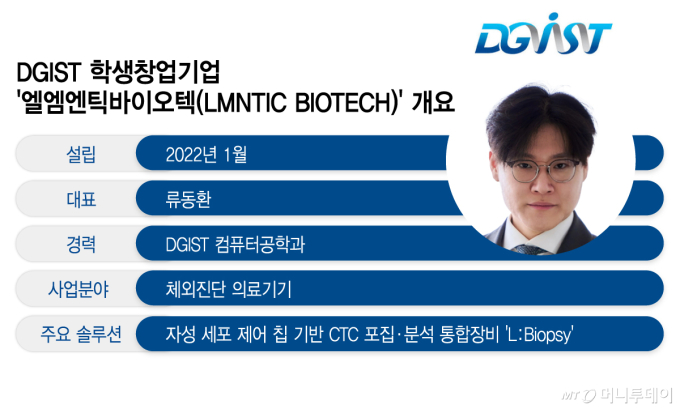
A student-founded startup, LMNTIC Biotech, from the Daegu Gyeongbuk Institute of Science and Technology (DGIST).
Development of an in vitro diagnostic device that captures, identifies, and recovers circulating tumor cells in the blood
Ryu Dong-hwan (CEO): “A Leap Beyond Recurrence Monitoring to a Platform for Precise Cellular Analysis”
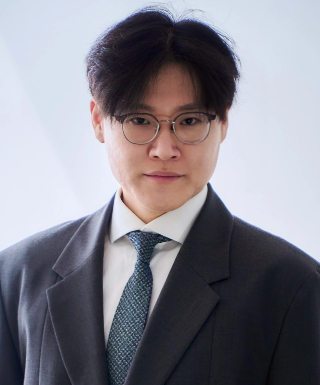
"If even a single cancer cell is present at the time of blood collection, we will detect and extract it for analysis without missing it. At the same time, we will identify what therapeutic targets that cancer cell possesses."
Ryu Dong-hwan (CEO), a student-founded startup at the Daegu Gyeongbuk Institute of Science and Technology (DGIST), stated, "While there are many advanced technologies for handling cells, tools that can be used routinely in hospitals, particularly in the field of liquid biopsy, remain lacking. We aim to develop single-cell technology that completes the entire process of cell capture, staining, imaging, and identification on a single chip, thereby resolving the issue of declining cell quality during these procedures, and turn it into a practical tool for clinical settings."
The "L:Biopsy," developed by LMNTIC Biotech, is an in vitro diagnostic device that captures, identifies, and recovers circulating tumor cells (CTCs)—cancer cells floating in the blood—using a single piece of equipment. Its first clinical application area is minimal residual disease (MRD) monitoring after surgery.
Existing CTC tests require separated cells to be transferred to slides or other equipment for identification and analysis. According to U.S. Food and Drug Administration (FDA) data, 56% to 67% of recovered cells are lost during the single transfer process to a slide alone. LMNTIC Biotech eliminated this step by fixing captured cells on a chip and performing staining and reading in place. Identified cells can be retrieved in an intact state for use in protein and genomic analysis.
The core technology is the "micro-magnetic cell circuit." It is a technique for transporting, trapping, and extracting cells coated with magnetic beads on micro-magnetic structures designed like semiconductor circuits, invented by Professor Kim Chul-gi of DGIST. The company secured the related registered patents in South Korea and the United States through an assignment of ownership rather than a license in February or March this year.
According to the company, in a test involving the addition of a breast cancer cell line to 10 mL of whole blood, the recovery rate was approximately 72%, which is comparable to the literature value (73%) for FDA-certified equipment. The process takes about four hours from blood collection to the first image, and centrifugation is not required. The device is a single tabletop unit weighing approximately 50 kg, making it smaller and easier to install than competing equipment that consists of two to three units.
The company has also begun entering the clinical stage. It is advancing clinical validation to verify performance using actual patient blood in collaboration with major tertiary hospitals in Korea.
The business will be advanced in stages. Before obtaining regulatory approvals, the company will generate revenue through the sale of research equipment and chips, as well as contract analysis services for pharmaceutical companies. Subsequently, it plans to expand into laboratory-developed tests (LDT) by partnering with U.S. CLIA-certified testing institutions, before pursuing insurance reimbursement listing and FDA approval. The cumulative amount of investment raised is 500 million won, and the company is currently raising a pre-Series A round of 3 billion won.
Ryu Dong-hwan (CEO) stated, “While it is widely accepted that losing some cells during single-cell analysis is unavoidable, the losses tolerated in a research laboratory cannot be accepted in clinical settings for cancer patients.” He or she added, “Hospital tests are conducted daily and must yield consistent results regardless of who performs them, so our top priority is to make the process as robust and user-friendly as possible.”
Cut video production time and costs significantly... The "AI platform" created by a 3-million-subscriber YouTuber
Student startup "Elba" from Ulsan National Institute of Science and Technology (UNIST)
Attention on the launch of 'UbiCo,' an AI video content collaboration platform
Koo Ju-won (CEO): “Use over 30 AI services at a low cost”
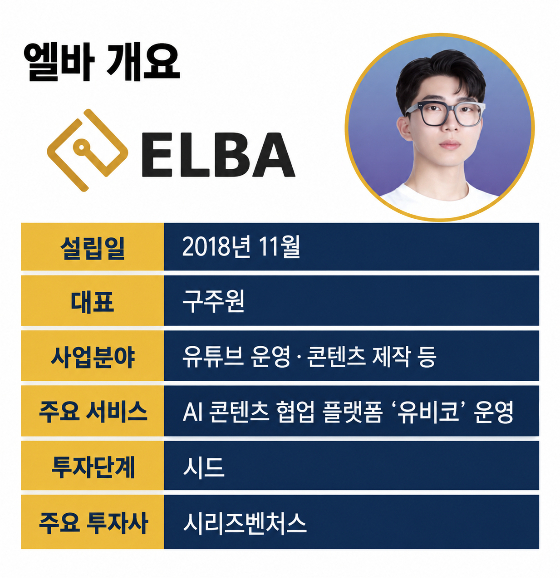
Fifteen channels, a cumulative subscriber base of 3 million, and 200 government and corporate projects. These are the achievements of video-specialized startup Elba. Koo Ju-won (CEO), who leads Elba, has been running YouTube for 13 years since high school. Based on their production experience, Koo (CEO), who is deeply passionate about video, launched a video production AI platform called "Yubico," which allows teams to use over 30 AI services together.
Yubico focused on consolidating the communication processes that arise during video production among team members and companies to minimize communication costs. For example, when a client makes a simple request such as "change the subtitle color at 3 minutes and 24 seconds" during video production, it takes three to four hours to draft a document conveying this request and have it delivered to the person in charge. The company explained that when the time spent on communication is converted into costs, it accounts for approximately 30% of the production budget.
Yubico has enabled all participants in the project process to join a single browser and provide direct feedback. By sharing this workspace, the AI used for video production can understand the project's past revision history and context. In particular, by allowing up to 30 types of AI services to be accessed through one browser, it is possible to reduce maximum AI subscription costs by up to 80%.
Since launching its service in April, Ubico has secured more than 4,800 users without any special marketing efforts, with approximately 70% of them being overseas users. This is thanks to the company's global expansion strategy from the early stages of the service, which supports around 10 languages, including English, Korean, Japanese, Chinese, and Spanish.
Koo Ju-won, representative of Elba, explained, "When we currently produce videos, we plan using Claude, create images with ChatGPT, generate the video with KingAI, and process the voice with ElevenLabs, combining the outputs of multiple AI tools into a single work. The strength of UbiCo is that this entire workflow can be carried out within a single space."
Elba started as a startup on the campus of Ulsan National Institute of Science and Technology (UNIST). The company has received recognition for its business potential from various sources, including being selected for the Presidential MVP Demonstration and Startup Competition 10Yeo Hoe (수상), IBK Changgong, Woori Financial DINO Lab, KDB NextONE, and Busan Technology Venture Capital Institute’s global investment attraction programs. It also secured a 3 million won seed investment from Series Ventures, Seoul National University Technology Holding Company, and the Busan Regional Consortium of Universities Technology Holding Company. Currently, Elba is in the process of raising Pre-Series A funding to launch full-scale marketing for its Yubico product.
Six major science and technology universities' deep tech startups clash at COEX on the 30th
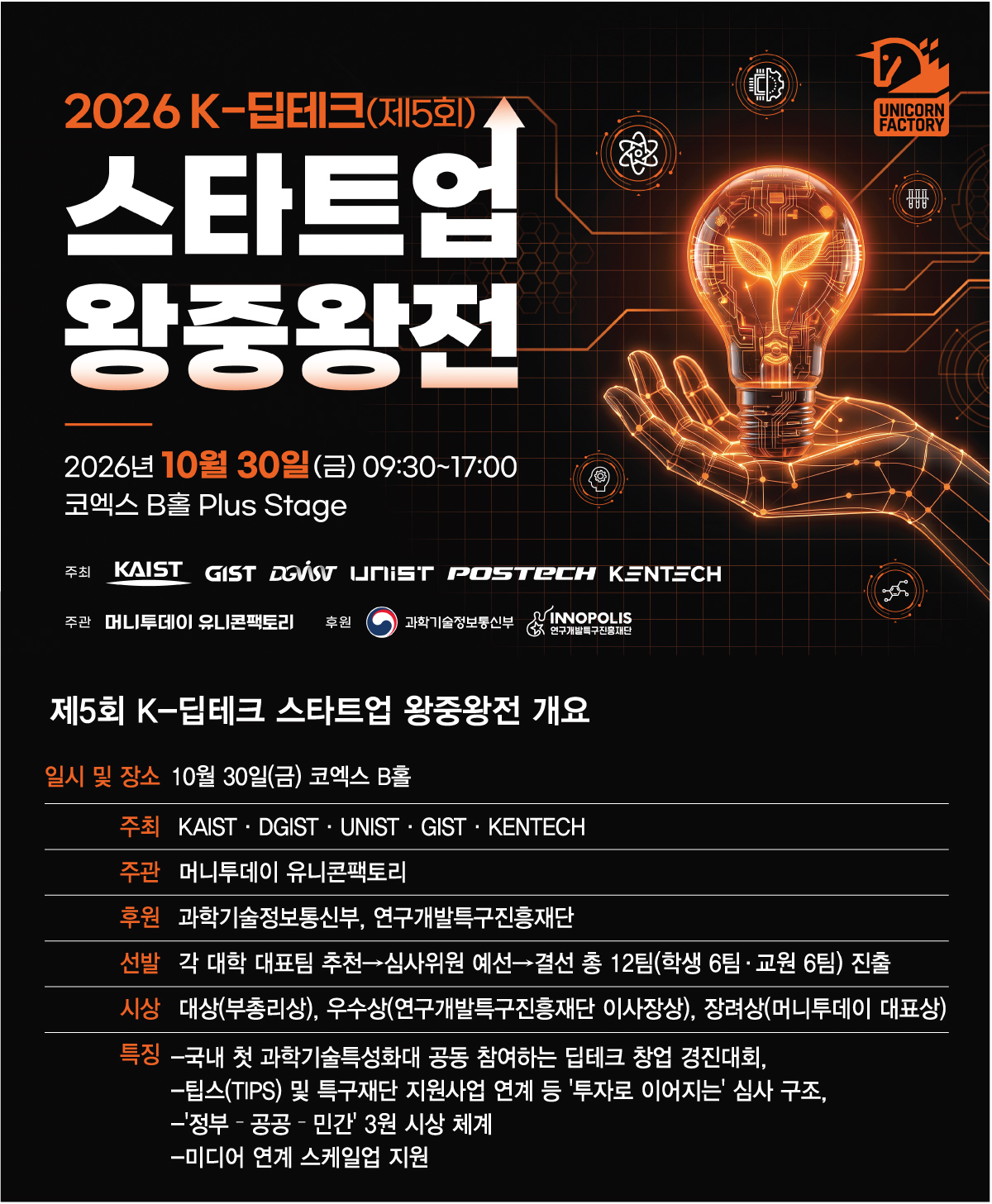
Meanwhile, Astromat, LMNTIC Biotech, and Elba will compete in the finals of the "2026 K-Deep Tech Startup King of Kings" tournament, which will be held on the 30th at the Plus Stage in Hall B of COEX in Seoul Samsung-dong (Application to attend: https://forms.gle/McNBqdiBts8RJazVA).
The King of Kings Tournament, now in its fifth year, is organized by Money Today’s startup media platform “Unicorn Factory” and co-hosted by KAIST (Korea Advanced Institute of Science and Technology), DGIST (Daegu Gyeongbuk Institute of Science and Technology), UNIST (Ulsan National Institute of Science and Technology), GIST (Gwangju Institute of Science and Technology), POSTECH (Pohang University of Science and Technology), and KENTECH (Korea National University of Energy Technology).
The review panel includes deep tech investment and commercialization experts from Samsung C-Lab Outside, GS Vents, Ecopro Partners, L&S Venture Capital, LB Investment, Blue Point Partners, Series Ventures, CNTech, Korea Technology Holdings, and the Research and Development Special Zone Promotion Foundation.
Participants range from corporate venture capital (CVC) arms of large conglomerates to deep-tech-focused venture capital firms, early-stage investment accelerators (ACs), and public technology commercialization institutional investors, collectively assessing the commercial viability and investment appeal of technologies in a comprehensive manner.
The finals featured a total of 12 teams, with six each in the faculty and student startup categories. The competition was conducted in the format of an actual investment recruitment IR (Investor Relations) presentation, consisting of a 10-minute pitch and a 10-minute Q&A session for each team. Teams were evaluated based on a combined score of technical feasibility (30 points), marketability (20 points), business viability (40 points), and team capability (10 points).
The grand prize will be awarded to one team each in the faculty and student startup categories. The two grand prize-winning teams will receive the Minister of Science and ICT Award, which is conferred on behalf of the Deputy Prime Minister, along with a prize money of 0.3 billion won. Four teams will receive the Excellence Award from Lee (President) of the Research Development Special Zone Promotion Foundation, each with a prize of 1 million won, while six teams will be given the Encouragement Award from the CEO of Money Today, each with a prize of 500,000 won.
Winning teams are offered benefits such as a bonus point for participation in the CVC open innovation linkage and the Global Digital Innovation Network (GDIN) overseas expansion program. Regardless of whether they win, all 12 finalist teams will receive support for a one-year follow-up scale-up program, including corporate promotion, expert consulting, and networking with investment firms.
<Application to Attend the 5th K-Deep Tech Startup King of Kings Tournament>
Date and time: October 30 (Fri), 9:30 a.m. to 5:00 p.m.
-Location: Hall B, COEX in Seoul, PLUS STAGE
Target: Deep tech startups and investment VC reviewers
-Hosts: KAIST, DGIST, UNIST, GIST, POSTECH, KENTEC, Money Today Unicorn Factory
-Application: https://forms.gle/McNBqdiBts8RJazVA
[Money Today Startup Media Platform Unicorn Factory]

 in FUTURE


