

[For more diverse corporate information on the startups mentioned in this article, you can view them on Unicorn Factory's big data platform 'Data Lab.]
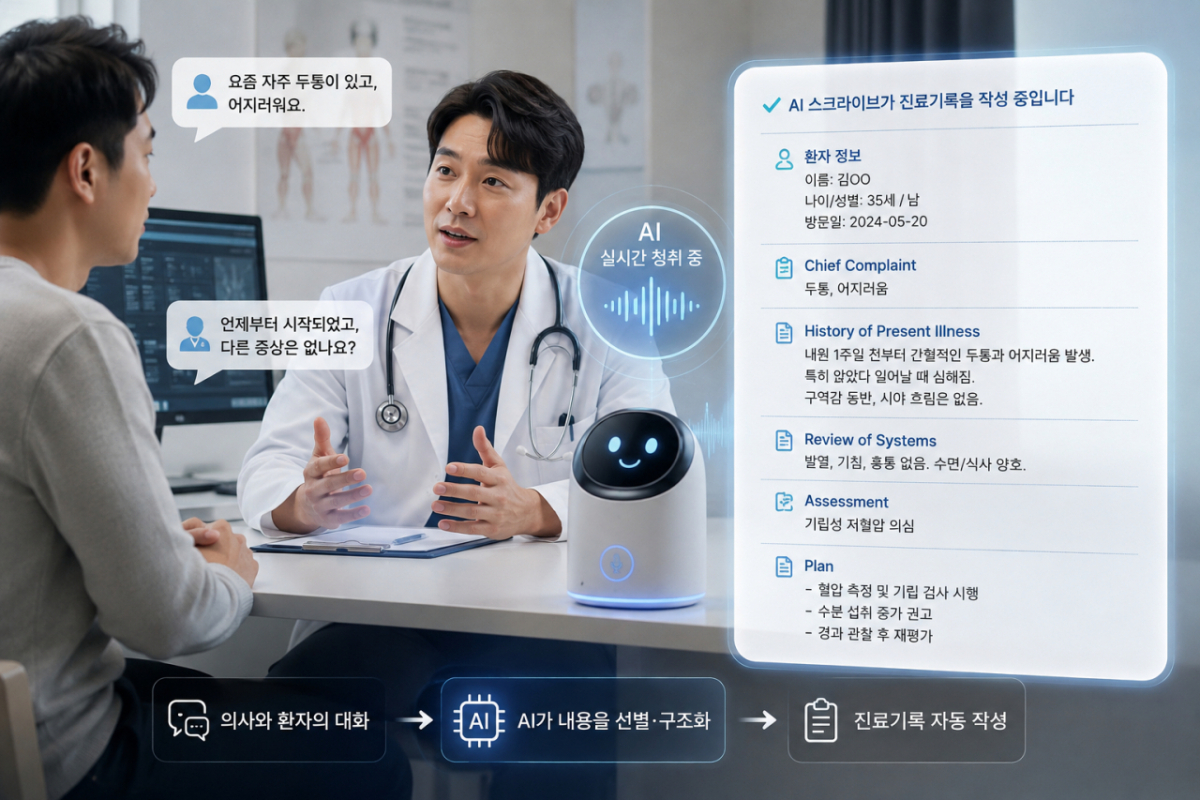
Artificial intelligence (AI) is relieving doctors of the burden of having to separately input clinical records while conversing with patients. This comes with the emergence of 'AI Clinical Record Secretary' (Ambient AI Scribe). Its key feature is that AI listens in real-time to conversations between doctors and patients, automatically selects core information such as symptoms, diagnoses, and prescriptions, structures it according to medical record formats, and generates records automatically.
Reduced clinical record time by 21%… "Let's capture the 4 trillion won market" — Big Tech also joins the race
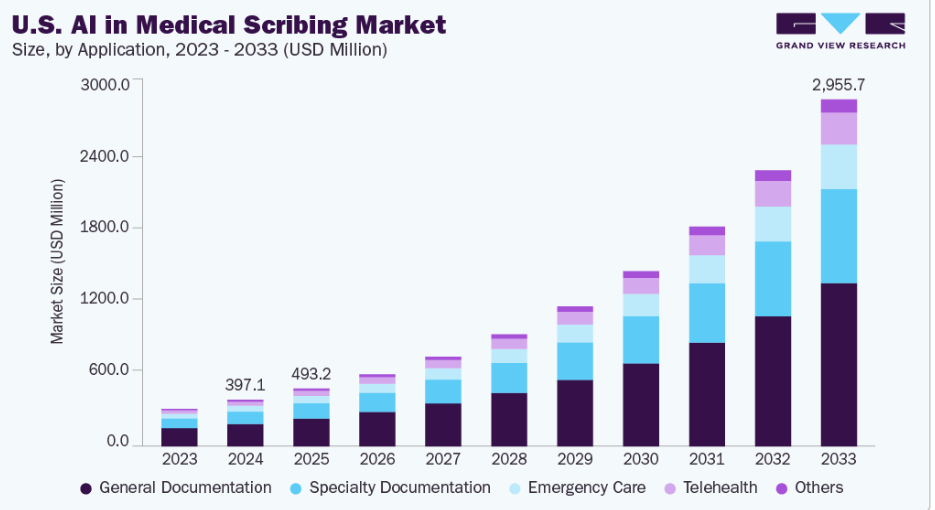
According to market research firm Grand View Research (GVR) on the 10th, the U.S. AI clinical record secretary market is projected to reach $2.95572 billion (approximately 4.1 trillion won) by 2033. Key drivers of market growth include excessive documentation burdens on medical staff, workforce shortages, and burnout.
Kim Chi-won, Deputy Representative of Kakao Ventures, stated, "The core factor driving adoption was the ability to immediately feel the utility, such as significantly reducing time spent charting after consultations, thereby effectively advancing doctors' departure times." This effect has been confirmed in actual research. According to a study published last June in the international academic journal 'JMIR Medical Informatics', Hawaii Pacific Health (HPH) in the U.S. introduced the AI clinical record secretary 'Abridge'. As a result, medical staff who actively utilized it reduced their average daily clinical record writing time by 21%. The so-called 'pajama time' — referring to EMR (Electronic Medical Record) work done outside of working hours — also decreased by 13%.
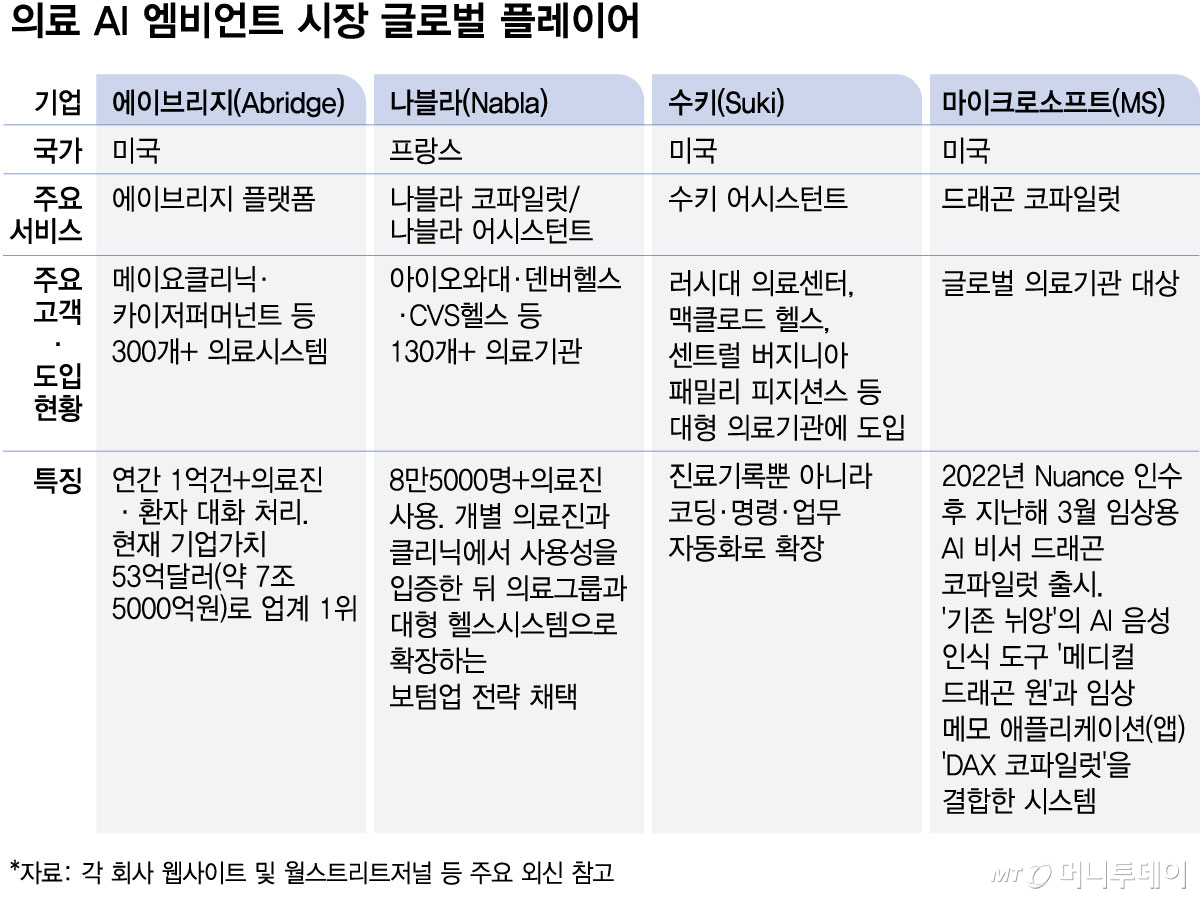
Competition to seize the global market is fierce. Industry leader Abridge has been adopted by more than 300 medical systems, including major U.S. institutional investors Mayo Clinic and Kaiser Permanente, processing over 100 million doctor-patient conversations annually. In last year's Series E funding round, it received a corporate valuation of $5.3 billion (approximately 7.5 trillion won). Nabla, which started in France, is also expanding its market by securing clients such as the University of Iowa, Denver Health, and CVS Health. According to the company, more than 130 medical institutional investors currently use Nabla with 85,000 medical staff.
Big Tech (large IT companies) has also entered the competition. Microsoft (MS), after acquiring speech recognition company Nuance in 2022, launched 'Dragon Copilot', an AI assistant for medical staff last year, to target the market.
Latecomer Korea targets Asian market… What are the mid-to-long-term challenges?
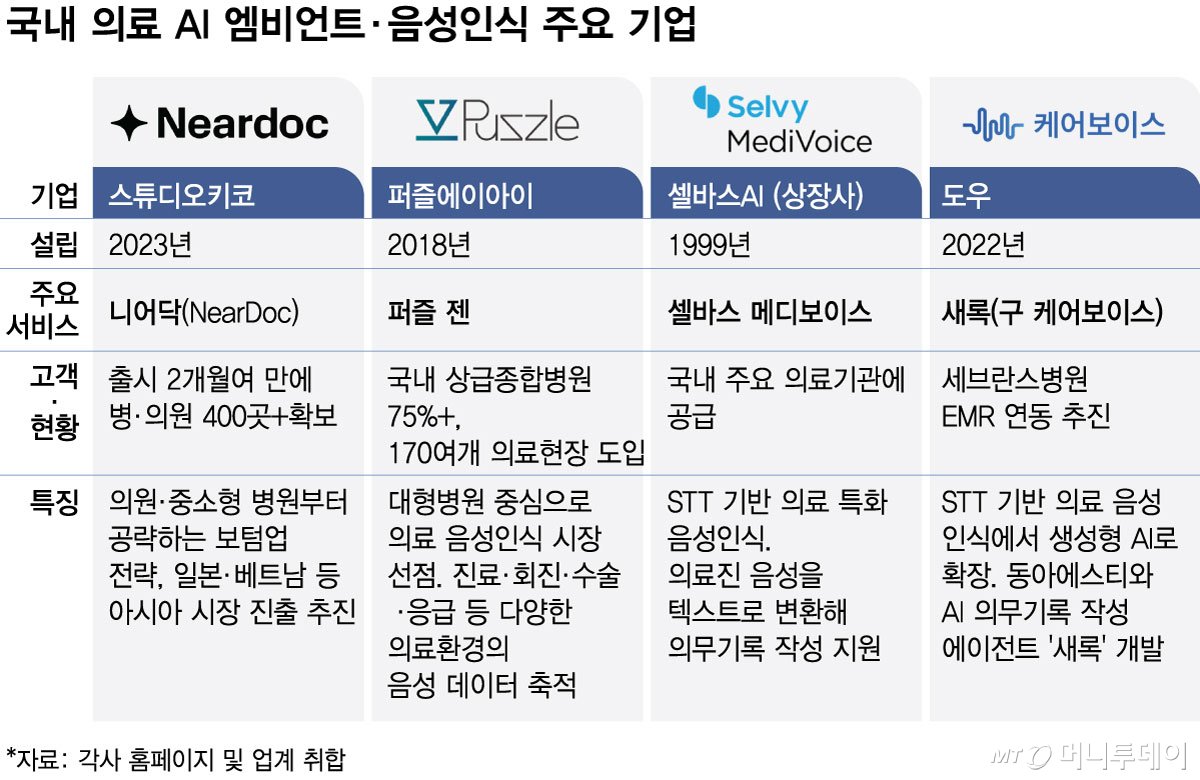
Domestic companies are also accelerating their market entry. Representative players include Puzzle AIand Studio Kiko. Puzzle AI, established in 2018, announced that more than 75% of domestic tertiary hospitals have adopted and use its medical speech recognition solution. It is explained that accumulating relevant data at over 170 medical sites has formed the foundation for this widespread adoption. Studio Kiko, established in 2023, launched 'NearDoc' last May to target clinics and small-to-medium-sized hospitals. Without separate advertising or marketing, it secured more than 400 medical institutions as customers within just over two months of launch. In the adjacent field of STT (speech-to-text) based medical speech recognition, companies such as Selvas AI and Do (operator of CareVoice) are advancing their technologies to support EMR systems.
Industry experts believe there is also an opportunity for domestic companies in the global market. By leveraging specialized technology tailored to Asian medical environments where English and local languages are mixed, they can expand into Asian markets such as Japan and Southeast Asia. However, concerns are also raised that as general-purpose AI technology rapidly advances, it may be difficult for unique Asian medical environments to serve as long-term entry barriers.
Lee Sung-moon, Team Leader of Korea Investment Accelerator, which invested in Studio Kiko, stated, "Language differences will act as a moat for domestic companies for the foreseeable future, but this period will not last indefinitely." He added, "The key to determining the future corporate valuation of domestic startups will be whether they can quickly secure customers (large hospitals) and medical data, and develop new revenue models such as clinical decision support systems (CDSS) based on accumulated data."
[MoneyToday startup media platform Unicorn Factory]

 in FUTURE


