

[For more diverse company information on the startups mentioned in this article, please visit the Unicorn Factory big data platform 'Data Lab'.]
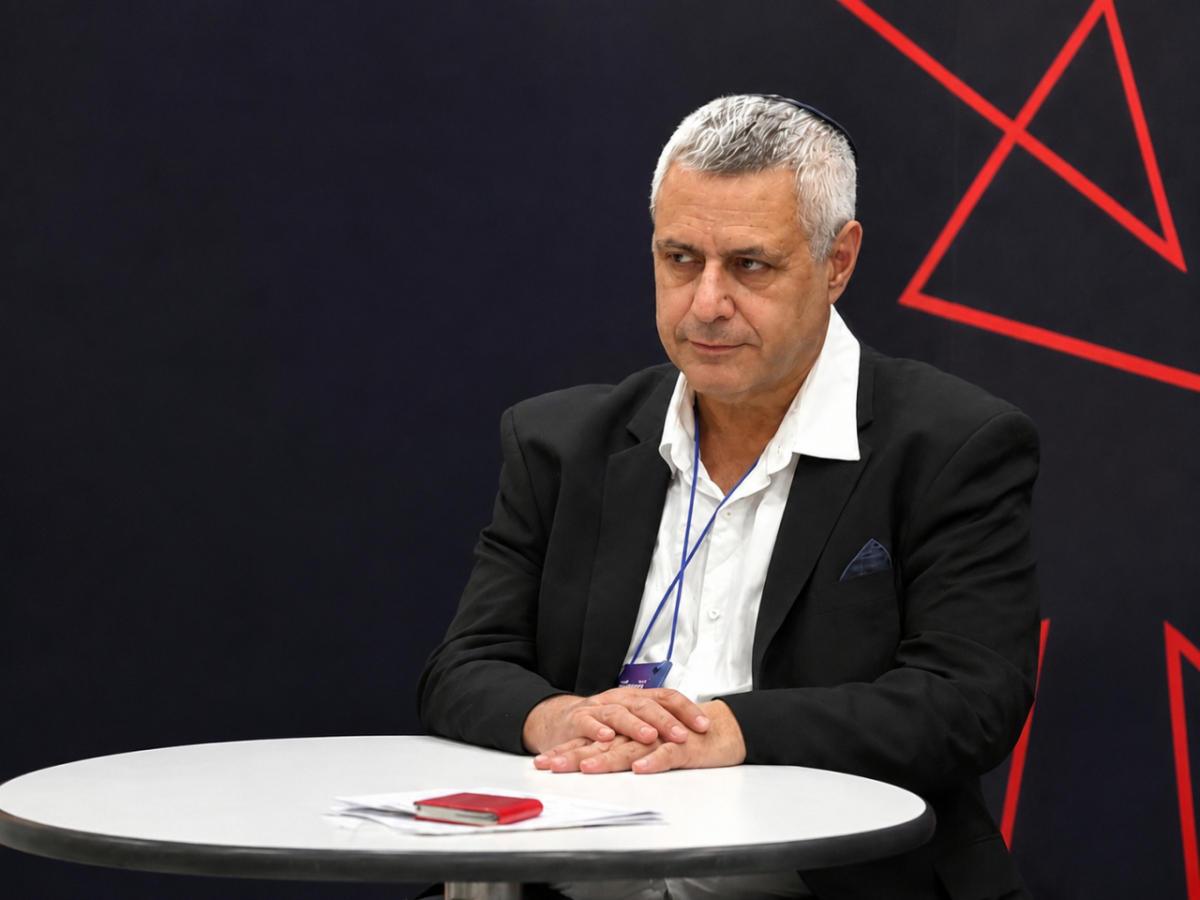
"Korean EdTech startups are already technically very solid and ahead. They have gone beyond simply being good. However, the problem is that they are too humble."
Avi Warshavsky, CEO of Mindset, who leads the Global EdTech Startup Awards (GES Awards), considered one of the world's largest EdTech award ceremonies, made these remarks in an interview with MoneyToday at the '2026 Edu-Plus Week Future Education Expo' held on the 12th at Seoul COEX. While he highly praised the technological capabilities of Korean EdTech startups, he noted that although their technology has reached a level competitive in the global market, they lack the confidence needed for overseas expansion and insufficient points of contact with the global market.
The GES Awards are a global EdTech startup competition led by Mindset, an Israeli accelerator and R&D (research and development) center. The program identifies promising EdTech startups from around the world, enabling them to compete on a global stage and providing opportunities to connect with overseas education markets.
EdTech startups selected through this awards program gain not only the opportunity to participate in Mindset's Accelerating Program but also investment opportunities from Mindset. According to CEO Warshavsky, over 40 partners from around the world are currently participating, with approximately 1,000 companies applying from 135 countries.
Beyond AI Technology: 'How It Is Used'… Opportunities for Korean EdTech
CEO Warshavsky believes that in the AI era, the competitiveness of EdTech startups will be determined not by securing their own proprietary AI core technologies, but by how agilely and effectively they apply AI technology to solve problems in educational settings.
He stated, "The most difficult task of creating technology is being undertaken by large companies like OpenAI or Google." He added, "What matters now is how well we understand the potential of this technology and how quickly we can apply it on the ground." He further emphasized that "understanding educational environments and the ability to design services will determine competitiveness."
He noted that such changes could present significant opportunities for Korean EdTech startups. In Korea, which boasts high digital infrastructure and strong educational demand, services leveraging AI to solve problems in education—ranging from AI courseware and personalized learning to support for teachers' instructional and administrative tasks and career guidance—are emerging rapidly.
CEO Warshavsky stressed that for Korean companies with global competitiveness to take the next leap, they must expand their points of contact with overseas markets.
He said, "Korean startups need to engage more frequently with entrepreneurs from other countries." He added, "It is not enough to simply develop good technology and services; there is a need for the ability to actively promote their competitiveness and achievements to overseas investors, educational institutional investors, and companies." He further emphasized that the 'humility' of Korean startups is not an advantage but rather an element that must be overcome in the process of global expansion.
Finally, he remarked, "Many people fear the future, but we are living in the most exciting moment in the history of learning." He concluded, "There has never been more potential for how we can learn and teach in the future."
MoneyToday Startup Media Platform Unicorn Factory]

 in FUTURE
