

[For more diverse corporate information on startups, visit the Unicorn Factory big data platform 'Data Lab'.]
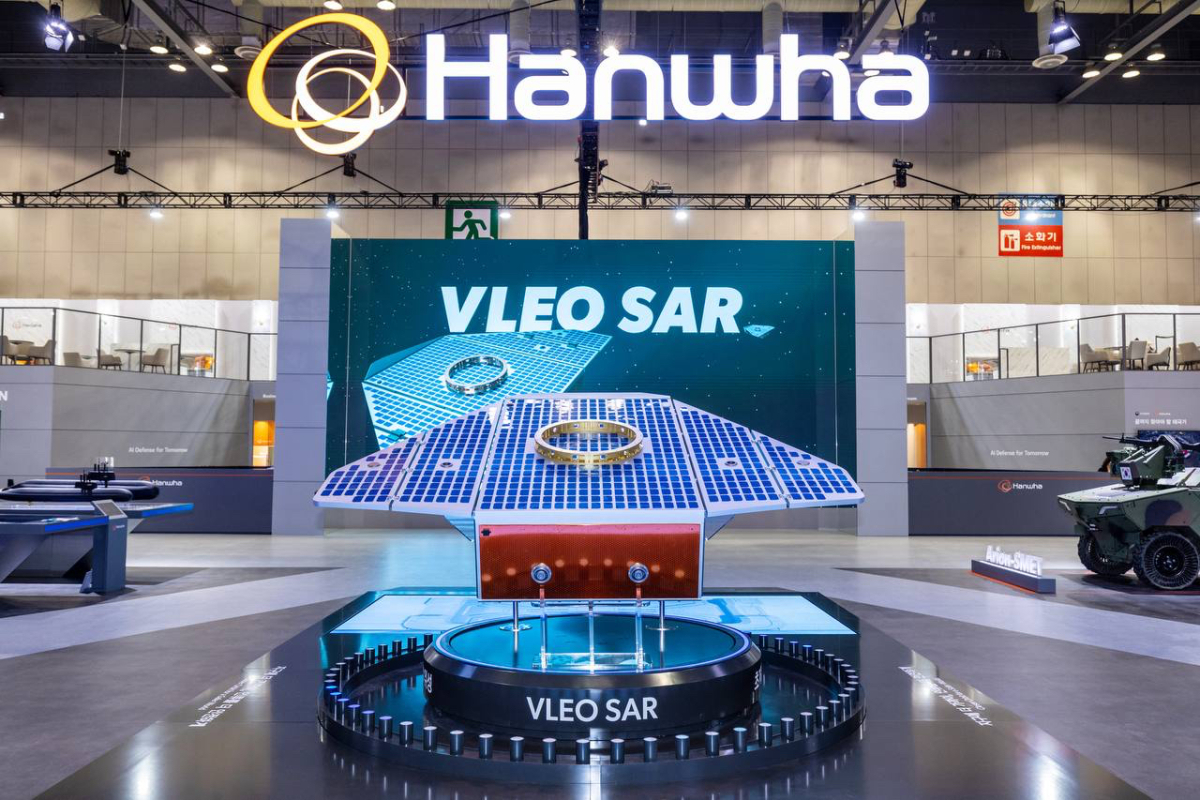
The key battlegrounds of the Low Earth Orbit (LEO) market are broadly three: launch vehicles, satellites, and services. The critical factors are how cheaply and frequently launches can be conducted, how quickly a large number of satellites can be deployed, and what services those satellites provide. This is also why SpaceX, the world's leading space company, has integrated rockets, satellites, and communication services within a single corporation. Hanwha Group is the only domestic entity to have established vertical integration by possessing all three pillars at the group level.
At the core of this are five space-related subsidiaries, including Hanwha Aerospace, Hanwha Systems, and Satrec Initiative. Hanwha Group's vision is to bundle these entities into a single collaborative structure and link them with land, sea, and air weapon systems to grow both the defense and space sectors simultaneously. In July, Hanwha announced plans to invest 5.5 trillion won in the space aviation and artificial intelligence (AI) fields by 2040. Hanwha Aerospace is set to invest approximately 2.3 trillion won in launch vehicles, while Hanwha Systems will invest approximately 2 trillion won in satellites, space AI data centers, and LEO communication networks.
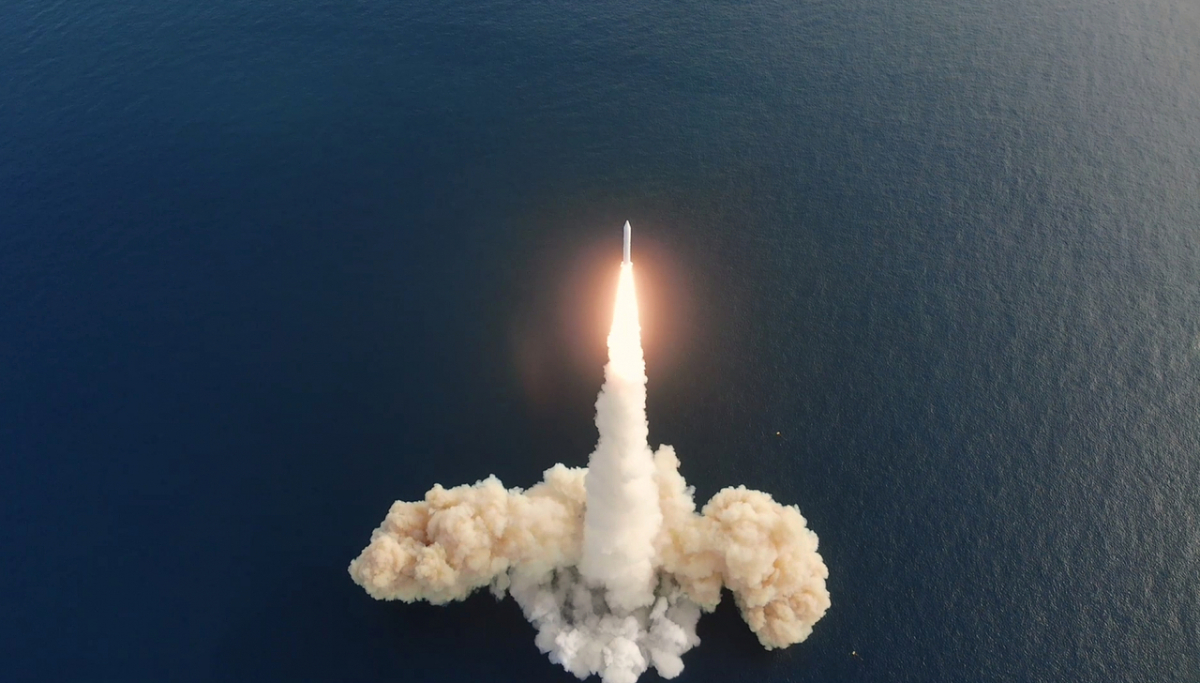
Hanwha Aerospace is responsible for launch vehicles. As the system integration company for the Nuri rocket, which has overseen the entire manufacturing process, Hanwha Aerospace demonstrated its private-sector-led operational capabilities during the fifth Nuri launch conducted on the 7th. It played a key role in transferring a significant portion of the practical launch operations previously led by the Korea Aerospace Research Institute (KARI) to the private sector.
The next challenge for the launch vehicle business is improving launch efficiency and economic viability. As LEO satellite projects gain momentum, the importance of launch capabilities that can stably and continuously transport multiple satellites into space is also growing. Accordingly, Hanwha Aerospace is participating in the government's development project for next-generation reusable launch vehicles. Hanwha has begun detailed design work on a methane engine equipped with recovery and reuse functions, aiming to fully operationalize reuse by launching a performance verification satellite on this vehicle in 2031.
Satellite manufacturing is led by Satrec Initiative and Hanwha Systems. Satrec Initiative, founded by the development team behind South Korea's first satellite, 'Uri Byeol-1,' has demonstrated unparalleled technological capabilities by developing a 25cm-class ultra-high-resolution optical satellite since being incorporated into Hanwha Aerospace in 2021.
Hanwha Systems is pursuing differentiation with an 'Ultra-High Resolution (UHR)' Synthetic Aperture Radar (SAR) satellite targeting the 'Very Low Earth Orbit (VLEO)' environment at altitudes below 400 km. A SAR satellite with a resolution of approximately 25 cm is scheduled for launch within this year, and a more precise 15 cm-class satellite capable of finer analysis is also under development. In December last year, the company completed the Jeju Space Center in Seogwipo, Jeju, on a site of 30,000 square meters, consolidating satellite development, assembly, and testing facilities. The center has a production capacity of up to 100 satellites per year.
The next step is the service sector that can be expanded through satellites. In the field of satellite communications, Hanwha Systems has completed the development of a communication system and terminals that link the Eutelsat OneWeb network with military tactical networks, with plans to build an independent LEO communication network in the long term. In the Earth observation field, the company is expanding its business area centered on satellite image sales and AI video analysis services.
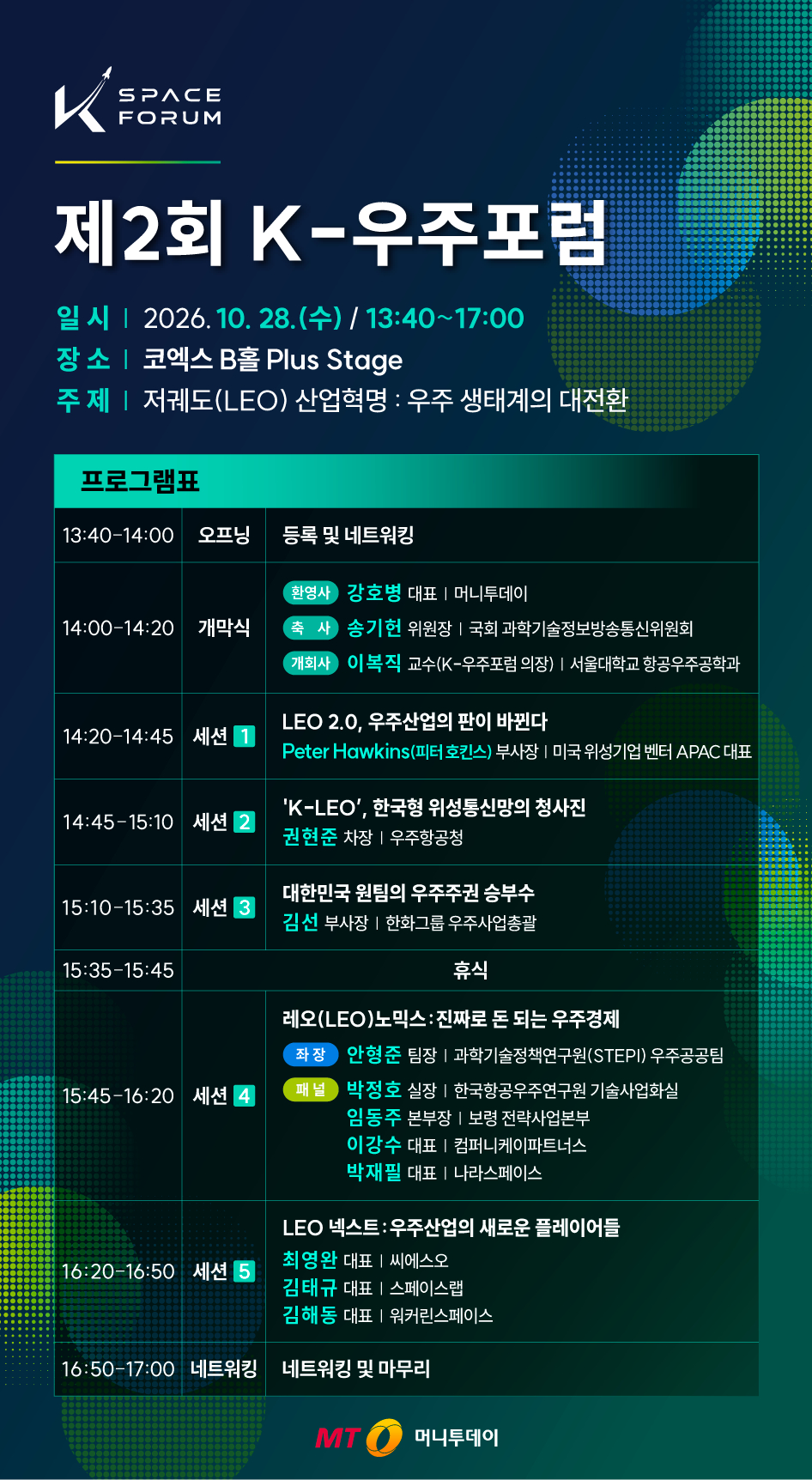
Hanwha's vertical integration strategy and specific blueprint for space-defense synergies, as envisioned by South Korea's representative space company in the rapidly changing global LEO market, will be unveiled at the '2nd K-Space Forum' to be held on the 28th at COEX in Seoul. Kim Sun, Vice President and Head of Space Business at Hanwha Group, is scheduled to take the stage personally that day to present Hanwha's strategy for building a space value chain in the LEO industry, as well as a vision for expanding space territory through collaboration between the government and private enterprises.
[MoneyToday startup media platform 'Unicorn Factory']

 in FUTURE


