

[For more diverse corporate information on the startups featured in this article, you can view them on the Unicorn Factory big data platform 'Data Lab'.]
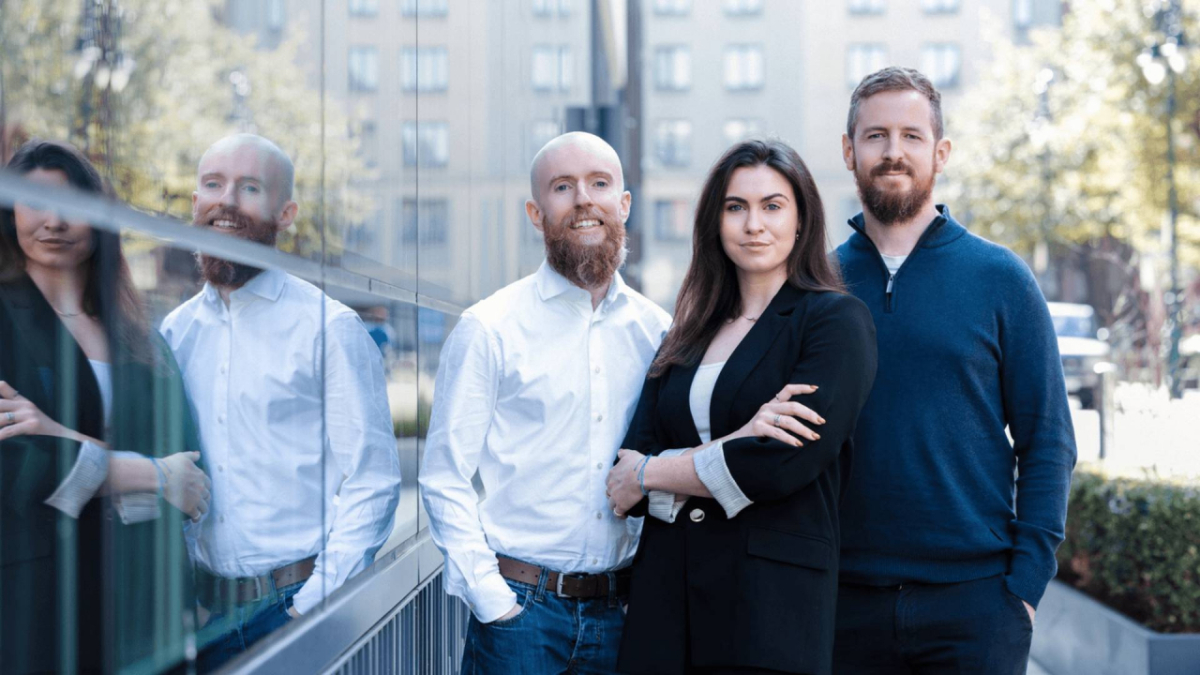
A female entrepreneur with a background as an international boxing athlete has launched an offensive into the U.S. legal market using artificial intelligence (AI) to assist with inheritance matters. The company is legaltech startup EstateMin.
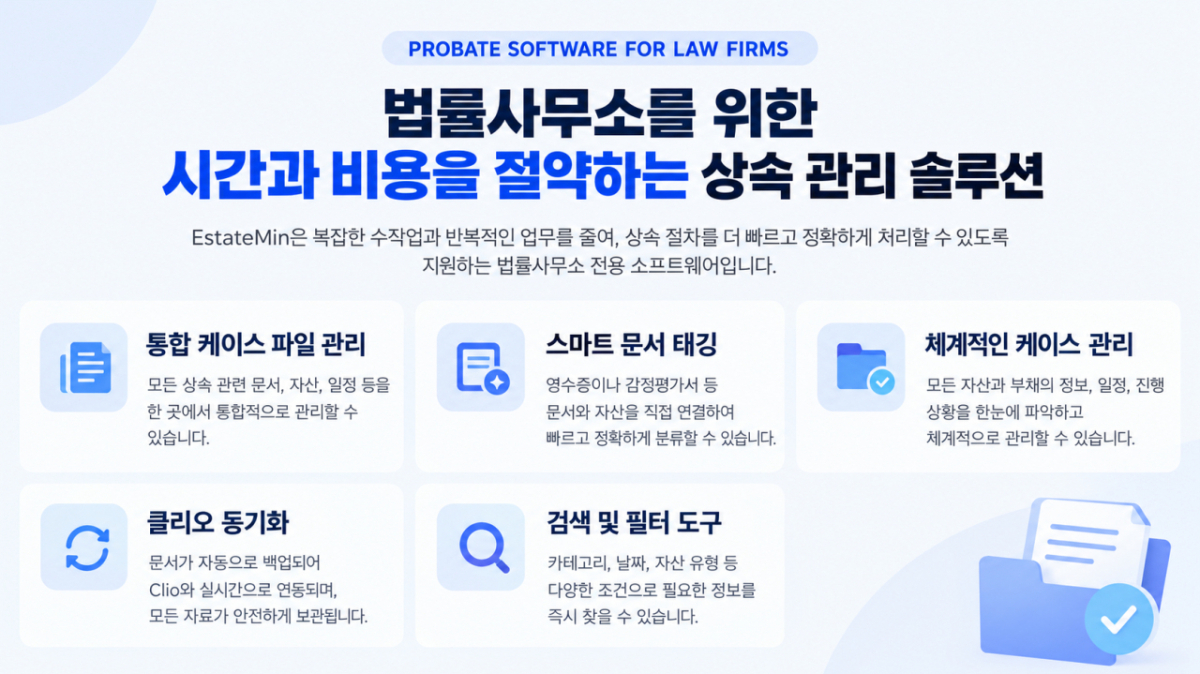
EstateMin, which was founded in Ireland and moved its headquarters to Brooklyn, New York, in the United States, has a core business model of automating the work of law firms specializing in inheritance and trusts using AI. Recently, it raised a pre-seed investment of 1 million euros (approximately 1.5 billion won).
This round of investment was joined by Ireland’s national startup support institutional investor NDRC, Firstport Syndicate, and government institutional investor Enterprise Ireland. Enterprise Ireland deployed funds through its 'HPSU (High Potential Start-Up)' program, which selectively supports high-growth companies.
From international boxer to lawyer… "Why type the same information twice?"
The background of Isabella Hughes, CEO leading EstateMin, is unique. She is a former boxing athlete who competed on the international stage, winning the women’s division at the '2023 Harringay Box Cup' and achieving outstanding results such as winning the '2022 Irish University Championships.'
After leaving the ring, she worked as a legal executive (legal practitioner) at a law firm. The startup idea emerged from the practical field. This was because clients’ submitted information was repeatedly re-transcribed by lawyers and staff onto documents every day.
CEO Hughes said, "When someone pointed out that 'we are retyping information customers have already provided,' I finally realized how much time was being wasted." Co-founder Oshin Dolphin also felt the same problem when going through inheritance procedures after her father passed away, and she joined Hughes in entering the startup arena.
EstateMin’s platform covers everything from wills and estate planning to estate administration and trust work. It digitizes client information collection and automatically extracts data from documents to support form creation. The AI review function scans documents to catch missing items, inconsistencies, or additional forms required before submission.
The results are reflected in the numbers. Currently, the service is being used in all 50 U.S. states, supporting 777 inheritance-related cases. The scale of estate assets under management reaches 68.6 million euros (approximately 1 trillion won).
EstateMin will invest the funds secured this time in acquiring customers within the United States, expanding its GTM (Go-to-Market) organization, and staffing up its engineering and product teams. The plan is to create growth by proving work-time reduction effects with definitive figures in fields where forms and procedures are standardized, such as inheritance and trusts, rather than general-purpose legal chatbots.
AI assistants working together… 'Town' becomes a unicorn 4 months after service launch
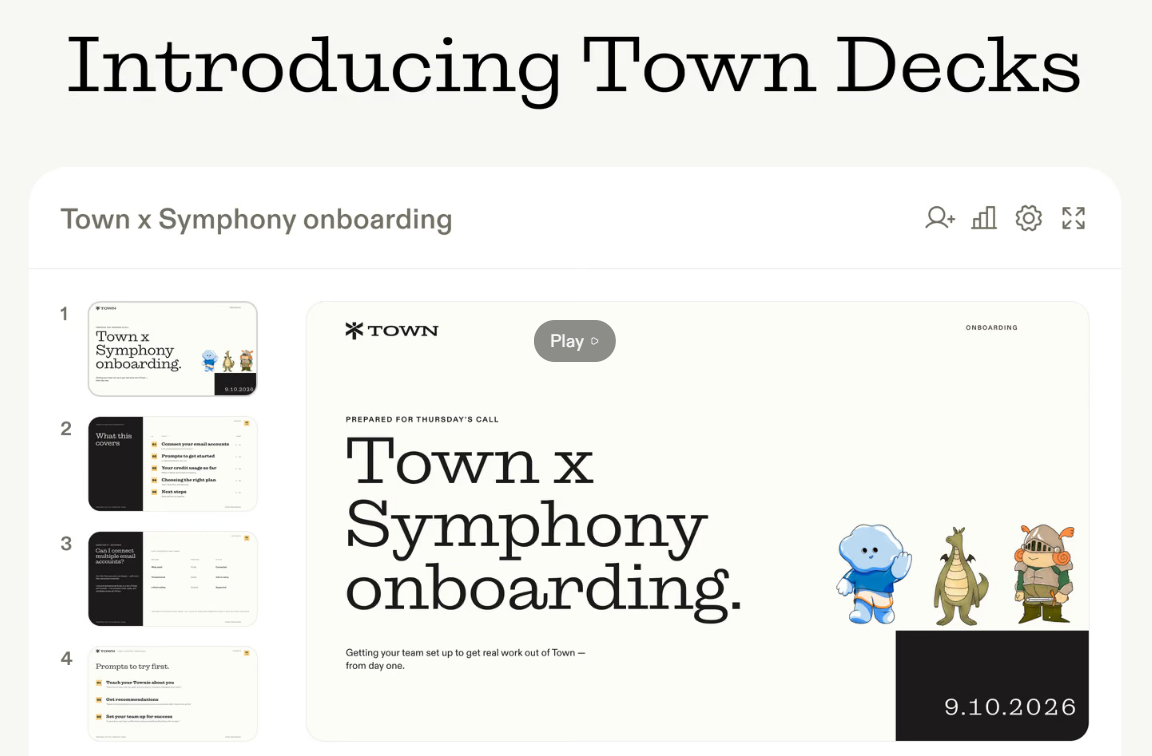
U.S.-based AI agent startup 'Town,' located in San Francisco, has risen to unicorn status (a non-listed company with a corporate valuation of over 1 trillion won) by raising a Series B investment of $18 million (approximately 140 billion won). This is just four months after officially launching its service last June.
This round was co-led by Forerunner Ventures and Menlo Ventures, with participation from Andreessen Horowitz (a16z), Serena Ventures, and First Round Capital. The cumulative amount raised exceeds $160 million (approximately 210 billion won). In June last year, it received a Series A of $55 million (approximately 73 billion won).
Town was co-founded by Jean-Denis Greze, who served as CTO (Chief Technology Officer) at U.S. fintech company Plaid in 2024, and Tony Vincent, who worked as an applied AI product director at Google. It initially started as a tax automation tool before pivoting to a personalized assistant for working professionals.
The core business model is assigning a dedicated AI assistant called 'Townie' to each individual employee of a company. Townie connects to work systems, including email and calendars, to handle practical tasks. The differentiator is that Townies can ask each other questions, share approved information, and hand over tasks.
Recently, the scope has been expanded to allow collaboration with external customers and partners, and a 'shared workflow' feature has also been introduced. When new work information arises, there is no need for each employee to individually update their own assistant; instead, the organization’s Townies are automatically updated.
CEO Greze said, "Each Townie learns the working style of its assigned person and takes on core tasks." He added, "Because Townies can ask each other questions and hand over work, no one remains in a waiting state. If AI made individuals faster, now we can make entire teams faster."
Town recorded ARR (Annual Recurring Revenue) at the level of several million dollars within weeks of its launch. In a situation where products are flooding the AI assistant market, shifting the front from 'individual productivity' to 'organizational productivity' is cited as a differentiating factor.
The industry views that the next challenge in enterprise AI adoption will be moving beyond individual productivity to organizational collaboration, establishing multi-agent collaboration as a core keyword in the AI market.
Analysis suggests that while personal assistant features have leveled out in competition, information sharing and permission management between AI agents require backing from corporate security and governance capabilities, resulting in relatively high barriers to entry.
"Reading signals sent by plants"… 15 billion won lump sum for AI decoding electrical signals
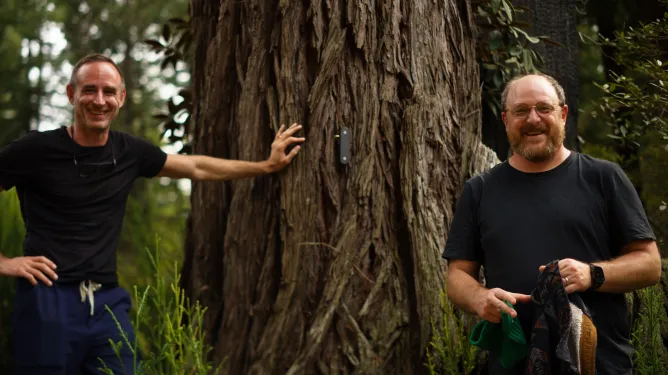
AI that reads human documents and connects employees has now begun interpreting signals inside plants as well. Attention is focused on the news of a $11.2 million (approximately 15 billion won) seed investment raised by U.S. startup 'Electric Plant,' which developed AI to decode electrical signals in plants.
The motivation for starting the business was a 'moving potted plant.' CEO Justin Mast became fascinated with this field after encountering a research case where a potted plant connected to an electric base detected current flowing through plant tissue when it needed more light and moved itself toward the light source.
He subsequently co-founded the company with neuroscientist Lee von Kraus, who had carried out projects for the U.S. Defense Advanced Research Projects Agency (DARPA). Existing agricultural technologies estimate plant status through soil moisture, leaf condition, satellite imagery, etc., but Electric Plant directly measures minute voltage changes occurring in plant tissue.
The model created after collecting data for three years is 'Bombadil.' It interprets minute voltage changes flowing through plant stems to convey to growers what the plant currently needs. Currently, it can interpret signals from approximately 125 species, including ferns, redwoods, tomatoes, and dahlias.
The sensor is about the size of an iPhone folded in half lengthwise. It penetrates down to the cambium, the living tissue layer beneath the bark, using stainless steel screws to capture changes at the microvolt level. Collected data is transmitted to a base station via a low-power wireless network, after which Bombadil in the cloud interprets it and conveys the results.
Economic efficiency is also a strength. Existing soil probes or portable spectrometers cost several thousand dollars each, but Electric Plant’s sensors are at the level of tens of dollars. It is explained that installing just one or two per acre yields sufficient accuracy.
By adjusting irrigation and fertilization schedules through this method, they emphasize that yield can be increased while water usage is reduced by more than 20%. However, the initial customer list and specific field verification results have not yet been disclosed.
Ma Seu-teu (CEO) said, "Existing technology is sophisticated but lacks the sophistication to look inside plants and cannot keep up with real-time demand." He added, "We are currently in the listening stage, but one day it will become a tool that allows people to 'converse' with plants."
[MoneyToday startup media platform 'Unicorn Factory']

 in FUTURE


