

Time- and Cost-Burdening SW Code Verification… 'AI Supervision Team' Emerges to Solve Inefficiency
Kim Ki-seop, Professor in the Department of Electrical Engineering, Computer Science and Information Technology at Daegu Gyeongbuk Institute of Science and Technology (DGIST)
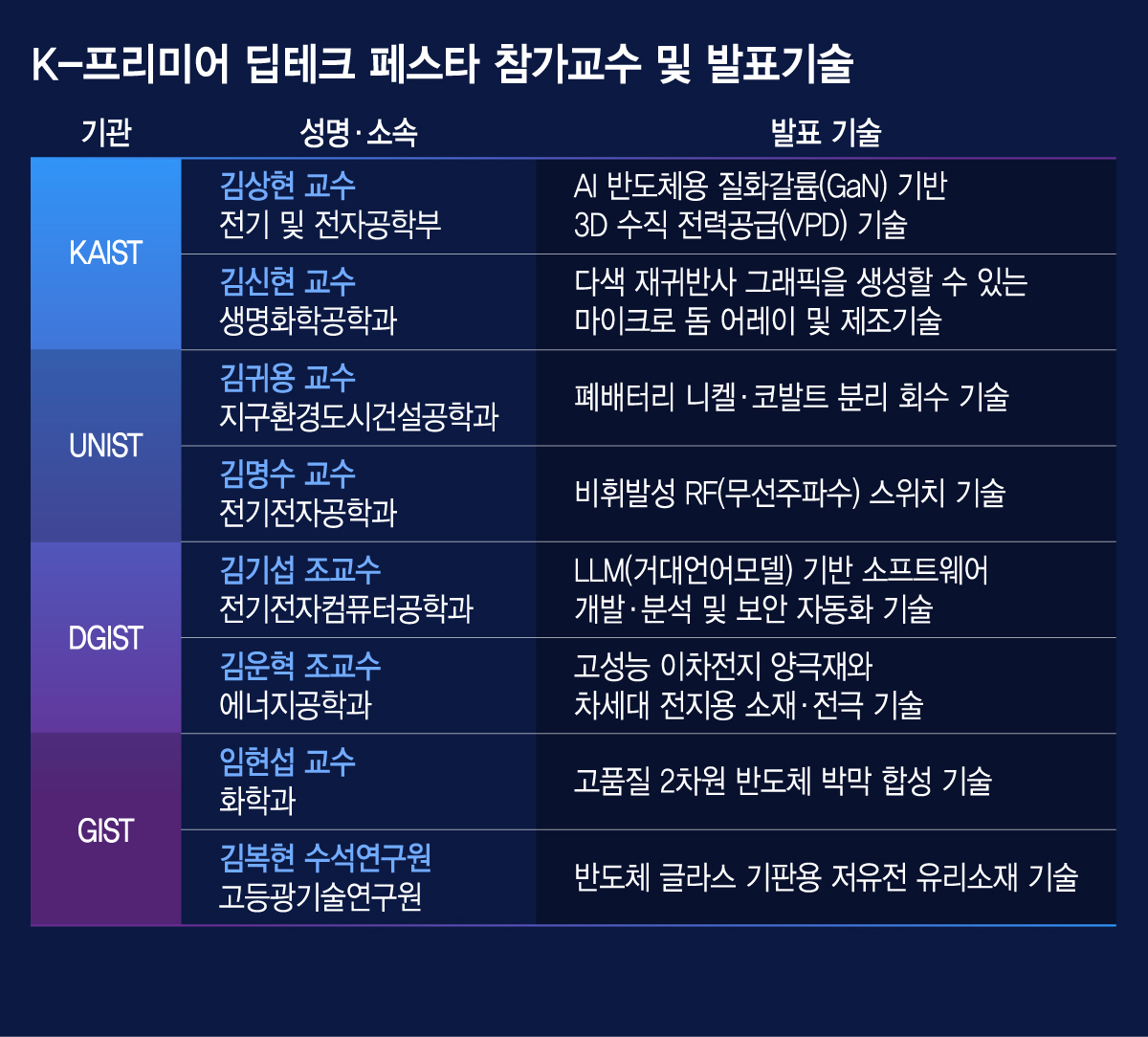
Development of LLM-Based Software Development, Analysis, and Security Automation Technologies
"Multiple AI Agents Simultaneously Review Code… Saving Time and Costs"
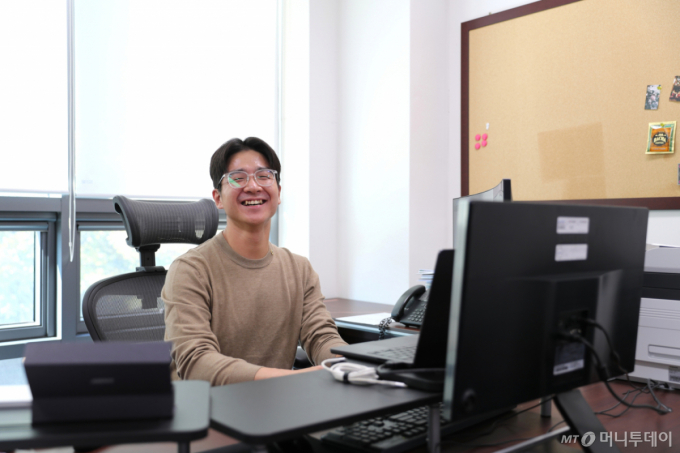
Verification of software (SW) code generated by artificial intelligence (AI) has emerged as a new challenge. Whether written by humans or AI, deploying code to actual services without review can lead to errors and security incidents. The procedure to prevent this is 'code review,' which involves examining the functionality, quality, and security issues of the code.
Because such code reviews also require significant time and cost, research into automating them with AI has continued. Most approaches have centered on a single AI reviewing the entire codebase. Kim Ki-seop, Professor in the Department of Electrical Engineering, Computer Science and Information Technology at Daegu Gyeongbuk Institute of Science and Technology (DGIST), said, "It is like having a single building inspector check everything from design to finishing alone," adding that it is "inefficient in terms of time, cost, and other aspects."
Professor Kim's research team created an 'AI Supervision Team' where multiple AIs with divided roles review code together. One AI verifies whether the code has been implemented according to the design, while another identifies security vulnerabilities. Yet another checks whether the team's established coding rules have been followed.
However, as the number of AIs and items to review increases, errors may occur where the code review deviates from its original purpose. The AI agents continue conversations with each other, effectively forgetting the initial supervision objective. To prevent this, the research team added an AI called a 'QA (Quality Assurance) Checker' that oversees the entire supervision team. Its role is to correct course when there is a risk of the AI agents losing the direction of the code review.
Professor Kim stated, "The core function of the QA Checker is to ensure that the AI code review team properly reaches its initial goal." Professor Kim's research team will directly introduce this technology at the '2026 K-Premier Deep Tech Festa' (Registration: https://vvd.bz/buvX), held on the 29th at COEX in Seoul.
Professor Kim is also conducting research into examining the thinking processes of AI models. Just as stimulating specific areas of the human brain activates language or physical functions, this research aims to identify neurons within AI that handle specific functions. Professor Kim said, "I was curious whether there are separate neurons responsible for each language inside an AI, and if removing those parts would truly disable that language capability."
Analysis results showed that removing neurons responsible for a specific language actually reduced the ability in that language. However, there were also cases where abilities in other languages declined simultaneously. Professor Kim explained, "If we only remove the neurons responsible for Japanese but Korean becomes clumsy as well, we must preserve the neurons among them that affect Korean," adding, "This way, we can accurately remove only the target to be deleted while using the remaining knowledge as before." The research team is also conducting studies on enhancing specific neurons to boost corresponding capabilities.
This research connects to technology for erasing knowledge that AI has already learned. In December 2024, the Indian Publishers Association, with participation from Bloomsbury, the publisher of Harry Potter, filed a lawsuit against OpenAI, claiming that ChatGPT provided book summaries without permission. The publishers demanded that if license agreements would not be signed, the training data should be deleted. However, retraining an AI from scratch to erase already learned content costs tens of billions of won.
Professor Kim is researching methods to store knowledge in easily erasable locations from the learning stage. Citing a classroom environment composed of multiple separate blackboards as an example, he said, "If we need to erase Harry Potter content, it would be like removing only the Harry Potter auxiliary blackboard," adding, "AI can be designed from the start to facilitate 'partial deletion.'"
Professor Kim emphasized, "The technologies I am researching will fundamentally align with the concerns of most AI companies," stating, "I want to better understand the needs of domestic companies and provide directly applicable technologies, thereby contributing to our country's economic development."
Custom Cathode Material Enhances Performance and Stability of All-Solid-State Batteries… Showcasing 'Dream Technology'
Kim Un-hyuk, Ji Gong-hak-gwa (Prof.) at Daegu Gyeongbuk Institute of Science and Technology (DGIST)
Development of High-Performance Secondary Battery Cathode Materials and Next-Generation Battery Material and Electrode Technologies
"Prioritize AI Data Center BBU Market Where Stability Is More Important Than Price"
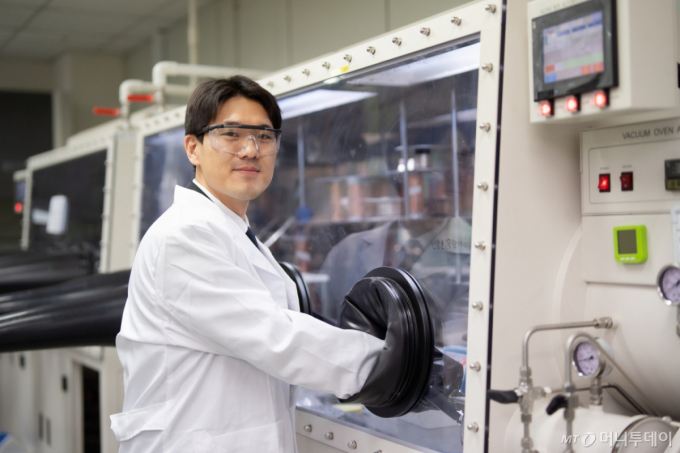
As battery fires have occurred consecutively in electric vehicles and data centers, industry demand for 'non-flammable batteries' is growing. Consequently, all-solid-state batteries, which replace the liquid electrolyte of lithium-ion batteries with a solid one, are drawing attention. Currently used liquid electrolytes are highly flammable and are cited as the main cause of fires. While solid electrolytes can significantly reduce this risk, the problem is not solved by the electrolyte alone. This is because the cathode material, which determines battery performance, does not match well with solid electrolytes. If existing cathode materials are used as-is in all-solid-state batteries, their lifespan rapidly decreases with repeated charging and discharging cycles.
To solve this problem, Kim Un-hyuk's research team at Daegu Gyeongbuk Institute of Science and Technology (DGIST) Ji Gong-hak-gwa (Prof.) developed a cathode material design technology tailored for all-solid-state batteries. Professor Kim explained, "The method involves creating the outermost surface of cathode particles with nano-sized crystals to block microcracks, which are the cause of lifespan degradation," noting that it is characterized by being applicable without significantly modifying existing cathode production equipment. Professor Kim's research team will directly introduce this technology at the '2026 K-Premier Deep Tech Festa' (Registration: https://vvd.bz/buvX), held on the 29th at COEX in Seoul.
Professor Kim's Ji Do (Prof.) is Professor Sun Yang-gook of Hanyang University. Professor Sun transferred over 40 cathode material patents to LG Chem in 2022, which is considered the largest technology transfer in the history of domestic universities. The transfer amount was reported to be 25 billion won. Professor Kim is expanding this research into cathode materials for all-solid-state batteries.
Cathode materials expand and contract in volume with each charge and discharge cycle. When this process repeats, microcracks form in the particles. Professor Kim said, "Lifespan decreases due to microcracks, so a battery that lasted 10 hours initially can only last 8 hours after two years." In lithium-ion batteries, even if cracks form, the liquid electrolyte seeps into the gaps, allowing lithium to continue moving. However, solid electrolytes and solid cathode materials do not move relative to each other, so they cannot fill the gaps.
Professor Kim stated, "Since both the electrolyte and the cathode material are solid, once broken, that portion becomes unusable capacity," adding, "Using general cathode materials makes lifespan degradation much more severe in all-solid-state batteries."
The research team began its study based on the hypothesis that composing the surface of cathode particles with small nano-sized crystals would disperse stress caused by volume changes. Experimental results confirmed actual performance improvements. Professor Kim said, "If you change the electrolyte, you must create a new cathode material to match it," noting, "We obtained results showing that in all-solid-state batteries, a structure where the outer surface of spherical cathode particles is composed of nano-crystals is appropriate."
All-solid-state batteries are more expensive than lithium-ion batteries due to the high cost of solid electrolytes. The research team plans to prioritize markets where safety is more important than price. Their first target is the BBU (Battery Backup Unit) in AI data centers. A BBU is a small battery that supplies power when a server experiences a power outage.
Professor Kim said, "If a fire breaks out in a BBU, all expensive GPUs (Graphics Processing Units) burn," adding, "We must target markets where there are customers who can afford the high price." He further stated, "Humanoid robots are also used in households, so they are an area where fires must absolutely be prevented," citing drones and the defense sector as other target markets.
Commercialization preparations have progressed to the prototype stage. The research team is conducting process verification with a target of Technology Readiness Level (TRL) 6-7. Professor Kim said, "No matter how good a technology is, companies hesitate to adopt it if implementation is difficult," adding, "We are focusing on creating entirely different cathode materials by adding just a little of our technology to existing equipment."
He continued, "Battery material companies such as L&F, EcoPro BM, POSCO Future M, and LG Chem can license this technology and supply it to cell manufacturers," stating, "If applied to electric vehicles, Hyundai Motor, OEM companies that manufacture drones, or companies that make BBUs can use this technology very effectively."
Professor Kim expects this technology to contribute to the competitiveness of the domestic battery material supply chain. Most of the precursors, which are raw materials for domestic cathode materials, rely on China. He emphasized, "Secondary batteries are directly linked to energy security," stating, "Korea must secure a super-gap in next-generation cathode materials to avoid ceding the market to China and to preemptively capture the North American and European markets."
<Registration for 'K-Premier Deep Tech Festa (Technology Transfer and Commercialization)'>
- Date: October 29, 2026 (Thu) 1:00 PM
- Location: Hall B PLUS STAGE, COEX, Samsung-dong, Seoul
- Participants: Companies considering technology transfer, joint research, or new businesses; family companies of government-funded research institutes; investment firms
- Participation Fee: Free (Pre-registration required)
- Hosts: Ministry of Science and ICT, KAIST, GIST, DGIST, UNIST, MoneyToday Unicorn Factory
- Sponsors: Korea Institute of Science and Technology Information (KISTI), Commercialization Promotion Agency for R&D Outcomes (COMPA)
- Application: https://vvd.bz/buvX
[MoneyToday Startup Media Platform Unicorn Factory]

 in FUTURE


