

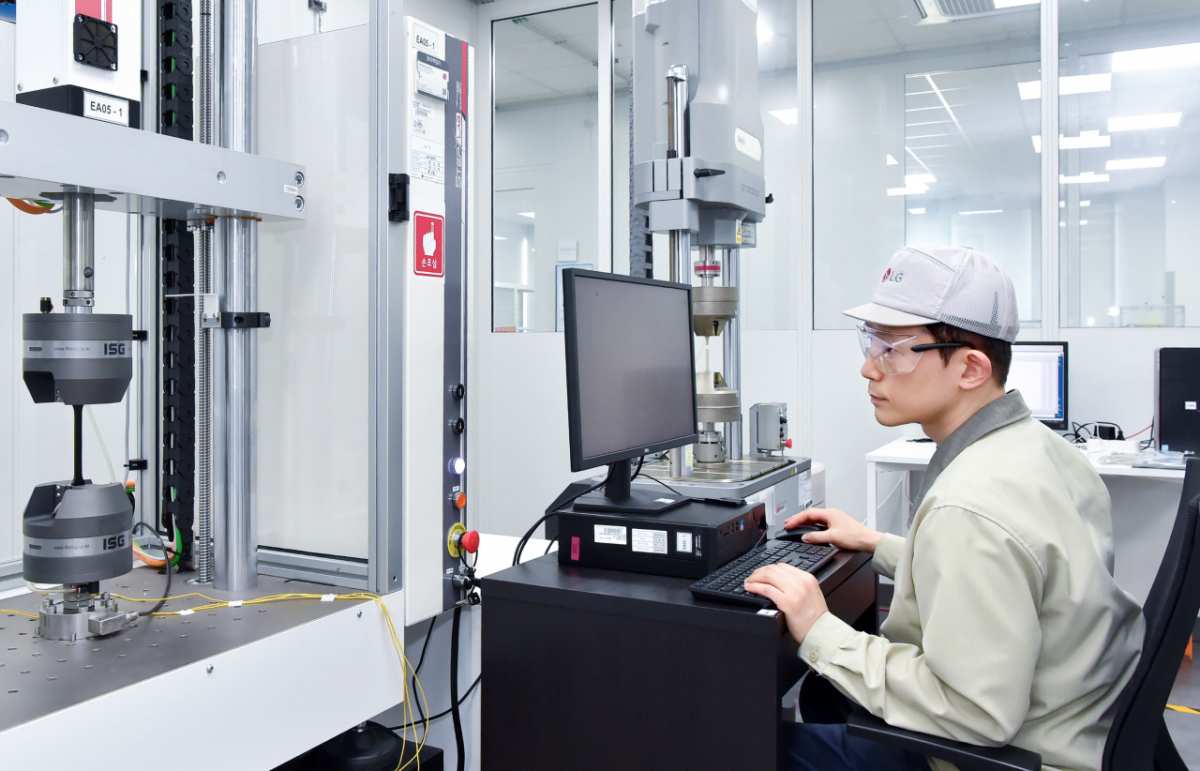
On the 15th of last month, at the 'Engineering Plastic (EP)' business unit's R&D site located in LG Chem's Osan CS Campus in Gyeonggi Province, a black rod emitting light and vibrating finely stood out in the center of the test equipment. Though it appeared as hard as steel, it was an EP made from nylon (PA) material developed to replace metal. The equipment holding this component subjected it to over 2 million cycles of repeated load testing to verify how long the part could withstand real-world application in vehicles.
Lee Jeong-hwan, team leader of LG Chem's Engineering Materials Application Technology Team, stated, "We test pilot-scale prototypes for various performance characteristics such as vibration at the component level using the same equipment used by automotive and electrical/electronics companies." He added, "This process also includes verifying whether simulated material application results translate into identical lifespan and performance in actual components."
In fact, this facility serves as a global EP R&D hub that develops materials according to customer specifications, validates their performance through real-world component applications, and supports both Yangsan certification and global certifications. Specifically, it provides one-stop support for the entire custom solution development process—from reviewing customer material requirements, activating simulation solutions (SISO·Simulation Solution), producing pilot prototypes, conducting performance evaluations, to obtaining global certifications.
Within South Korea's petrochemical industry, the EP R&D Center at LG Chem's Osan CS Campus is the only facility that has integrated and established a system for material development and technical support capable of resolving uncertainties across the entire customer value chain. Its core competitiveness lies in an uninterrupted integrated development system spanning from material stage to physical verification. First, based on over 40 years of accumulated EP formulations and physical property data, along with artificial intelligence (AI), LG Chem predicts material properties and recommends formulations. Subsequently, by combining computer-aided engineering (CAE) with the expertise of specialized researchers, it develops SISO for component performance that simulates virtual product environments on computers to predict everything from material properties to molding processes, structural and performance characteristics, and reliability. These predictions are then verified through actual testing and evaluation equipment involving hundreds of components.
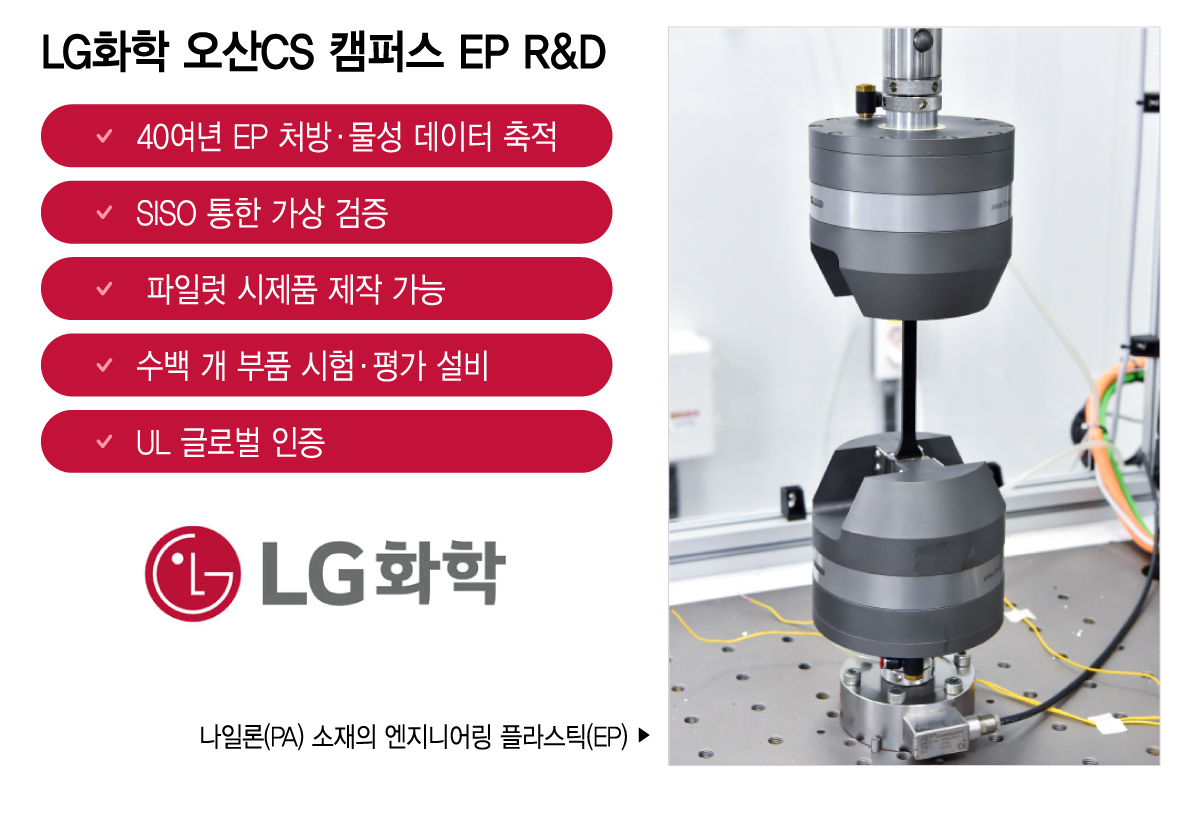
Most importantly, the system that verifies SISO prediction results at the component level is considered a key factor in enhancing customer trust and enabling joint development. During this process, hundreds of research facilities conduct various evaluations—including up to 10 million cycles of repeated fatigue testing, impact tests, vibration tests, and heat resistance tests—according to customer requirements. Performance tests that would otherwise require outsourcing to external institutions, taking several months and costing tens of millions to up to 100 million won, can now be handled internally.
Another strength is the ability to support global certifications independently. Previously, samples (product specimens) had to be sent to overseas safety certification institutions like UL laboratories for evaluation. If a test failed, new specimens had to be produced and resubmitted, meaning certification could take at least two months. The EP R&D team can now proceed with certification procedures using self-generated test data recognized by UL, thereby reducing the time and cost required for product development and certification.
LG Chem's EP business unit established this support system to proactively secure early-stage development cases in emerging industries such as robotics, AI-powered data centers, and other new sectors. Once the robot market enters a mass production phase similar to the automotive or home appliance industries, accumulated application cases and test data will enable LG Chem to gain a competitive edge in material selection.
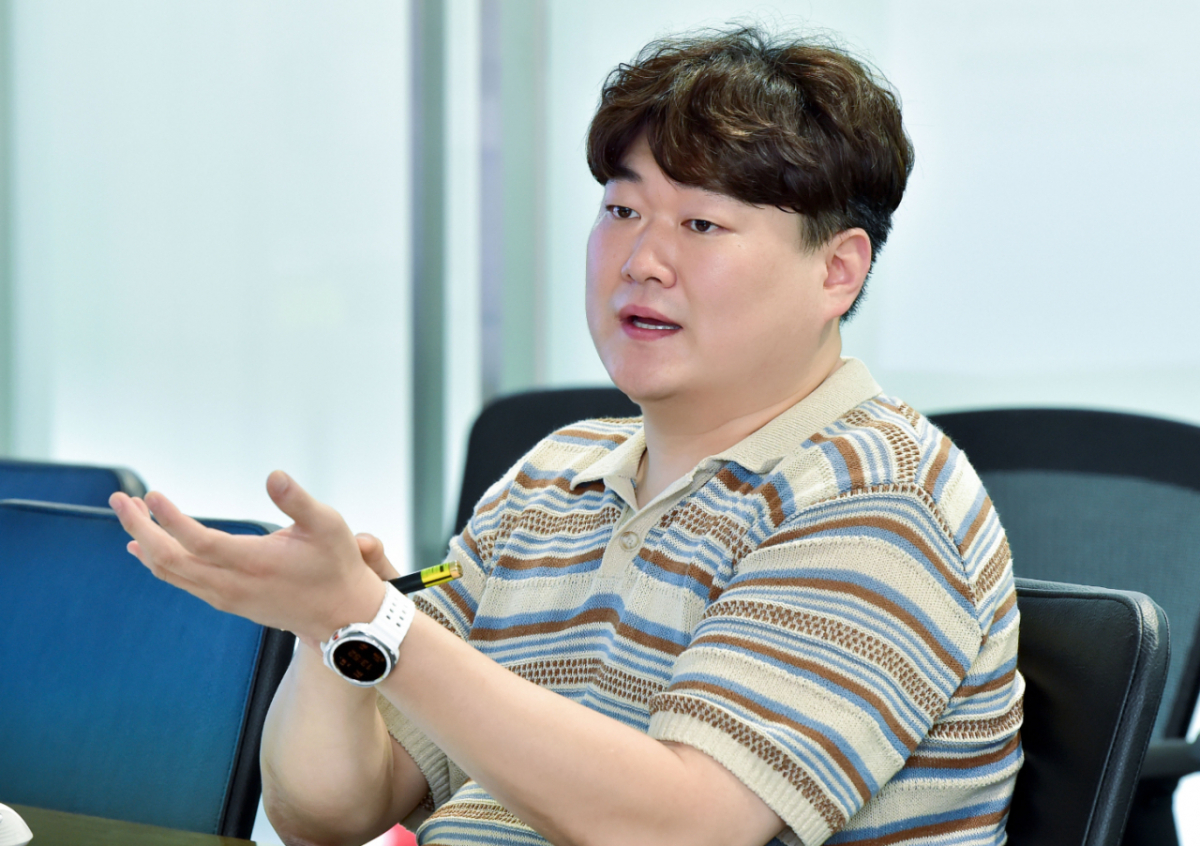
Yoon Hyung-seok, team leader of LG Chem's Engineering Materials Development and Operations Team, said, "Even if these do not immediately lead to mass production, accumulating diverse preliminary validations and component application cases creates a virtuous cycle where other customers may propose new joint development projects based on what they observe, or we can proactively suggest needs that customers have yet to recognize." He further added, "Currently, we are proposing optimal materials to customers based on accumulated development cases and test data, linking them to new joint development tasks."

 in INDUSTRY


