

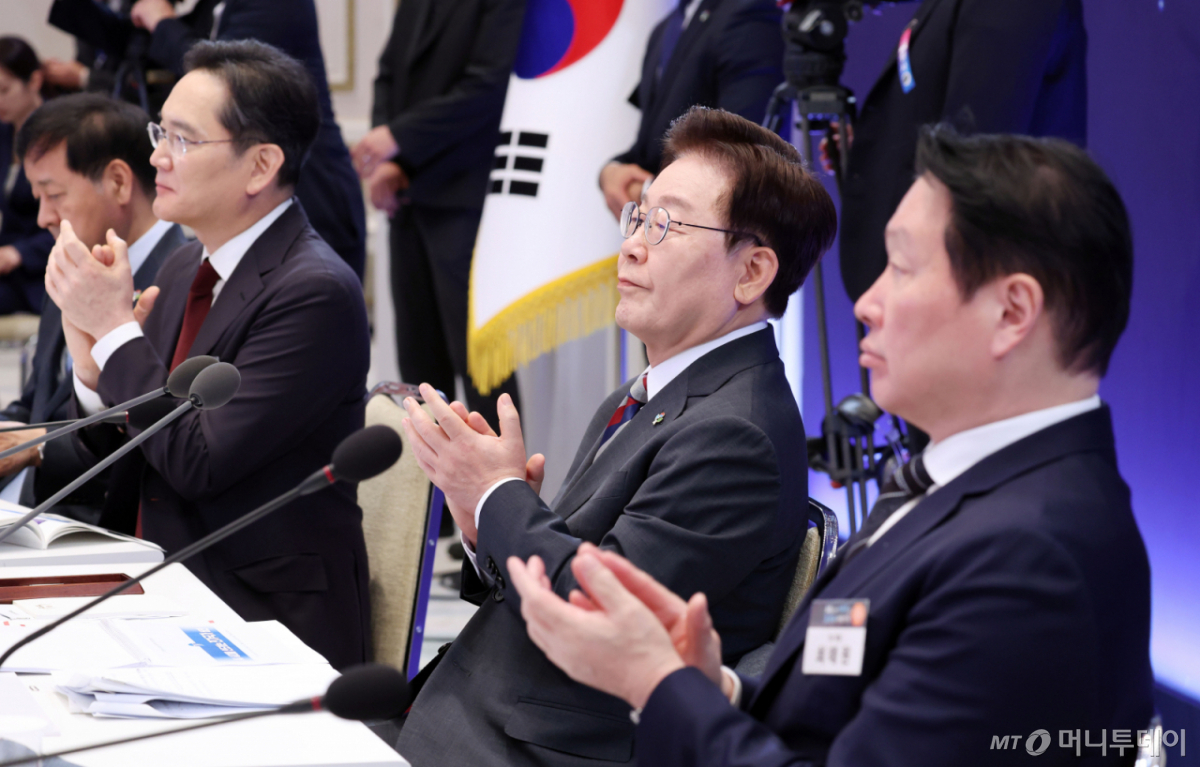
"It is even threatening the identity of the Republic of Korea."
This was not a remark from the sharp political arena. Ahead of the 2012 general and presidential elections, both ruling and opposition parties pushed for stricter regulations on large corporations and welfare promises. In response, the five major economic groups issued a joint statement warning against populism with these words.
South Korea's economic organizations, centered around the Federation of Korean Industries (now The Korea Economic Daily인협회) and the Korea Chamber of Commerce and Industry (KCCI), have consistently voiced the business community's stance at key moments. During the Moon Jae-in administration, despite the tense early days of the new government, the Korean Confederation of Employers (Korea Federation of Business Organizations) and the SME Central Association took the lead in opposing rapid minimum wage hikes and the introduction of the 52nd-hour workweek. When the government unveiled a stringent carbon neutrality scenario in 2021, economic groups immediately voiced their opposition.
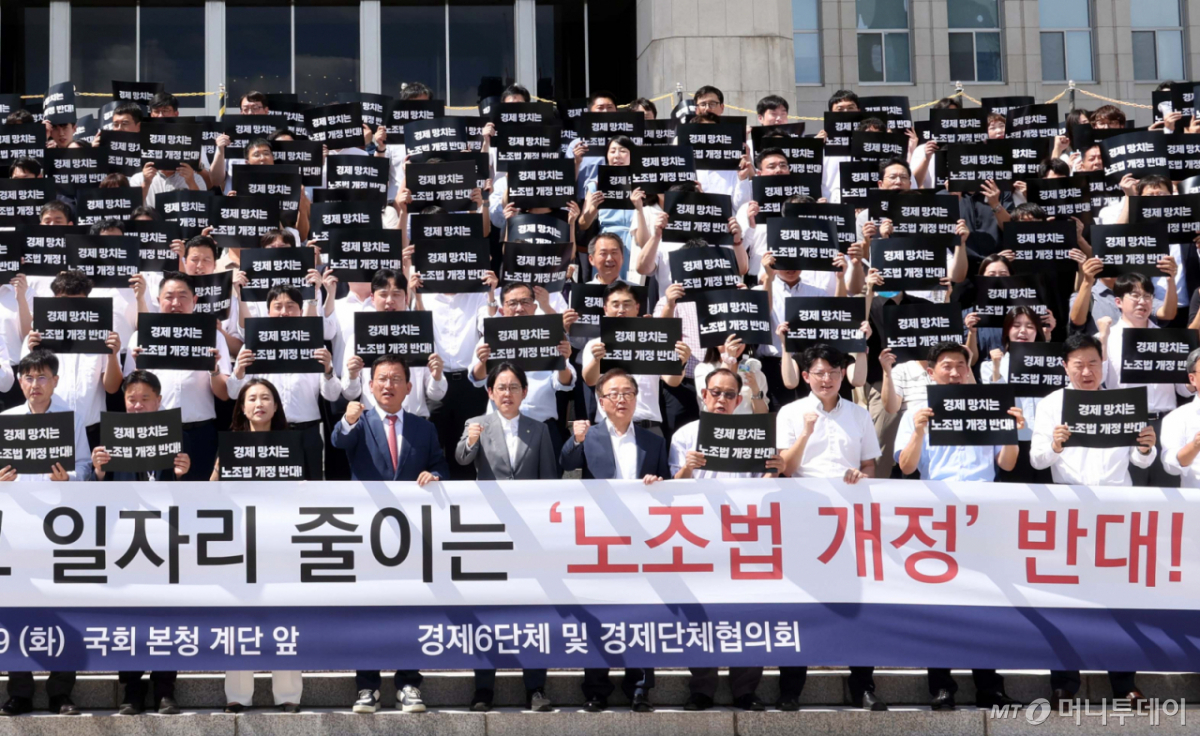
Just last year, these organizations went so far as to hold outdoor protests to block the forced passage of what the ruling party called the "yellow ribbon law" (amendments to Articles 2 and 3 of the Trade Union and Labor Relations Adjustment Act). By putting the brakes on the ruling faction's unilateral moves, they signaled that businesses represent at least an alternative viewpoint.
However, since the beginning of this year, public statements by economic groups toward the government have sharply contracted. In the business community, there is a prevailing view that the KCCI's "inheritance tax press release" incident in early February marked a turning point. The organization had cited flawed data to highlight South Korea's excessive tax burden, prompting President Lee Jae-myung to strongly reprimand them. Even on a weekend, President Lee posted related articles on X (formerly Twitter), stating that spreading fake news "deserves condemnation," and directly held them accountable with severe criticism.
Following the incident, the KCCI's entire executive board resigned, and the organization underwent government audits, enduring a major crisis. Among business leaders, there was a strong perception that this was an effort to "tame" them. Although the KCCI is a statutory body established under law, it was highly unusual for the president himself to intervene over deficiencies in certain press releases. Some interpreted this as The Korea Economic Daily인협회 (The Korea Economic Daily (Hankyung) Association), which has long been subdued due to its "original sin" of involvement in the state affairs manipulation scandal during its former name as the Federation of Korean Industries, sending a strong warning message to the business community through the KCCI.
In fact, rebuttals or expressions of regret by economic groups regarding government policies have disappeared. This year, the KCCI issued only four official comments and statements, none of which opposed the government. Among The Korea Economic Daily (Hankyung) Association's six official comments this year, it is difficult to find any critical of the government.
The same applies to joint statements from the six major economic groups (KCCI, The Korea Economic Daily (Hankyung) Association, Korea Chamber of Commerce and Industry, SME Central Association, KOFIA, and Korean Mid-sized Companies Federation). Of the ten statements released this year, apart from expressing concern last month over the Financial Services Commission's direction toward institutionalizing sustainability disclosure systems, all others were predominantly expressions of "welcome."
Dissatisfaction is growing on the ground. While economic groups welcome the government's "three mega projects," they fail to demand the "exception for the 52nd-hour workweek" that businesses urgently need, and while welcoming the new domestic production tax credit, they do not point out the exclusion of electric vehicles from it. Earlier this year, when the Semiconductor Special Act passed through the National Assembly in January, economic groups only expressed a stance of "welcome," omitting discussion on the 52nd-hour workweek debate that was considered substantive. This time, although the industry was visibly perplexed by the exclusion of electric vehicles from the tax credit target amid China's rapid market dominance, all six major economic groups uniformly offered only "welcome."
An industry insider pointed out, "Economic groups are watching the government's mood, forcing individual companies to fight sensitive issues one by one, ultimately creating a huge burden." They added, "The government must guarantee the autonomy of economic groups, and these groups must create a virtuous cycle by vividly conveying the voices from the field."

 in INDUSTRY

