

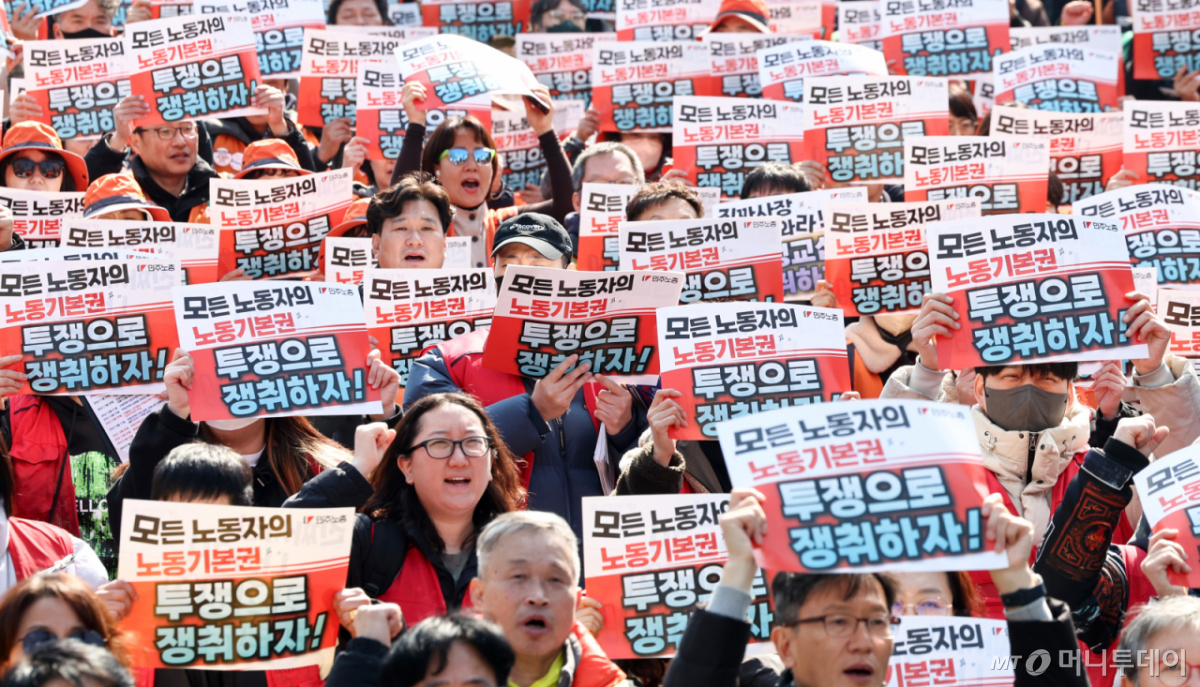
The business community pointed out that the increase in legal disputes surrounding the Yellow Ribbon Law (amended Labor Union Act) was predictable, with the root cause lying in "vague regulations." They warned that unless this issue is resolved, both prime contractors and subcontract workers will continue to raise objections regarding decisions by local and central labor committees, leading to expanded costs and operational burdens.
The business community responded that the rise in retrial applications at the Central Labor Committee following initial rulings by local labor committees, as well as administrative lawsuits challenging those rulings, had already been anticipated. The analysis suggests this is because, with the implementation of the Yellow Ribbon Law, the labor movement simultaneously voiced long-suppressed demands, many of which included unreasonable claims, thereby significantly increasing the potential for disputes. TaPyongyang Law Firm announced that between March and July 3 following the law's enactment, a total of 1,168 subcontract unions had requested collective bargaining with 441 prime contractor companies.
A business community official stated, "Since the implementation of the Yellow Ribbon Law, numerous subcontract unions have indiscriminately demanded collective bargaining," adding, "There are also many cases where issues that should be resolved through contractual relationships between prime contractors and subcontractors are being escalated into questions about the 'employer status' of prime contractors."
Fundamentally, the core provisions of the Yellow Ribbon Law are vague, inevitably leading to conflicts between prime contractors and subcontract unions. The law includes individuals who hold a "substantive and concrete position to exercise control or make decisions" within its definition of employers, yet there is no clear standard for determining what constitutes "substantive and concrete." Additionally, defining the subject of labor disputes as "decisions on working conditions and business management decisions that affect working conditions" in abstract terms is also problematic. Although the government prepared an "interpretation guideline" considering these criticisms, it is still deemed insufficient to resolve confusion due to numerous ambiguities and lack of legal binding force.
Given such regulatory circumstances, even labor committees, which should serve as stabilizing forces, are reportedly losing credibility. In fact, cases are emerging where initial rulings by local labor committees are overturned at the Central Labor Committee. Consequently, acceptance of Central Labor Committee decisions is expected to decline, leading to a surge in future administrative lawsuits.
Companies report that the management burden arising from legal disputes related to the Yellow Ribbon Law is substantial. Another business community official remarked, "Once cases reach the administrative lawsuit stage, conflicts typically span several years, generating significant costs and operational burdens during this process," and added, "Unless vague regulations on employer status are improved, legal disputes will inevitably continue to increase."

 in INDUSTRY
